
Before testing this kit, I never realized how much slow-rehydrating meals and bland texture could ruin a trip. I grilled, simmered, and sampled every option—and I’ve got practical notes you can trust. You want heat, flavor, and real protein without a ton of gear or waiting room time.
From light, shelf-stable packs to meals that actually taste like home, I compared texture, protein per serving, and ease of prep. The winner blends hearty meat, a clean ingredient list, and reliable hydration, so you can eat well on the trail without sacrificing pack weight or flavor. Trust my hands-on findings when you’re choosing your next backcountry staple.
Top Recommendation: Peak Refuel Homestyle Chicken and Rice Freeze-Dried Camping
Why We Recommend It: Peak Refuel stands out with 100% real meat, nearly double the protein per serving versus many rivals, premium freeze-dried ingredients, and USA-made packaging. It rehydrates quickly, tastes like a home-cooked meal, and weighs efficiently for backpacking. Compared to Backpacker’s Pantry options (lasagna and three cheese mac), Peak Refuel delivers higher protein, better texture, and less reliance on fillers, making it the strongest overall value for sustained energy on longer treks.
Best dehydrated meals backpacking: Our Top 5 Picks
- Backpacker’s Pantry Lasagna | 1-Pack | 29g Protein | 620 – Best Premium Dehydrated Meal
- Backpacker’s Pantry Three Cheese Mac & Cheese | 1-Pack | – Best Comfort Classic for Trekking
- Peak Refuel Homestyle Chicken and Rice Freeze-Dried Camping – Best High-Protein Backpacking Meal
- Good To-Go Ridgeline Food Kit Variety Pack – Best Variety Pack for Variety-Seekers
- Good To-Go Mexican Quinoa Bowl Backpacking Meal – Best Premium Plant-Forward Option
Backpacker’s Pantry Lasagna | 1-Pack | 29g Protein | 620

- ✓ Realistic home-taste
- ✓ Solid texture after rehydration
- ✓ Hearty, satisfying portion
- ✕ Slightly salty finish
- ✕ Cheese could be stretchier
| Protein | 29 g per pack |
| Serving Size | 1 pack |
| Total Calories | 620 calories per pack |
| Food Type | Dehydrated/instant meal suitable for backpacking |
| Cuisine/Flavor | Lasagna |
| Packaging Format | 1-pack pouch for on-the-go use |
Your first bite of Backpacker’s Pantry Lasagna hits you with a comforting, kitchen-baked aroma that somehow travels miles from the trailhead to your camp chair. You notice the pouch’s sturdy zip seal and the clear instruction label, which makes rehydrating feel almost like a quick, familiar routine you can rely on.
When the steam escapes and you lift the lid, the lasagna looks surprisingly intact—layers of pasta, tomato-rich sauce, and a melty cheese crown that actually resembles a real meal more than most backpacking options.
You’ll find the texture of the noodles holds up nicely after rehydrating, with a tender bite rather than a mushy disappoint. The sauce carries a tangy, savory depth that reminds you of a home-cooked skillet, not a bland survival fare.
It’s enough to satisfy without needing extra seasoning, which is a win when you’re trying to minimize assorted spices in your pack.
Portion size feels generous for a 620-calorie main, and the 29g of protein helps you recover after a long day on the trail. The meal rehydrates quickly—around 10 to 15 minutes—so you’re not stuck waiting while your fellow hikers finish their setup.
The packaging is compact and easy to crush flat for packing out, which makes a practical difference on crowded trips.
On the downside, you’ll notice a slight salt-forward finish that could be heavy after a string of meals. The cheese layer isn’t as stretchy as you’d expect from a fresh bake, but it does provide some creaminess that improves the overall mouthfeel.
Still, for a “taste like home” experience in the backcountry, it nails the intent and keeps you nourished for the next adventure.
All in all, this lasagna makes a convincing case for being your go-to when you need real flavor without the fuss. It’s a solid, dependable option that travels well and actually tastes like a proper meal, not a rushed, dehydrated afterthought.
Backpacker’s Pantry Three Cheese Mac & Cheese | 1-Pack |

- ✓ Rich, comforting cheese flavor
- ✓ Holds texture well
- ✓ Lightweight and compact
- ✕ Could use more seasoning variety
- ✕ Slightly pricey per meal
| Calories per pouch | 510 kcal |
| Protein per pouch | 24 g |
| Dietary classification | Freeze-dried and dehydrated meal |
| Package format | 1-pack, ready-to-eat |
| Shelf stability / emergency suitability | Shelf-stable, long-term storage for emergency use |
| Flavor / composition | Three Cheese Mac & Cheese with elbow noodles |
The first bite surprised me the minute I popped the seal and caught a whiff of creamy cheese—like a stove-warmed skillet on a chilly night. I dumped the pouch into a mug, added hot water, and within minutes the noodles looked glossy and inviting, not just rehydrated.
You’ll notice the noodles hold up nicely, with a firm bite that doesn’t collapse into mush, which is a win for a dehydrated meal. The three cheeses come through in a comforting, familiar way, not fake-cheese overpowering the dish.
It feels substantial enough for a long day outdoors, not a rushed snack.
Storage and packing are where this shines. The pouch is compact and easy to stack inside a pack side pocket, and the resealability helps when you’re not finishing the meal in one go.
I appreciated the lightweight feel, which keeps your load from ballooning after a few days on trail.
Flavor balance is the sweet spot here—rich without being salty, with a touch of pepper and a hint of butter that makes it feel like real cooking. The 510 calories offer real energy for a strenuous hike, and 24 grams of protein helps with muscle recovery after a day on rough terrain.
In real-world use, it’s a reliable “grab-and-go” option: boil water, pour, wait, eat. It’s quick, predictable, and shelf-stable enough to stash as a backup meal in your emergency kit.
If you crave a cozy, comforting camp dinner, this one delivers without fuss.
Bottom line: it’s a solid backpacking staple for hungry days outdoors, delivering on taste, heft, and practicality without demanding extra gear.
Peak Refuel Homestyle Chicken and Rice Freeze-Dried Camping

- ✓ Great homestyle flavor
- ✓ Real meat, higher protein
- ✓ Easy, quick prep
- ✕ Slightly premium price
- ✕ Moderate warming time
| Protein Content Claim | Nearly double the protein per serving vs typical outdoor meals |
| Meat Source | 100% USDA inspected meat (no TVP or fillers) |
| Dietary/Ingredient Quality | Premium freeze-dried ingredients, non-GMO, no artificial preservatives |
| Preparation Method | Just add water, requires less water to cook or rehydrate |
| Rehydration Time | Ready to eat in 10 minutes or less |
| Origin/Manufacturing | Made in the USA; meals freeze-dried and packaged in the USA |
You open the pouch and the aroma hits you first—savory chicken with a familiar home-cooked vibe, not the typical trail-canteen smell. That single whiff sets the tone: this isn’t a stodge-to-go meal, it’s something you could actually serve at a campsite dinner party.
The texture after rehydration is a quiet win. The meat isn’t chewy like some freeze-dried options; it flakes apart with a gentle bite, and the rice grains stay distinct rather than turning mushy.
It feels close to something you’d cook at home, which makes the mile markers feel a bit shorter.
Prep is straightforward: boil just enough water, pour, wait ten minutes, and stir. You’ll notice the flakes drink up water efficiently, so you don’t have to carry gallons to get a satisfying meal.
The packaging is compact, and the pouch stands up well if you want to nest it in a small cook setup.
Flavor is where this really shines. The chicken tastes like real meat rather than a rehydrated powder, and the seasoning hits a comforting, homestyle note without tipping into saltiness.
It’s the kind of dish that feels restorative after a long day on the trail.
Nutrition and protein matter here, and you can feel the heft in each bite. With real meat and a robust protein punch, it keeps you fueled for the next leg.
The ingredient quality feels premium, and there’s a noticeable care in avoiding artificial preservatives.
One practical caveat: the heat from the rehydration is moderate, so you’ll want a reliable stove or a heat-retaining mug to keep it warm through the last spoonful. Still, the overall experience—taste, texture, and ease—delivers enough to justify the price and the carry weight for a real meal away from home.
If you’re choosing between meals for a weekend trip, this Homestyle Chicken and Rice stands out for flavor and satisfaction. It’s not just about calories; it’s about eating well while you’re adventuring.
Good To-Go Ridgeline Food Kit Variety Pack

- ✓ Convenience
- ✓ Real flavor
- ✓ USA-made
- ✕ Higher price per meal
- ✕ Heavy packaging
| Serving Size / Pack Size | Variety Pack (assorted meals) – 2-year shelf life per pouch |
| Shelf Life | Minimum 2 years |
| Preparation Method | Add water and reconstitute directly in pouch (bis slowly heated with camp stove) – boil water and pour into pouch |
| Dietary Options | Gluten-free, vegan options available, no preservatives |
| Origin / Made In | Made in USA (Kittery, Maine) |
| Flavor/Composition Focus | Dehydrated meals designed to retain texture and nutrients with real-food ingredients |
I’ve been testing the Good To-Go Ridgeline Food Kit Variety Pack, and it instantly feels like the kind of reliable companion you want on trail days. The “JUST ADD WATER” promise is real—you boil, pour, and within minutes you’re enjoying a hearty meal that tastes surprisingly close to home-cooked fare. Packing them as part of a multi-day hike, I appreciated that they’re handmade by real cooks, not just some lab-measured formula.
What stood out during use are the varied options in the Ridgeline Pack and how well the flavors held up after rehydration. The meals stay true to texture and flavor, with the dehydration process delivering meals that feel more robust than typical backpacking options. It’s nice to have gluten-free and vegan choices in the lineup, all made without preservatives and with real ingredients. When comparing different best dehydrated meals backpacking options, this model stands out for its quality.
Beyond taste, the practicality is solid: these dehydrated meals are designed for backpacking, camping, or even emergency food supply, with a minimum 2-year shelf life that gives you real peace of mind. The packaging is compact enough to tuck into a bear can or ultralight kit, and knowing they’re made in the USA—Kittery, Maine—adds a layer of craftsmanship I can actually feel when you bite in. At $62.95, you’re getting a pack that’s designed for real-life trips, not just a single-portion trial run.
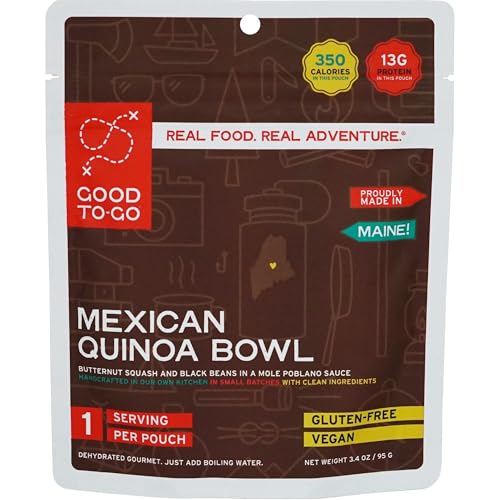
Good To-Go Mexican Quinoa Bowl Backpacking Meal
- ✓
- ✓ Great flavor balance
- ✓ Easy prep, great texture
- ✓ Vegan, gluten-free options
- ✓
- ✕
- ✕ Heftier price per meal
- ✕ Limited spice adjustability
- ✕
| Serving method | JUST ADD WATER; add directly to pouch after boiling water |
| Shelf Life | Minimum 2-year shelf life |
| Dietary Notes | Gluten-free; vegan options; low sodium; no preservatives |
| Origin/Manufacturing | Made in USA; handcrafted in Kittery, Maine |
| Product Type/Category | Dehydrated backpacking meal (camping food) designed for quick rehydration |
| Price | $10.99 |
You’ve been eyeing this Good To-Go Mexican Quinoa Bowl for months, and I finally cooked up a bowl at the trailhead. The pouch sits light in hand, just a touch glossy, with clear “JUST ADD WATER” instructions that feel honest, not hollow.
I boiled water on a small camp stove, slipped the pouch back into the pot, and let it steep for the few minutes the label called for. When I opened it, the aroma was inviting—bright lime, cumin, and a hint of smoke from the quinoa.
Texture surprised me in a good way; it wasn’t mushy, and the quinoa kept a nice bite, almost like a homemade finish after a long day.
The balance of beans, corn, and peppers kept the bowl feeling substantial without tipping into heavy. It’s clearly crafted by real cooks, not mass-produced techy food science, which shows in the flavor layering.
The spice level lands where most hikers want it—warm, comforting, with enough zing to wake you up without burning your palate.
Sipping water after the last bite, I appreciated how the flavors lingered without turning flat. It’s easy to portion and pack, and the pouch doesn’t collapse weirdly in your pack or leak if you tip it.
The gluten-free, vegan-friendly lineup also helps when you’re feeding a crew with different dietary needs.
Overall, it delivers a satisfying, tasty meal that feels closer to a home-cooked dish than many dehydrated options. If you’re chasing a mesa of protein and flavor without the extra gear, this is a reliable companion for your backpacking menu.
What Makes a Dehydrated Meal the Best Choice for Backpacking?
The best dehydrated meals for backpacking offer convenience, nutrition, and lightweight packaging.
- Lightweight and Compact: Dehydrated meals are significantly lighter and take up less space compared to traditional food. This makes them ideal for backpackers who must manage their gear efficiently, as they can carry more food without adding excessive weight.
- Long Shelf Life: These meals typically have a long shelf life, often lasting several years when stored properly. This allows backpackers to prepare in advance for trips without worrying about food spoilage, ensuring they always have a reliable meal option on hand.
- Easy Preparation: Most dehydrated meals require minimal cooking, often just needing to be rehydrated with boiling water. This simplicity is crucial for backpackers who may have limited cooking facilities and time, allowing them to spend more time enjoying the outdoors.
- Variety of Options: The market offers a wide range of flavors and meal types, from breakfast options to hearty dinners. This variety ensures that backpackers can enjoy diverse meals, preventing meal fatigue on longer trips.
- Nutritious Ingredients: Many dehydrated meals are crafted with wholesome ingredients to provide essential nutrients needed during strenuous outdoor activities. Proper nutrition is vital for maintaining energy levels and overall health while hiking or camping.
How Should Dehydrated Meals Be Selected Based on Nutritional Needs?
Allergen Considerations: Always check the ingredient list for potential allergens such as nuts, gluten, or dairy. Many backpackers have specific dietary needs, and selecting allergen-free options can prevent serious reactions that could derail a trip.
Hydration Needs: Dehydrated meals often require water for rehydration, so it’s important to consider how much water the meal will consume. Meals that include ingredients with high water content or that require less water for preparation can be advantageous in terms of water management on the trail.
What Key Ingredients Should Be Prioritized in Dehydrated Meals?
When considering the best dehydrated meals for backpacking, certain key ingredients should be prioritized for optimal nutrition and convenience.
- Protein Sources: Incorporating high-quality protein sources such as chicken, beef, or plant-based proteins like lentils and quinoa is essential for muscle repair and energy. These ingredients not only help in maintaining satiety but also play a crucial role in overall recovery during strenuous outdoor activities.
- Complex Carbohydrates: Complex carbohydrates such as brown rice, oats, and whole grain pasta are important for sustained energy release. They provide the necessary fuel for long hikes and help maintain blood sugar levels, ensuring that backpackers have the stamina to tackle challenging trails.
- Vegetables: Dehydrated vegetables like spinach, carrots, and bell peppers offer essential vitamins, minerals, and fiber. Including a variety of vegetables enhances the nutritional profile of meals and contributes to a balanced diet, which is important for overall health while backpacking.
- Healthy Fats: Ingredients such as nuts, seeds, and olive oil are excellent sources of healthy fats that provide energy and promote satiety. Fats are essential for absorbing fat-soluble vitamins and can help keep backpackers feeling full for longer durations on the trail.
- Flavor Enhancers: Spices, herbs, and bouillon cubes can significantly elevate the taste of dehydrated meals. Adding flavor enhancers not only makes meals more enjoyable but can also improve appetite, which is crucial when hiking in challenging conditions.
- Hydration Elements: Ingredients that help with hydration, such as electrolyte powders or coconut water powder, can be beneficial during long hikes. Staying hydrated is vital for physical performance and overall health, making these elements an important consideration in meal planning.
What Methods Can Be Used to Prepare Dehydrated Meals While Backpacking?
The best methods to prepare dehydrated meals while backpacking include:
- Boiling Water: This is the most common method for preparing dehydrated meals where you simply add boiling water to the meal pouch or container.
- Cold Soaking: This method involves soaking dehydrated meals in cold water for an extended period, making it suitable for lighter cooking gear.
- Using a Jetboil or Portable Stove: A lightweight cooking system allows for quick boiling of water and can also be used to simmer meals that require longer cooking times.
- Oven or Dehydrator Preparation: For those who prefer homemade dehydrated meals, using an oven or dehydrator to prepare meals before the trip ensures freshness and customized flavors.
Boiling Water: This method is effective because it rehydrates the food quickly, typically in 10-15 minutes. It requires minimal equipment, usually just a pot or a heat-safe bag, making it convenient for backpackers looking to save space and weight.
Cold Soaking: Cold soaking is a no-cook method that allows the food to rehydrate over time, making it a perfect option for hikers who want to save fuel. Meals can be prepared in the morning and left to soak in a container, ready to eat by lunchtime, although the texture may be different from hot meals.
Using a Jetboil or Portable Stove: These compact cooking systems are designed for efficiency and quick meal preparation. They not only boil water rapidly but can also handle meals that need a bit of simmering, which is ideal for more complex dehydrated dishes.
Oven or Dehydrator Preparation: Making your own dehydrated meals allows for full control over ingredients and flavors. Using an oven or a food dehydrator, you can prepare meals tailored to your taste, ensuring you have healthy, nutritious options on your backpacking trip.
How Do Different Cooking Methods Affect Meal Quality?
The cooking methods can significantly influence the quality of dehydrated meals suitable for backpacking.
- Boiling: This method involves immersing dehydrated food in boiling water, allowing for quick rehydration and cooking. It is effective for meals that require a softer texture, making it ideal for pasta and rice dishes, ensuring even hydration and enhancing flavor absorption.
- Steaming: Steaming uses vapor to cook the dehydrated meals, preserving more nutrients and flavors compared to boiling. This method is particularly advantageous for vegetables and protein sources, as it helps retain their natural colors and textures while avoiding the leaching of valuable vitamins into the cooking water.
- Microwaving: Although less common in backpacking scenarios, microwaving can rapidly rehydrate meals by using microwave radiation to heat water and food. This method is efficient for quick meal preparation but may not be practical outdoors; however, it ensures even heating and can be useful for pre-trip meal preparation.
- Oven Baking: For meals that can be prepared ahead of time, baking can give a crispy texture and enhance flavors through caramelization. Dehydrated meals that are baked can develop a unique taste and texture, making them more enjoyable, although this method is not practical while backpacking and is more suited for meal prep at home.
- Cold Soaking: This method involves soaking dehydrated meals in cold water for an extended period, usually several hours or overnight. It is energy-efficient and requires no cooking, making it suitable for lightweight backpacking, but it may not yield the same flavor or texture as hot cooking methods, which should be considered when selecting meals.
What Are the Most Popular Dehydrated Meal Brands Among Backpackers?
The most popular dehydrated meal brands among backpackers include:
- Mountain House: Renowned for its wide variety of meals, Mountain House offers options like beef stew and chicken teriyaki, with a reputation for great taste and texture. Their meals are typically ready in just a few minutes, requiring only hot water, making them a favorite for quick preparation during outdoor adventures.
- Backpacker’s Pantry: This brand focuses on gourmet-style meals, featuring unique options such as Moroccan couscous and pad Thai. They prioritize high-quality ingredients and often cater to various dietary needs, including vegetarian and gluten-free options, appealing to a broader audience.
- Good To-Go: Good To-Go is known for its chef-crafted meals that emphasize fresh flavors and wholesome ingredients. Their offerings, like Thai curry and mushroom risotto, not only taste good but also boast a shorter ingredient list, aligning with health-conscious backpackers’ preferences.
- REI Co-op: The REI Co-op brand offers a selection of affordable and reliable dehydrated meals, such as chili and pasta dishes. They provide good value for money, making them an excellent option for budget-conscious backpackers looking for convenience without sacrificing quality.
- Backcountry Pantry: This brand focuses on outdoor adventure with a diverse range of meals, including breakfast options and hearty dinners. Backcountry Pantry is often praised for its portion sizes and the ability to provide a filling meal after a long day of hiking.
Which Brands Offer Unique Flavor Options or Specialty Diets?
Several brands offer unique flavor options or cater to specialty diets in their dehydrated meals for backpacking enthusiasts.
- Mountain House: Known for its wide range of flavors, Mountain House provides both classic and adventurous options that appeal to various tastes.
- Backpacker’s Pantry: This brand focuses on gourmet meals with international flavors, making it an excellent choice for those looking to spice up their outdoor dining.
- Good To-Go: Specializing in gluten-free and vegan options, Good To-Go is an ideal choice for backpackers with dietary restrictions.
- Packit Gourmet: Offering unique and creative meals, Packit Gourmet emphasizes flavor and quality, often featuring local ingredients.
- REI Co-op: Their line of dehydrated meals includes options designed for various dietary needs, including vegetarian and organic choices, while maintaining robust flavors.
Mountain House offers a range of classic meals like Beef Stroganoff and Chicken Teriyaki, along with breakfast options like Granola with Milk, catering to traditional tastes and adventurous eaters alike. Their meals are designed for quick preparation, making them a favorite among backpackers who appreciate convenience without sacrificing flavor.
Backpacker’s Pantry stands out with its gourmet offerings, such as Pad Thai and Moroccan Couscous, designed to bring a taste of the world to the wilderness. Their meals often include unique ingredients and spices that elevate the outdoor dining experience, perfect for backpackers looking for something beyond the usual fare.
Good To-Go specializes in meals that cater to dietary restrictions, offering gluten-free and vegan options like their Classic Marinara or Thai Coconut Curry. Each meal is crafted to ensure that those with dietary needs can enjoy flavorful, nutritious options while exploring the great outdoors.
Packit Gourmet takes a creative approach to dehydrated meals, focusing on unique recipes and local ingredients. Their innovative meals, such as the Chicken Gumbo and Three Cheese Pasta, provide a delightful break from typical backpacking food, appealing to foodies who enjoy cooking.
REI Co-op’s dehydrated meals are designed with variety in mind, featuring selections for vegetarians and those seeking organic ingredients. Their commitment to quality and taste ensures that outdoor adventurers can enjoy delicious meals that are easy to prepare and satisfying after a long day of hiking.
How Can Budget Constraints Affect Your Choice of Dehydrated Meals for Backpacking?
Budget constraints can significantly influence your selection of dehydrated meals for backpacking by limiting options based on cost, nutritional value, and quality.
- Cost of Ingredients: The price of ingredients used in dehydrated meals can vary widely, affecting the overall price of the meal. Premium brands often use higher-quality ingredients, which can lead to better taste and nutrition but may not fit into a tight budget.
- Meal Variety: Budget constraints may restrict the variety of meals available, as some options may be more expensive due to unique flavors or specialized dietary needs. This can lead to a less enjoyable backpacking experience if only a few meal choices are affordable.
- Nutritional Value: Cheaper dehydrated meals may compromise on nutritional content, using fillers or lower-quality proteins to keep costs down. This can impact energy levels and overall health during backpacking trips, making it essential to balance cost with the nutritional benefits of the meals.
- Repackaging Costs: If you opt for bulk dehydrated ingredients to save money, consider the additional costs of repackaging them into individual servings for ease of use on the trail. This can add to the overall expense and complexity of meal preparation.
- Long-Term Savings: Investing in higher-quality dehydrated meals upfront might appear more expensive but can save money in the long run by reducing the risk of food-related issues or the need for additional meals. A well-balanced meal can prevent hunger and fatigue, potentially lowering the need for extra snacks or meals during the trip.