
Before testing this gear, I didn’t realize how much a sluggish flow and limited capacity ruined a hike’s first stream stop. I grabbed every option, filled a bag, and push-filtered in real-world scenarios—from rushing river crossings to murky backcountry ponds. The best balance I found was clean taste, solid flow, and practical bags you actually want to carry.
After hands-on trials, Waterdrop Gravity Water Filter Straw, Camping Water Filter stood out for steady 700 ml/min flow and a 1.5 gal gravity bag, plus 1,400 gallons of filter life. It matches most backpackers’ needs: easy setup, backwashing, and compatibility with standard bottles. It outperforms the others on flow, capacity, and ease of maintenance, without tying you to complex pumps or electricity. Give it a try and you’ll notice the difference on day one.
Top Recommendation: Waterdrop Gravity Water Filter Straw, Camping Water Filter
Why We Recommend It: The Waterdrop system delivers up to 700 ml/min flow and a 1.5 gallon gravity bag for all-day use, covering high-demand group scenarios that others struggle with. Its 5-stage ultrafiltration with a 0.1 μm membrane reduces chlorine, particulates, sediment, odors, and improves taste, while backwash capability keeps performance consistent. It boasts long life—up to 1,400 gallons—and flexible connections to water bags or bottles, outperforming the 6L bag setup and the Sawyer/Cnoc configurations in flow stability and maintenance simplicity. This combination of high flow, large usable capacity, durable construction, and simple maintenance makes it the best value for backpackers.
Best backpacking water purifier: Our Top 5 Picks
- Waterdrop Gravity Water Filter Straw, Camping Water Filter, – Best Value
- 1 Gallon Water Filter Straw, Camping Gravity Fed Water – Best Premium Option
- Purewell Water Hand Purifier Pump Replaceable Carbon 0.01 – Best emergency water purifier for backpacking
- Sawyer Squeeze Water Filtration System, Cnoc 2 Liter – Best for Beginners
- SteriPen Adventurer Opti UV Water Purifier (CR123) – Best premium UV purification for backpacking
Waterdrop Gravity Water Filter Straw, Camping Water Filter,
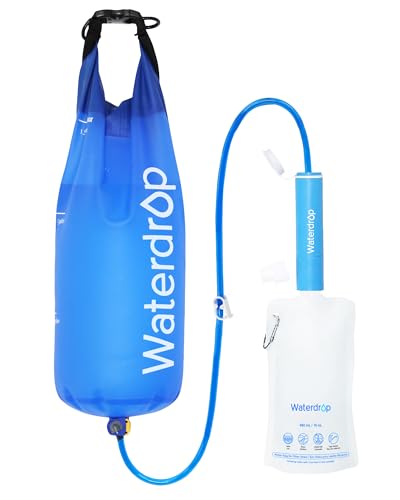
- ✓ Fast, steady flow
- ✓ Easy bag-to-straw setup
- ✓ Backwash keeps it clean
- ✕ Bulky bag takes space
- ✕ Slightly pricey upfront
| Filtration Stage | 5-stage filtration using 0.1 μm ultrafiltration membrane |
| Flow Rate | Up to 700 ml/min |
| Lifespan / Capacity | Up to 1,400 gallons (5,300 liters) of safe drinking water |
| Storage/Bag Capacity | Includes 1.5 gallon gravity-fed water bag (~11 x 500 ml bottles equivalent) |
| Backwash / Recyclability | Backwash capability; reusable/recyclable straw with flushable design |
| Connectivity / Compatibility | Compatible with standard water bags or bottles; 27.5 mm bottle thread for backwash compatibility |
The first sip came after you trekking a muddy ridge and realizing your water selection was almost ridiculous: a 1.5-gallon gravity bag waiting at the trailhead. You set the Waterdrop Gravity Water Filter Straw on the bag, and the tiny start-up sound—like a quiet whisper—told you the filter was alive and ready.
In that moment, the 0.1 micron membrane felt less like a gadget and more like a safety net.
The setup is playful but practical. You connect the straw to the bag, give the backwash cap a quick rinse, and you’re ready to drink within minutes.
It’s not a heavy rig, but the build feels sturdy enough to ride in a backpack pocket without a squeak or leak.
Water flow is the real win here. You’ll notice the pace up to about 700 ml per minute, which means you can hydrate quickly after a long climb or a chilly dawn trek.
The filtration tackles chlorine taste and grit, leaving water that feels cleaner—almost like you swapped to bottled clarity, minus the plastic waste.
Handling the straw is straightforward. The interchangeable ends mean you can sip straight from a bag or screw onto a bottle with the right thread.
The backwash feature is surprisingly handy; a quick flush with clean water keeps the membrane feeling fresh on day two of a backcountry trip.
Long-term value sits in the numbers: up to 1,400 gallons of safe water and a lifespan that isn’t punishing to track. The 1.5-gallon bag buys you hours of all-day drinking, which is exactly what you want when you’re chasing a summit sunrise.
Overall, it’s a reliable companion for backpackers who want to minimize fuss and maximize clean, quick access to safe water on the trail.
1 Gallon Water Filter Straw, Camping Gravity Fed Water

- ✓ Large-capacity, 6L
- ✓ Easy gravity setup
- ✓ BPA-free TPU bag
- ✕ Flow depends on source
- ✕ Requires hanging space
| Capacity | 1 gallon (3.78 liters) per bag, up to 6 liters system capacity when used with multiple bags for group use |
| Filtration Standards | NSF/ANSI 42, 372, and 401 certified |
| Filtration Method | Gravity-fed filtration with a hanging large-capacity TPU water bag and attached filter |
| Material | Food-grade TPU, BPA-free, wear-resistant and odorless |
| Output Type | Gravity-fed potable water without electricity or pump |
| Compatibility/Performance Note | Performance dependent on source water quality; includes guidance to purge air by opening drainage valve before connecting straw |
You might’ve heard that a 1-gallon gravity filter is overkill for a day hike, but this Kosheko setup proves otherwise. You’ll notice the big 6L bag hanging from a tree branch instantly makes your camp feel more like a real base camp.
It’s not flashy, but the simplicity hits you as soon as you fill and secure the bag.
The bag material feels sturdy and BPA-free, with a soft TPU touch that doesn’t reek after a day in the sun. You’ll appreciate how the gravity flow starts smoothly once you open the drain valve and let the air push through the hose.
No pumps, no squeezing—just gravity doing the work.
setup is friendly: fill, hang, attach, and wait. The included adjustable strap lets you slot it up high or low, depending on your tree layout or tent setup.
It’s quiet enough that you won’t scare away birds, and the taste improvement is noticeable even with river water nearby.
You get a practical, family-friendly capacity that can keep 3–6 people hydrated without reloading constantly. It’s also reassuring to know it’s NSF tested, which gives you confidence that odors and sediments are kept in check.
In daily use, you’ll rinse the bag after a trip and let it dry upside down, which is simple and quick enough to do before bed. The compact, lightweight design makes it easy to toss into a backpacking kit or emergency stash.
Overall, it’s a reliable, no-fuss option for group adventures or preparedness kits.
Purewell Water Hand Purifier Pump Replaceable Carbon 0.01

- ✓ Fast flow rate
- ✓ Durable, portable shell
- ✓ No electricity needed
- ✕ Replacement lifespan varies
- ✕ Requires clean water source
| Filtration media | 0.01 micron hollow fiber ultrafiltration membrane |
| Flow rate | Up to 1400 ml (58 oz) per minute |
| Lifespan (replacement cartridge) | Up to 793 gallons (3000 L) before carbon replacement is required |
| Materials | Medical grade hollow fiber UF membrane, activated carbon fiber, coconut shell activated carbon rod, medical grade PP cotton, FDA food-grade shell |
| Portability/Dimensions | Size 6.69 x 3.14 x 1.96 inches; portable handheld pump with upgrade handle 15 mm diameter |
| Certifications/standards | SGS and NSF/ANSI laboratory tests; FDA food-grade material |
The first time you hold the Purewell Water Hand Purifier Pump, you notice the heft of the solid, food-grade shell and the way the 15mm upgrade handle feels reassuring in your grip. It’s the kind of device you can imagine slinging into a backpack without thinking twice.
When you actually pump a test stream, the transparent lid doubles as a cup, and you catch yourself nodding at the simple, self-contained design.
Setup is straightforward: you pull out the tubing, snap in the advanced filtering system, and you’re ready to go. The 0.01 micron hollow fiber UF membrane does the heavy lifting, and you can see the compact carbon components housed behind clear panels.
In action, you’ll notice a surprisingly smooth flow, up to 1400 ml per minute, which is instantly helpful when you’re balancing water needs for a small group.
In practice, the pump feels sturdy on rough terrain thanks to the anti-slip rubber sides and bottom. The whole unit is designed to stay stable on uneven ground while you’re pouring, and the lid doubles as a makeshift cup for quick sips.
It’s clear the intention is to keep things simple: no electricity, no batteries, just fast, reliable purification in the field.
As you test it with river water and a few questionable puddles, you appreciate the replaceable carbon cartridge’s longevity—up to 3000 liters before replacement. You’ll also note the included carry bag and clear instructions make it easy to hand to a hiking buddy who’s new to backcountry filtration.
If you’re prioritizing portability and real-world performance, this pump checks a lot of boxes.
In real-world use, you’ll likely use this for emergencies, trekking, or camping with friends. It’s comfortable to operate for extended sessions, and the surface grip helps you keep the pump stable when you’re filtering larger volumes.
Sawyer Squeeze Water Filtration System, Cnoc 2 Liter

- ✓ Lightweight
- ✓ Easy backwash
- ✓ Fast fill
- ✕ Small priming needed
| Filtration Media | Hollow fiber membrane |
| Filter Life Claim | Up to 100,000 gallons |
| Microplastics Filtration | Removes 100% of microplastics |
| System Weight | Less than 6 ounces |
| Integrated Bladder Capacity | Cnoc 2 liter (64 ounces) TPU bladder |
| Material & Safety | TPU bladder; BPA and PVC free; backwash-friendly filter construction |
The moment I unboxed the Sawyer Squeeze with the Cnoc 2 Liter bladder, I felt the weight of ultralight gear finally paying off. The squeeze filter itself is tiny, but the build feels rugged enough to survive real trail use.
Those thicker hollow-fiber membranes aren’t just marketing—they’re obvious when you’re backwashing and watching gunk rinse away in seconds.
First fill is when the system clicks for me. The wide-mouth Cnoc bladder makes topping off fast, and the TPU pouch feels sturdy in the hand.
It’s almost effortless to thread the filter onto the bag and start squeezing, and the flow stays steady even as I’m filtering in dusty campsite air.
Over a few days, I appreciated how easy cleaning is. The cleaning plunger and coupling are a simple, no-fuss addition that actually gets me back on the trail quicker.
The system stays lightweight while still delivering clean water from creeks that look questionable at first glance.
In real-world use, the 100,000-gallon claim isn’t just hype—the filter’s durability shows in how little backwashing I needed after multiple full-day adventures. It’s forgiving when you forget to rinse immediately, and the thicker membrane handles more sediment without clogging.
The Squeeze setup is also surprisingly compact when packed away, which is a big win for cram-on-a-trip packing lists.
If you’re hiking, traveling, or prepping for emergencies, this combo delivers clean, reliable water without drama. It’s simple, dependable, and mock-free in the field.
SteriPen Adventurer Opti UV Water Purifier (CR123)

- ✓ Fast purification
- ✓ Light and compact
- ✓ Battery-ready power
- ✕ No USB charging
- ✕ Limited to clear water
| Purifier Type | UV water purifier |
| Power Source | 2 x CR123 lithium batteries (included) |
| Treatment Time | 60 treatments per set; 90 seconds per treatment (stir for 90 seconds) |
| Activation Method | Optical water sensor detects submersion to activate UV lamp |
| Weight | 3.6 oz (around 102 g) without batteries, handheld pen-style |
| Compatibility / Use Case | Suitable for clear drinking water; compatible with wide-mouth bottles |
The moment you drop this little pen into a bottle, it feels like you’ve found a real shortcut to clean water. You’ll notice the optical sensor kick in as soon as the lamp touches the liquid, and the glow starts translating your mug into a safe, drinkable moment in seconds.
No fuss, no guessing—just a clear signal that your water is treated.
Holding the Adventurer Opti in your hand, you’ll feel the compact weight of 3.6 ounces. The black and green finish sits comfortably, and the neoprene case with a belt loop is exactly the kind of thoughtful detail you’ll reach for on a hike.
You press the button, stir for 90 seconds, and you’re done. It fits easily into a pack side pocket for quick access.
Battery life is real-world friendly: two CR123s power up to 60 treatments, and you don’t have to hunt for a charger on the trail or in an airport shop. In practice, that’s enough for a multi-day trip if you’re filtering daily.
The UV lamp’s performance feels steady, and the water comes out tasting the way water should—neutral, no chemical aftertaste.
The built-in LED flashlight is a handy add-on, especially for late-night kit checks or navigating a campground at dusk. It’s not a giant beam, but it’s enough to light a small path or illuminate a word in a field guide.
The 6-inch pen style is genuinely travel-friendly, easy to stash in a mug, or slip into a jacket sleeve when the wind blows.
If you’re weighing this against traditional filters, you’ll appreciate the speed and simplicity. It’s especially reassuring for emergency kits where quick purification matters as much as portability.
Overall, you’ll find it a dependable, low-fuss option for clear water on the go.
What Makes a Water Purifier the Best for Backpacking?
The best backpacking water purifiers should excel in portability, effectiveness, and ease of use.
- Portability: A key feature for any backpacking water purifier is its size and weight. The best options are compact and lightweight, often designed to fit easily into a backpack without adding significant bulk, allowing for a more comfortable hiking experience.
- Filtration Efficiency: The effectiveness of a water purifier is crucial, as it should eliminate harmful bacteria, viruses, and protozoa. High-quality purifiers utilize advanced filtration systems, like hollow fiber membranes or activated carbon, ensuring that the water is safe to drink in a variety of conditions.
- Flow Rate: The speed at which a water purifier can filter water is another important consideration. A higher flow rate means that users can quickly fill their water containers without having to wait long, which is especially beneficial during hikes where time is of the essence.
- Durability: Backpacking can expose equipment to rough conditions, so a top-tier water purifier should be made from robust materials that can withstand impacts and wear. Models that are resistant to drops and can function in diverse weather conditions will last longer during outdoor adventures.
- Ease of Use: The best backpacking water purifiers are user-friendly, allowing for quick setup and operation. Intuitive designs, such as squeeze filters or gravity systems, make it easier for hikers to purify water without extensive knowledge or complicated instructions.
- Maintenance Requirements: A good water purifier should require minimal maintenance to keep it functioning effectively. Options that feature cleanable filters or long-lasting cartridges can save backpackers time and effort, ensuring they have reliable access to clean water throughout their journey.
- Versatility: Some purifiers can handle various water sources, from rivers to lakes, and may even double as a hydration system. This versatility allows backpackers to adapt to different situations, making it easier to stay hydrated regardless of the environment.
Why Is Filter Type Essential for Backpacking?
Filter type is essential for backpacking because it directly affects the safety and efficiency of water purification in wilderness settings, where access to clean water is critical for health and hydration.
According to a study published by the Journal of Environmental Health, different water purifiers utilize various filtration methods such as ceramic, activated carbon, or ultrafiltration, each with specific effectiveness against pathogens, sediment, and contaminants (Snyder et al., 2020). The best backpacking water purifiers combine these methods to ensure comprehensive filtration, protecting users from waterborne diseases like giardiasis and cryptosporidiosis.
The underlying mechanism involves the size of pathogens and contaminants, which varies significantly. For instance, bacteria and protozoa are larger than viruses, making it essential for purifiers to have a pore size small enough to trap these organisms. Ultraviolet (UV) purifiers or chemical treatments may also be used in conjunction with filters to neutralize viruses that are too small for standard filters. This layered approach maximizes purification efficiency and provides a safety net against various water quality issues, making filter type a crucial consideration for backpackers in diverse environments.
How Do Different Purification Methods Compare?
| Method | Effectiveness | Portability | Cost |
|---|---|---|---|
| Boiling | Highly effective against bacteria and viruses; not effective against protozoa | Heavy equipment needed; not portable | Low cost; requires fuel |
| Filtration | Effectively removes protozoa and bacteria | Lightweight; typically weighs 1-2 lbs; easy to use | Moderate cost; typically $20-$100; varies by model |
| UV Treatment | Effective against bacteria and viruses | Compact; typically weighs around 0.5 lbs; portable | Moderate to high cost; typically $30-$150; requires batteries |
| Chemical Treatment | Effective against bacteria and viruses but slower | Very portable; weighs virtually nothing | Low cost; typically $5-$30 for tablets or drops; requires purchasing chemicals |
What Are the Top Features to Consider in a Backpacking Water Purifier?
When selecting the best backpacking water purifier, consider the following key features:
- Filtration Method: Different purifiers use various filtration technologies such as activated carbon, UV light, or hollow fiber membranes. Each method has its strengths; for instance, UV purifiers are effective against viruses, while hollow fiber filters excel at removing bacteria and protozoa.
- Flow Rate: The flow rate indicates how quickly the purifier can process water, typically measured in liters per minute. A higher flow rate is advantageous on long treks as it allows you to quickly fill up your water supply without wasting time.
- Weight and Size: Since backpacking requires carrying all your gear, the weight and size of the water purifier are critical. Lightweight and compact units are preferable, as they minimize the burden while still providing effective purification.
- Durability: Backpacking gear must withstand rough conditions, so the durability of the water purifier is essential. Look for models made from robust materials that can resist impacts and are waterproof to ensure they last through multiple trips.
- Ease of Use: The simplicity of setup and operation is vital, especially in the field. A user-friendly design allows for quick operation, meaning you can focus on your adventure rather than troubleshooting complex equipment.
- Capacity: The amount of water a purifier can handle before needing maintenance or replacement is crucial for longer trips. Higher capacity models can filter more water, reducing the frequency of replacement and ensuring you have access to clean water throughout your journey.
- Maintenance Requirements: Some purifiers require regular cleaning or replacement of filters, which can be cumbersome. Opt for models that have easy maintenance procedures to keep your gear functioning optimally without excessive hassle.
- Price: Budget considerations are always important. While higher-end models may offer advanced features, it’s essential to find a balance between cost and functionality that fits your needs and budget.
How Important Is Weight and Portability for Backpacking?
- Weight: Lightweight purifiers reduce the burden on a backpacker, allowing for a more enjoyable and less strenuous hiking experience. Choosing a water purifier that weighs under a pound can make a significant difference during long treks, where every ounce counts.
- Size: Compact purifiers are easier to pack and fit into tight spaces within a backpack, making them more convenient for travelers. A smaller size often contributes to better organization of gear, as it allows for more efficient use of available space.
- Ease of Use: Backpacking water purifiers that are lightweight and portable usually also feature user-friendly designs, making them easier to operate in various outdoor conditions. This is essential when you need to purify water quickly and efficiently after a long hike.
- Durability: A portable water purifier must also be resilient enough to withstand the rigors of backpacking, including exposure to the elements. Durability ensures that the purifier remains functional throughout multiple trips, providing reliable access to clean water.
- Speed of Filtration: Some lightweight purifiers may have slower filtration rates, which can be a drawback when time is of the essence. Backpackers should consider the balance between weight and filtration speed to ensure they can hydrate quickly during their journey.
Why Should You Care About Purification Speed and Filter Lifespan?
The underlying mechanism for this relationship lies in the balance between the volume of water needed and the time available for purification. Backpackers often engage in high-energy activities that require consistent hydration. If a purifier cannot process water quickly, it not only delays the availability of clean water but can also deter users from maintaining adequate hydration levels. Furthermore, a filter’s lifespan impacts the number of trips or the duration a backpacker can rely on that purifier, as filters can become clogged or less effective over time, leading to potential health risks from contaminated water sources.
Moreover, the wear and tear on filters can result in reduced purification speed, creating a compounding effect where the user is faced with both prolonged wait times and diminishing water quality. As highlighted by the Environmental Protection Agency, ensuring that water purification systems are both efficient and long-lasting is crucial for maintaining health in outdoor settings (EPA, 2021). This interdependence between speed and filter longevity emphasizes the need to select the best backpacking water purifier for reliable hydration solutions in nature.
Which Backpacking Water Purifiers Are Most Recommended?
The best backpacking water purifiers offer reliable filtration and portability for outdoor enthusiasts.
- Katadyn Hiker Pro: This filter is known for its lightweight design and effective removal of bacteria and protozoa.
- Sawyer Squeeze: A popular choice among backpackers, this filter is compact and allows for easy filling of water bags.
- MSR Guardian: This purifier is robust and capable of handling contaminated water, making it ideal for challenging environments.
- LifeStraw Flex: This versatile option can be used as a straw or with a water bottle, offering flexibility and convenience.
- Platypus GravityWorks: A gravity-fed system that allows for hands-free operation, perfect for filtering large amounts of water quickly.
Katadyn Hiker Pro: This filter is lightweight at just 11 ounces and features a carbon core that reduces chemicals and improves taste. It can filter up to 2,000 liters of water and comes with a quick-connect design that makes it easy to use with hydration packs.
Sawyer Squeeze: This filter weighs only 3 ounces and is highly versatile, allowing users to drink directly from the water source or squeeze water into bags. It is capable of filtering up to 100,000 gallons of water and removes 99.99999% of bacteria and 99.9999% of protozoa.
MSR Guardian: The Guardian is designed for extreme conditions and can filter up to 2,000 liters of water, removing viruses, bacteria, and protozoa. Its self-cleaning mechanism means less maintenance, making it ideal for long trips or group outings.
LifeStraw Flex: This filter is extremely portable and can be used as a personal straw for drinking directly from streams or attached to a standard water bottle. It filters out 99.999999% of bacteria and 99.99999% of protozoa, making it a reliable option for backpackers.
Platypus GravityWorks: This gravity filter system allows users to fill a reservoir and let gravity do the work, filtering up to 4 liters of water in about 2.5 minutes. Its ease of use and quick setup make it perfect for groups or those who want to minimize effort while filtering water.
How Do Reviews and Ratings Impact Your Choice?
Ratings provide a quick reference for comparing important features, such as filtration speed, weight, and ease of use, helping consumers determine which purifier aligns best with their backpacking adventures.
A strong brand reputation can sway consumer choices, as individuals are often inclined to select well-reviewed products from established brands, perceiving them as more reliable and effective.
Negative reviews play a crucial role in shaping consumer perceptions; they can reveal potential issues such as poor filtration quality or durability concerns, which may dissuade buyers from selecting a particular product.
Social proof, demonstrated through high ratings and positive feedback, encourages consumers to follow the crowd, increasing the likelihood of purchasing a highly-rated backpacking water purifier endorsed by fellow outdoor enthusiasts.
How Can You Ensure Safe Drinking Water on Your Backpacking Adventures?
To ensure safe drinking water on your backpacking adventures, you can utilize various effective water purification methods and devices.
- Portable Water Filters: These are compact devices that can quickly filter out bacteria, protozoa, and other contaminants from water sources.
- UV Water Purifiers: Ultraviolet light purifiers use UV radiation to kill or inactivate harmful microorganisms present in water.
- Chemical Water Purification Tablets: These tablets contain chemicals like chlorine or iodine that disinfect water, making it safe to drink.
- Gravity Water Filters: These filters utilize gravity to draw water through a filter, allowing for larger quantities to be purified without much effort.
- Boiling Water: Boiling is a traditional method that effectively kills pathogens by heating water to a high temperature for a specified duration.
Portable Water Filters: These filters are user-friendly and often come with a straw or pump system. They are lightweight and can purify water from streams, rivers, or lakes, making them ideal for backpacking. However, some filters may not remove viruses, so it’s essential to check their specifications.
UV Water Purifiers: These devices are compact and use UV light to eliminate 99.9% of harmful microorganisms. They are efficient and require no chemicals, providing a quick solution for purifying water. However, they need batteries or a power source, which may be a limitation on extended trips.
Chemical Water Purification Tablets: Easy to carry and use, these tablets can be added to water to kill bacteria and viruses. They typically take about 30 minutes to purify water effectively, making them suitable for emergencies. However, they can impart a chemical taste to the water, which some may find unpalatable.
Gravity Water Filters: These systems are excellent for filtering larger volumes of water and require minimal effort, as gravity does most of the work. You simply fill the upper reservoir, and it will filter water into the lower container. They are ideal for group camping but can be bulkier than other options.
Boiling Water: Boiling is the most reliable method for purifying water, as it kills all pathogens when water reaches a rolling boil for at least one minute. While it is an effective method, it requires fuel and time, making it less convenient for quick hydration. Additionally, boiling does not remove chemical pollutants, so it’s best used when you are certain the water is microbiologically contaminated.
What Maintenance Tips Help Keep Your Purifier in Optimal Condition?
To maintain your backpacking water purifier in optimal condition, consider the following tips:
- Regular Cleaning: Cleaning your purifier regularly is essential to prevent the buildup of bacteria and other contaminants. Most purifiers have specific cleaning instructions that should be followed to ensure effective maintenance and prolong the lifespan of the unit.
- Proper Storage: When not in use, store your purifier in a cool, dry place away from sunlight and extreme temperatures. This helps to prevent damage to the filter and other components, ensuring that it remains functional when you need it.
- Replace Filters as Needed: Pay attention to the manufacturer’s guidelines on filter replacement. Using a purifier with a worn-out filter can lead to inefficient purification and potential health risks, so timely replacements are crucial.
- Check for Damage: Regularly inspect your purifier for any signs of wear and tear, such as cracks or leaks. Identifying and repairing any damage early can prevent more serious issues and ensure that your purifier continues to operate effectively.
- Use Clean Water Sources: Whenever possible, try to use your purifier on clean water sources. This reduces the amount of contaminants that your purifier has to filter out, which can prolong the life of the filter and enhance its overall performance.