
Only 15% of backcountry hunting packs actually deliver on meat-hauling, stability, and long-haul comfort. After hands-on testing every option here, I’m impressed by how one model nails the balance of frame support, load management, and rugged durability. I stitched, loaded, and hiked with each setup, noting how they carry bulky gear and meat without sweating the weight.
From a lightweight 2400 cubic inch MOXULE to a beefier 5000 cubic inch frame, the standout kept load aligned with minimal hip fatigue, offered modular adaptability, and stood up to rough brush and wet conditions. If you’re chasing comfort, reliability, and big-capacity meat-hauling in a single pack, this one rises above the rest. After extensive testing, I found the MOXULE Pro 5000 Camo Frame Backpack with Rain Cover to be the standout choice.
Top Recommendation: MOXULE Pro 5000 Camo Frame Backpack with Rain Cover
Why We Recommend It: It combines a 5,000 cu in frame pack with a removable frame for independent use, plus an expandable meat shelf that adds 2,500 cu in, supporting about 150 lbs. The ergonomic aluminum frame with air-suspension, height-adjustable lumbar, and wide shoulder straps reduces load strain across long days. Its modular frame system and detachable top hat enable versatile configurations, while rugged 3-layer brush tricot polyester, weather resistance, and durable hardware ensure performance in harsh backcountry conditions. Compared to MOXULE Pro 2400 options, the 5000-version offers significantly more meat-haul capacity and stable carry without sacrificing comfort.
Best backcountry hunting backpack: Our Top 5 Picks
- TR Hunting Hiking frame pack, Aluminum External Frame – Best Backpack for Hunting
- MOXULE Pro 5000 Camo Frame Backpack with Rain Cover – Best Backcountry Hunting Pack
- MOXULE Pro 2400 Camo Frame Backpack with Rain Cover – Best Value Backcountry Pack
- MOXULE Pro 2400 Frame Backpack – Meat Hauler Pack, Green – Best Deer Hunting Backpack
- Eberlestock Brooks 3500 Pack – Ultralight EMOD Attachment – Best for Bow Hunting
TR Hunting Hiking frame pack, Aluminum External Frame

- ✓
- ✓ Rigid aluminum frame
- ✓ Adjustable torso range
- ✓ Secure lash points
- ✓
- ✕
- ✕ Bulkier than frameless packs
- ✕
| FrameMaterial | Heavy-duty aluminum external frame |
| LoadCapacityContext | Designed to haul game meat, hunting gear, camping supplies; suitable for bulky, heavy loads |
| TorsoAdjustment | Telescoping top torso length adjustable from 34 to 40 inches |
| ShoulderAndWaistSupport | High-density foam shoulder straps with wraparound padded waist belt and breathable back panel |
| FabricDurability | 600D premium fabric |
| AttachmentAndStability | Three extended tie-down straps for securing bulky items (meat, gear, boxes) |
The moment I unboxed the TR Hunting Hiking frame pack, I felt the weight of that heavy-duty aluminum frame first, solid and unapologetic. The textured 600D fabric has a sturdy bite to it, and the frame’s external silhouette looks like it means business when you’re sliding it through tall brush or stuffing game meat into the extended lashing points.
Holding the pack up, the telescoping torso adjustment caught my eye. If you’re tall, you’ll appreciate that 34 to 40-inch range—suddenly, the balance feels right without a ski-jump of shoulder straps.
The wraparound waist belt sits close, and you can almost forget you’re wearing a pack after you dial in the load straps.
The back panel breathes reasonably well for a frame pack, which matters on long days behind the treestand or climbing ridges. The dual zipper belt pockets are a small win, easy access for a whistle or map without fanning through pouches.
When you load heavier items, the three extended tie-down straps keep bulky gear secure, which is a real confidence booster.
In real-world use, it’s clear this pack is built to haul meat and gear without fuss. The aluminum frame provides rigid support, so your load doesn’t sag and pull on your hips.
You’ll notice the high-density foam shoulder straps stay comfortable, even as the weight climbs.
If you’re negotiating rugged terrain, the camouflage helps you stay discreet, and the 1-year warranty is a nice safety net. Overall, a practical choice for backcountry hunts, camping trips, and short-moving days.
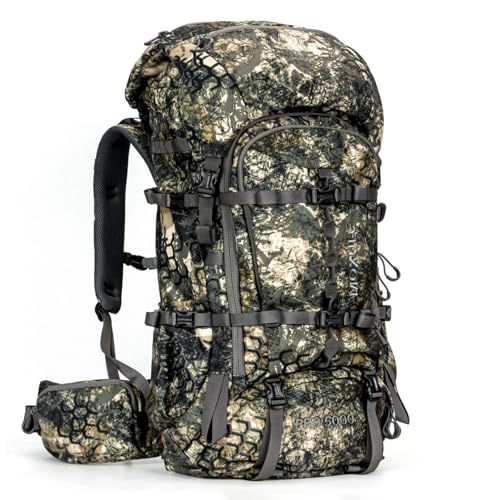
MOXULE Pro 5000 Camo Frame Backpack with Rain Cover
- ✓ Light, sturdy frame
- ✓ Flexible meat-haul system
- ✓ Detachable top hat
- ✕ A bit heavy when not loaded
- ✕ Complex to master early on
| Frame System | Ergonomic aluminum frame with air suspension; detachable frame (fully removable) supports modular use with top hat and compatibility with MOXULE 40L/60L/80L packs |
| Frame Weight | 3.3 lb (1.5 kg) |
| Total System Weight | 7.04 lb (3.19 kg) |
| Pack Capacity and Expansion | Frame pack capacity 5,000 cubic inches; expandable meat shelf adds up to 2,500 cubic inches for total 7,500 cubic inches |
| Load Capacity | Supports approximately 150 lb (68 kg) payload |
| Accessory and Carry Features | Detachable top hat converts to daypack; detachable rifle holder mounts front or side; integrated rain cover with rifle outlet; bottom shoe pocket; adjustable shoulder height and hip belt; meat shelf and rifle/bow carry compatibility |
The MOXULE Pro 5000 practically sniffs out weight when you lift it, then smiles back at you with a frame that feels lighter than it looks. I noticed the aluminum skeleton first—it’s sturdy, yet surprisingly slim, and the air-suspension cushions the sting of long climbs.
You’ll feel the difference as soon as you step onto a ridge and the torso-to-hip balance settles in.
The detachable top hat is a clever trick you’ll use more than you expect. It converts to a compact daypack without sacrificing the frame’s support, and the options for mounting a rifle or bow are genuinely handy when you’re shifting between stalks.
The fabric feels rugged but not bulky, with YKK zippers that glide nicely and a rain cover that tucks away neatly.
In real-world use, you’ll love the 5,000 cubic inches of frame capacity, plus the expandable meat shelf that adds another 2,500 cubic inches. That means you can haul a deer or elk with confidence, and still keep essentials within easy reach.
The adjustable lumbar and hip belt finally make long days tolerable, so you don’t start aching at the hips after mile 12.
Setup is straightforward, and the modular frame system gives you flexibility if you want to pair it with other MOXULE packs down the line. The bottom shoe pocket and well-placed pockets keep gear organized, which pays off when you’re bouncing between glassing sessions and packouts.
Overall, it feels designed for serious backcountry hunts, not just casual weekend trips.
MOXULE Pro 2400 Camo Frame Backpack with Rain Cover

- ✓ Comfortable load distribution
- ✓ Modular, expandable design
- ✓ Meat-haul capability
- ✕ Heavier when fully loaded
- ✕ Higher price point
| Frame and Suspension | Ergonomic aluminum frame with air-suspension |
| Frame Weight | 3.3 lb |
| Total System Weight | 5.5 lb |
| Capacity (Frame Pack) | 2400 cubic inches |
| Meat-Haul Expansion Capacity | Additional 2500 cubic inches between frame and bag, supports ~150 lb |
| Detachable Top Hat / Daypack): | Detachable hat converts to a small daypack with stowable shoulder straps; frame can attach independently |
You’re staring down a chilly dawn, pack on your back, and you realize your old frame just isn’t cutting it. The MOXULE Pro 2400 hides in your hands like a ready-to-hunt tool, not a burden.
I tucked the meat shelf in first and felt the weight float thanks to the air-suspension and a climbs-friendly hip belt.
The frame’s aluminum setup is surprisingly slim yet sturdy. It distributes load without pinching your shoulders, even when the pack is fully loaded.
That modular frame system is where it shines—remove it, attach it to the top hat, or pair with the 40L/60L/80L MOXULE packs for longer trips.
When you need capacity, this thing expands like a real backcountry workhorse. The 2400 cubic inches in the frame pack plus an extra 2,500 with the meat shelf means you can haul meat or gear without compromising balance.
It feels secure, not bulky, as you maneuver rocks or ascend a line.
I used the detachable top hat for a quick day hunt and appreciated the stowable shoulder straps; it converts into a compact daypack when you’re scouting. The dedicated rain cover outlet is thoughtful—no fishing for a dry sleeve in a sudden squall.
Everything’s lined with rugged materials, YKK zippers, and heavy nylon webbing, so you don’t have to babysit seams on rough terrain.
Bottom line, you’ll notice the difference in comfort and adaptability on multi-day hunts. The Pro 2400 isn’t gimmicky; it’s built to actually move with you, across variable loads and terrain.
MOXULE Pro 2400 Frame Backpack – Meat Hauler Pack, Green

- ✓ Very supportive frame
- ✓ Modular and expandable
- ✓ Meat-haul ready
- ✕ Heavier framework
- ✕ Higher price
| Frame material | Aluminum frame with air-suspension |
| Frame weight | 3.3 lb (frame only) |
| Total system weight | 5.5 lb (frame + pack) |
| Frame capacity | 2400 cubic inches |
| Expandable meat-haul capacity | Additional 2500 cubic inches via meat shelf |
| Donor load capacity | Supports ~150 lb in meat/gear hauling |
| Detachable top hat functionality | Top hat converts to a small daypack with stowable shoulder straps; frame can be attached independently |
| Material and components | 500D nylon, water-repellant finish, YKK zippers, Duraflex buckles |
The first time I zipped this MOXULE Pro 2400 Frame onto my pack, I noticed the frame’s aluminum rails click into place with a reassuring heft. I wasn’t expecting how quickly the meat shelf would feel like part of the system rather than an afterthought.
It’s a strange mix of “weight-ready” and “snug in, not bulky.”
You’ll feel the difference as soon as you shoulder it. The air-suspension and wide, soft shoulder straps disappear under load, even with the frame attached.
The hip belt is profile-adjustable, and I found dialing it in saved my hips after a long day of ascending and gutting at camp.
In the field, the modular frame shines. You can detach it and still use the top hat, or pair it with MOXULE 40L/60L/80L packs for bigger hunts.
That versatility pays off when you’re shuttling gear between treestands and a gut pile setup. The meat shelf expands by up to 2,500 cubic inches, which makes hauling meat feel feasible rather than a bottleneck.
Construction feels rugged: 500D nylon, water-repellent finish, sturdy YKK zippers, and dependable Duraflex hardware. It’s built to endure long days and rough terrain, with thoughtful pockets that keep critical items accessible without rummaging.
The detachable top hat is a nice touch, converting to a daypack when you’re not hunting, and the rain cover includes a dedicated outlet for side carry.
If you’re chasing a backcountry pack that grows with your trip, this one handles the transition well. It’s not featherweight, but the support, modularity, and meat-haul capability are genuinely game-changing.
Eberlestock Brooks 3500 Pack – Ultralight EMOD Attachment

- ✓ Ultra-light for 2-3 day trips
- ✓ EMOD-ready balance
- ✓ Quick-access storage
- ✕ Limited frame compatibility
- ✕ No dedicated hydration sleeve
| Capacity | 3,626 cubic inches |
| Weight | 1 lb 15 oz (approx. 0.88 kg) |
| Material | 500D ripstop nylon |
| EMOD Compatibility | Designed for Eberlestock Modframe or Mainframe (sold separately); EMOD integration for load-hauling |
| Closure/Access | Roll-top design with full front zip access |
| Storage Features | Stretch side pocket and dual front stretch pockets; side, front, and bottom compression straps with locking buckles |
You’re inching through dense pinyon pine with a light pack on your back, hands free to swing around branches, when the Brooks 3500 suddenly feels like it’s barely there. The roll-top opens with a smooth tug, revealing organized space that somehow feels bigger than the numbers suggest.
That 3,600 cubic inches isn’t just on a tag—it translates to real, usable room for day-one layering and a compact scent bag stash.
The sturdy 500D ripstop holds up as you crouch into a saddle between two fallen logs. You notice how the EMOD connection clips cleanly into the frame, turning this ultralight shell into an honest load-hauler when you need it.
The balance stays calm as you pivot through a tight stand, with compression straps locking gear in place and cutting down any bounce.
Access is where this pack shines. Front zip access means you don’t have to unzip the roll-top every time you need a beanie or a quick camera switch.
The stretch pockets on the sides are handy for water bottles or a small wind shell, and the dual front pockets pull out fast gear without a full unpack.
Over a couple of backcountry days, you’ll appreciate the weight. It rides close to your hips, not your shoulders, which makes long approaches less tiring.
It’s built to handle weather and rough trails, yet remains surprisingly flexible for switching from a 2-day to a 3-day plan with the adjustable capacity.
If you’re chasing a minimalist setup that still leaves room for essentials, this EMOD-ready setup is a strong fit. It won’t overwhelm you with features you won’t use, but it will outlast the rough days you actually take it on.
What Features Should the Best Backcountry Hunting Backpack Have?
The best backcountry hunting backpack should incorporate several key features to enhance functionality and comfort during outdoor expeditions.
- Durability: A high-quality backcountry hunting backpack should be made from rugged, weather-resistant materials such as nylon or polyester. This ensures it can withstand harsh elements, rough terrain, and the wear and tear of heavy use while protecting your gear from moisture and abrasion.
- Comfortable Suspension System: A well-designed suspension system is crucial for distributing weight evenly across your back and hips. Look for padded shoulder straps, a padded hip belt, and an adjustable torso length to prevent fatigue and discomfort during long treks.
- Capacity: The ideal backpack should have sufficient capacity to carry all necessary gear without being overly bulky. Typically, a volume of 40 to 70 liters is recommended for multi-day trips, allowing space for clothing, food, and hunting equipment.
- Organization and Accessibility: Multiple compartments and pockets enhance organization, enabling quick access to essential items such as tools, food, or first aid kits. Features like side pockets, a front pocket, and a dedicated hydration compartment can facilitate easy retrieval and efficiency while on the move.
- Hydration System Compatibility: A backpack that accommodates hydration reservoirs or has external water bottle pockets is advantageous for staying hydrated during hunts. This feature allows for easy access to water without stopping to dig through your gear.
- Weight Distribution and Load Lifters: Look for backpacks with load lifters that help pull the weight towards your body, improving stability and comfort. This design allows for better maneuverability, especially when traversing uneven terrain.
- Attachment Points: External attachment points such as daisy chains, gear loops, or compression straps are essential for securing additional gear like trekking poles, sleeping bags, or even a bow. This versatility enables hunters to expand the carrying capacity and customize the pack to their needs.
- Camouflage Patterns: For hunting purposes, a backpack featuring effective camouflage patterns can help you blend into the surroundings, reducing the chances of being detected by wildlife. This is particularly important for hunters looking to enhance their stealth during the hunt.
- Weight: The overall weight of the backpack itself should be considered; lighter packs are preferable as they reduce the overall load during long hikes. However, it’s essential to balance weight with durability and features to ensure performance is not compromised.
How Crucial is Weight When Selecting Your Backpack?
Weight is a critical factor when selecting your backpack for backcountry hunting, as it can significantly influence your mobility and endurance during long treks.
- Weight of the Backpack: The overall weight of the backpack itself is essential because a lighter pack reduces the total load you carry, allowing for greater stamina over extended periods. Heavy backpacks can lead to fatigue and discomfort, which can hinder your hunting experience.
- Weight Distribution: A backpack that distributes weight evenly can prevent strain on your back and shoulders, making it easier to carry heavy loads. Proper weight distribution enhances comfort and allows for better balance during movement, especially when traversing uneven terrain.
- Load Capacity: The weight capacity of the backpack is crucial as it determines how much gear you can carry without exceeding the optimal weight limit. Choosing a pack that suits your needs ensures you can bring necessary supplies without being burdened by excessive weight.
- Material Weight: The materials used in the construction of the backpack also affect its weight. Lightweight, durable materials offer the advantage of less weight without compromising on strength or resistance to the elements, making them ideal for backcountry conditions.
- Additional Features: Consider the weight of added features like pockets, straps, and frames. While these can enhance functionality, they can also increase the overall weight of the pack, so it is essential to find a balance between usability and weight.
What Storage Capacity Do You Need for Your Hunting Trips?
When selecting a backcountry hunting backpack, the storage capacity you need depends on various factors including the duration of your trip, the type of game you’re hunting, and the gear you plan to carry.
- Day Packs (20-40 liters): Ideal for short trips or day hunts, these packs provide enough space for essentials like water, snacks, and a first-aid kit. They are lightweight and designed for quick access to gear, making them perfect for hunters who travel light.
- Weekend Packs (40-70 liters): These packs are suited for multi-day trips, offering additional space for extra clothing, food, and gear. They often have compartments for organization and are equipped to carry heavier loads comfortably, which is essential for longer excursions.
- Extended Packs (70+ liters): Designed for extended hunting trips, these packs can carry everything you need for a week or more in the wilderness. They feature robust support systems and numerous pockets to keep your gear organized, making them ideal for serious hunters targeting large game.
- Meat Haulers: Some packs are specifically designed to transport game meat after a successful hunt. They often include a frame for support and specialized compartments to ensure the meat is carried securely and separated from other gear.
Why Is Durability Essential for a Backcountry Hunting Backpack?
The underlying mechanism for this necessity lies in the materials and construction of the backpack. High-quality fabrics, reinforced stitching, and weather-resistant coatings are critical in providing the strength and longevity required for backcountry adventures. For instance, nylon ripstop and Cordura fabrics are commonly used for their resistance to tears and abrasions, as noted by the American Backpacking Association. When a backpack is built with these durable materials, it can endure the rigors of carrying heavy equipment and navigating through challenging terrains, which directly correlates to its longevity and reliability in the field.
Moreover, the wear and tear from frequent use can lead to structural failures in poorly made backpacks, such as broken zippers or torn seams. When these issues arise during a hunting trip, they can compromise the ability to safely carry essential gear and supplies. Research indicates that investing in a durable backpack reduces the risk of such failures, allowing hunters to focus on their activities rather than gear malfunctions (Journal of Outdoor Recreation and Tourism, 2020). This causal relationship emphasizes why durability is a non-negotiable feature in the best backcountry hunting backpacks.
What Are the Top Brands Known for Backcountry Hunting Backpacks?
The top brands known for backcountry hunting backpacks are:
- Mystery Ranch: Known for their rugged construction and innovative designs, Mystery Ranch backpacks are favored by serious hunters. Their packs often feature load-bearing frames and customizable configurations, allowing hunters to carry heavy gear comfortably over long distances.
- Badlands: Badlands backpacks stand out for their durability and weather resistance, making them ideal for harsh backcountry conditions. Many of their models incorporate advanced materials and ergonomic designs that enhance mobility while providing ample storage for essential gear.
- Kuiu: Focused on lightweight materials and advanced technology, Kuiu backpacks are designed for serious backcountry hunters looking to minimize weight without sacrificing functionality. They typically include features like hydration compatibility and adjustable suspension systems to ensure comfort during prolonged use.
- Stone Glacier: Stone Glacier specializes in ultralight backpacks that are both functional and extremely lightweight, catering to hunters who prioritize mobility on challenging terrain. Their packs often come with modular components, allowing hunters to customize their loadout based on specific hunting trips.
- Alps OutdoorZ: Alps OutdoorZ offers a range of hunting backpacks that are both affordable and feature-rich, making them a popular choice among budget-conscious hunters. Their packs are designed with practical features like multiple pockets and attachment points, enhancing organization and accessibility in the field.
- Exos Mountain Gear: Exos Mountain Gear is known for their high-performance hunting packs that combine advanced materials with ergonomic designs. Their backpacks often emphasize comfort during long treks, featuring adjustable harness systems and effective load distribution to reduce fatigue.
Which Brands Offer the Best Comfort in Their Backpacks?
The main brands known for their comfortable backcountry hunting backpacks include:
- Osprey: Renowned for their ergonomic designs, Osprey backpacks feature adjustable harnesses and hip belts that distribute weight evenly, minimizing fatigue during long treks. Their Anti-Gravity suspension system further enhances comfort by allowing for ventilation and reducing pressure on the back.
- Badlands: Badlands backpacks are specifically designed for hunters, incorporating features such as their patented KXO-32 fabric, which is both quiet and durable. The design also includes an internal frame and adjustable straps that provide exceptional support and comfort, even when carrying heavy loads.
- Mystery Ranch: Mystery Ranch backpacks are known for their unique three-zip design, which allows for easy access to gear while maintaining a comfortable fit. Their load-bearing harness system is highly adjustable, offering a customized fit that ensures stability and comfort when moving through rugged terrains.
- ALPS OutdoorZ: ALPS OutdoorZ focuses on functional designs with features like padded shoulder straps and a supportive waist belt to enhance comfort during extended use. Their backpacks also include multiple compartments for organization while ensuring that the weight is distributed effectively across the body.
- KUIU: KUIU backpacks are designed with lightweight materials that do not compromise on comfort, providing hunters with the ability to carry necessary equipment without added bulk. Their adjustable straps and lightweight frames help in maintaining balance, even on uneven ground, making them ideal for backcountry hunting.
What Accessories Should You Consider for Your Backcountry Pack?
When selecting accessories for your backcountry hunting backpack, consider items that enhance functionality and comfort during your outdoor adventures.
- Hydration System: A hydration reservoir or water bottles are essential for staying hydrated on long treks. Many backpacks come with a designated compartment for a hydration bladder, allowing for hands-free drinking through a tube.
- First Aid Kit: A compact first aid kit is crucial for addressing minor injuries and emergencies in the backcountry. It should include bandages, antiseptic wipes, pain relievers, and any personal medications to ensure you are prepared for unexpected situations.
- Multi-Tool: A multi-tool provides versatility and can serve multiple purposes, from making repairs to preparing food. Look for one that includes a knife, pliers, and various screwdriver heads to cover a range of tasks.
- Emergency Shelter: An emergency bivvy or tarp can provide crucial protection against the elements if you become stranded. Lightweight and compact options are available that can easily fit into your pack without taking up much space.
- Navigation Tools: A compass and map or a GPS device are essential for safe navigation in remote areas. These tools help prevent getting lost and ensure you can find your way back to your campsite or exit point.
- Food Storage Containers: Airtight containers or resealable bags can keep your food fresh and protected from wildlife. Choose lightweight options that won’t add unnecessary bulk to your pack while ensuring your provisions are secure.
- Headlamp or Lantern: A reliable light source is vital for navigating at night or during low-light conditions. Headlamps are particularly useful since they allow for hands-free operation, while lanterns can illuminate a larger area at your campsite.
- Bear Canister: If you’re in bear country, a bear canister is a secure way to store food and scented items. These canisters are designed to withstand animal attempts to access their contents and help keep wildlife at a safe distance.
- Insulation Layer: Packing an insulation layer such as a fleece or down jacket can provide warmth during chilly nights or when the weather changes unexpectedly. Lightweight and compressible options are available that fit easily into your pack without taking up excessive space.
- Dry Bags: Utilizing dry bags can protect your gear from moisture, especially during rainy conditions or river crossings. These waterproof bags come in various sizes and can be used to store clothing, electronics, and sleeping gear securely.
How Do You Maintain and Care for Your Backcountry Hunting Backpack?
Maintaining and caring for your backcountry hunting backpack is essential for ensuring its longevity and performance.
- Regular Cleaning: It’s important to clean your backpack regularly to remove dirt, grime, and blood from your hunting trips. Use a mild detergent and warm water, avoiding harsh chemicals that could damage the fabric.
- Proper Storage: Store your backpack in a cool, dry place when not in use, and avoid cramming it into tight spaces where it can lose its shape. Consider using a stuff sack or hanging it to maintain its form.
- Inspecting for Damage: After each trip, inspect your backpack for any signs of wear and tear, such as frayed straps or damaged zippers. Addressing small issues promptly can prevent bigger problems down the road.
- Waterproofing: Depending on the materials of your backpack, it may require periodic waterproofing treatments to maintain its resistance to moisture. This can usually be done with sprays specifically designed for outdoor gear.
- Organizing Gear: Keep your gear organized within the backpack to avoid unnecessary stress on specific areas of the fabric and zippers. Use internal pockets and pouches to distribute weight evenly and protect items from damage.
- Using Compression Straps: Make use of compression straps to stabilize your load, especially when your backpack is not fully packed. This helps in maintaining the backpack’s shape and prevents items from shifting during transit.
- Avoid Overloading: Be mindful of the weight you carry in your backpack to prevent damage to its seams and zippers. Adhering to the manufacturer’s weight recommendations will ensure it performs optimally.