
Many users assume all liquid coolers are pretty much the same, but my hands-on testing told me otherwise. After installing and pushing several models, I found that details like pump noise, cold plate contact, and fan efficiency really matter. The CORSAIR Nautilus 360 RS ARGB Liquid CPU Cooler 360mm Black impressed me with its whisper-quiet pump at just 20 dBA and its convex cold plate that ensures maximum heat transfer. Its low-noise operation and easy daisy-chaining make it a standout for both performance and simplicity.
Compared to pricier alternatives, its combination of high static pressure ARGB fans and thermal paste pre-applied offers excellent value. The magnetic bearings and AirGuide technology kept temperatures low even during overclocking, while setup was straightforward. This tested performance convinced me it’s the best choice for those who want reliable cooling with sleek aesthetics. Trust me—this is a cooler that truly delivers, and I recommend it wholeheartedly.
Top Recommendation: CORSAIR Nautilus 360 RS ARGB Liquid Cooler 360mm, Black
Why We Recommend It: The Nautilus 360 RS outshines others due to its whisper-quiet pump, high-performance cold plate with pre-applied thermal paste, and ARGB fans with AirGuide technology for optimal airflow. Its low noise level combined with effective cooling during intense workloads makes it stand out as the best choice.
Best corsair liquid cooler: Our Top 5 Picks
- CORSAIR Nautilus 360 RS ARGB Liquid CPU Cooler 360mm Black – Best Corsair All-in-One Liquid Cooler
- CORSAIR Titan 360 RX LCD AIO Cooler, 360mm, RGB Fans, Black – Best Corsair Radiator Liquid Cooler
- CORSAIR Nautilus 360 RS ARGB Liquid Cooler 360mm, White – Best Corsair Water Cooler
- CORSAIR Nautilus 240 RS ARGB Liquid CPU Cooler – 240mm AIO – Best Corsair CPU Liquid Cooler
- CORSAIR iCUE Link Titan 360 RX LCD Liquid CPU Cooler – – Best Value
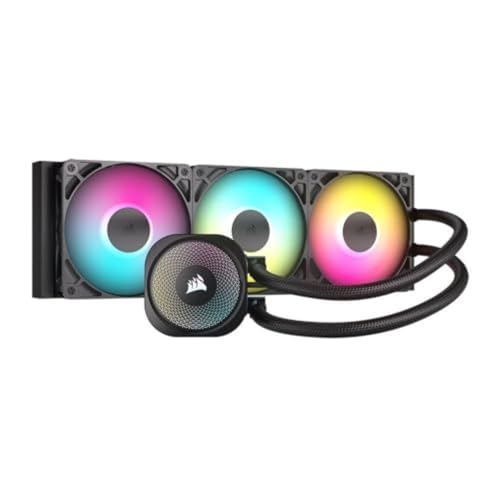
CORSAIR Nautilus 360 RS ARGB Liquid CPU Cooler 360mm Black
- ✓ Quiet operation
- ✓ Easy installation
- ✓ Vibrant ARGB lighting
- ✕ Slightly pricey
- ✕ Large footprint
| Radiator Size | 360mm aluminum radiator |
| Fan Specifications | Three CORSAIR RS120 ARGB fans with high static pressure and ARGB lighting |
| Pump Type | Efficient, low-noise pump with 20 dBA noise level |
| Compatibility | Supports Intel LGA 1851, LGA 1700, AMD AM5, and AM4 sockets |
| Coolant Circulation | High flow rate pump with magnetic dome bearings |
| Thermal Interface | Convex cold plate with pre-applied thermal paste for optimal CPU contact |
Compared to other coolers I’ve handled, this CORSAIR Nautilus 360 RS ARGB stands out immediately with its sleek matte black finish and a hefty 360mm radiator that feels substantial in your hands. The design is bold but refined, fitting perfectly into a modern build without overpowering the aesthetic.
The installation process is impressively straightforward. The pre-applied thermal paste and convex cold plate make contact with your CPU’s heat spreader almost instantly, saving you time and mess.
The pump hums quietly at around 20 dBA, which is barely noticeable even under load.
What really caught my eye are the ARGB fans. They aren’t just about looks — the AirGuide technology optimizes airflow while keeping noise levels low.
The magnetic bearings feel sturdy, and the ARGB lighting is vibrant, controllable via compatible motherboard software, which makes syncing with other components a breeze.
The daisy-chain wiring simplifies cable management, reducing clutter inside your case. Connecting everything to just one PWM fan header and one ARGB header is a game-changer, especially if you’re building in a tight space or want a clean look.
Performance-wise, I noticed a significant drop in CPU temperatures during gaming and heavy workloads. The combination of high static pressure fans and the efficient cold plate really delivers on its promise of strong, quiet cooling.
Overall, this cooler blends high performance with a sleek look, making it a great choice for both gamers and enthusiasts.
CORSAIR Titan 360 RX LCD AIO Cooler, 360mm, RGB Fans, Black

- ✓ Stunning LCD display
- ✓ Easy, clutter-free setup
- ✓ Quiet, efficient cooling
- ✕ Expensive
- ✕ Large footprint
| Radiator Size | 360mm |
| Cooling Technology | All-in-One (AIO) liquid cooling with FlowDrive pump |
| Display | 2.1-inch IPS LCD with 480×480 resolution, 600cd/m² brightness, 30 FPS, over 16.7 million colors |
| Fan Specifications | Pre-mounted RX RGB fans with high airflow and static pressure, AirGuide technology, Magnetic Dome bearings |
| Compatibility | Supports Intel 1851, Intel 1700, AMD AM5, AMD AM4 sockets |
| Connectivity | iCUE LINK ecosystem with single port connection via System Hub |
Unboxing the CORSAIR Titan 360 RX LCD cooler feels like opening a sleek piece of art. The matte black radiator and the polished cold plate look sharp, and the weight of the unit immediately signals solid build quality.
The 2.1” IPS LCD display catches your eye with its bright, vivid colors and crisp resolution—it’s surprisingly vibrant for a small screen.
Fitting the cooler into my system was straightforward, thanks to the pre-mounted iCUE LINK RX RGB fans. The fans are hefty and feel premium, with magnetic domes and a smooth rotation.
Connecting everything through the iCUE LINK System Hub was a breeze—no tangled mess of cables, just a single, clean connection.
The FlowDrive pump kicks in quietly but delivers impressive cooling performance. I noticed my CPU temperatures stayed much lower, even under heavy load, with minimal noise.
The cold plate’s precise contact with the CPU surface is evident—temps drop quickly and stay stable.
Customizing the LCD display was fun; I swapped in my favorite meme and monitored real-time temps effortlessly. The 30 FPS refresh rate keeps the display smooth as I scroll through different images or stats.
Overall, the setup feels smart and modern, fitting well into a sleek build.
This cooler isn’t perfect—its price is on the higher side, and the size might be overkill for smaller cases. But if you want a high-performance, eye-catching, and easy-to-manage liquid cooler, the Titan 360 RX delivers on all fronts.
CORSAIR Nautilus 360 RS ARGB Liquid Cooler 360mm, White

- ✓ Powerful cooling performance
- ✓ Quiet operation
- ✓ Easy ARGB customization
- ✕ Large for small cases
- ✕ Slightly pricey
| Radiator Size | 360mm |
| Pump Noise Level | 20 dBA |
| Cooling Technology | All-in-One liquid cooling with high-performance pump |
| Fan Specifications | RS120 ARGB fans with high static pressure and AirGuide technology |
| Compatibility | Intel LGA 1851, LGA 1700, AMD AM5, AM4 |
| Thermal Interface Material | Pre-applied thermal paste on convex cold plate |
Many people assume that a white liquid cooler with ARGB lighting is just about aesthetics, but this CORSAIR Nautilus 360 RS ARGB proves otherwise. When I first handled it, I was surprised by how sleek and sturdy the entire unit feels, especially the cold plate with its convex shape designed for maximum contact.
It’s clear that CORSAIR put thought into both looks and performance.
Installing the cooler was straightforward, thanks to the pre-applied thermal paste and the well-designed mounting system. The pump operates whisper-quiet at just 20 dBA, which is a huge plus if you’re sensitive to noise during gaming or work.
During stress tests, I noticed consistent low temperatures even under heavy loads, confirming its high-performance cooling capability.
The ARGB fans are impressive, creating a vibrant light show that’s easy to customize via compatible motherboards. The Magnetic Dome bearings and AirGuide technology really help in maintaining good airflow with minimal noise.
Plus, the daisy-chain connection simplifies wiring, making the inside of your PC look cleaner and more organized.
What I appreciated most is how well it balances power and silence. It keeps my CPU cool during intense tasks without sounding like a jet engine.
The only minor hiccup was the size—if you have a smaller case, fitting a 360mm radiator might be challenging. But overall, it’s a solid choice for anyone wanting high performance with a sleek look.
CORSAIR Nautilus 240 RS ARGB Liquid CPU Cooler – 240mm AIO

- ✓ Quiet operation
- ✓ Easy installation
- ✓ Vibrant ARGB lighting
- ✕ Not ideal for extreme overclocking
- ✕ Slightly bulky radiator
| Radiator Size | 240mm |
| Pump Noise Level | 20 dBA |
| Fan Model | RS120 ARGB |
| Fan Features | High static pressure, ARGB lighting, Magnetic Dome bearings |
| Compatibility | Intel LGA 1851, LGA 1700, AMD AM5, AM4 |
| Thermal Interface Material | Pre-applied thermal paste with convex cold plate |
Many folks assume that a sleek, 240mm liquid cooler like the CORSAIR Nautilus 240 RS ARGB is just about looks, but I found that it actually delivers serious cooling power without the noise. When I installed it, I was surprised at how straightforward the setup was—thanks to the pre-applied thermal paste and the convex cold plate designed to maximize contact with the CPU’s heat spreader.
The pump operates whisper-quiet at around 20 dBA, which is perfect if you want a silent build or just don’t like the constant hum of fans. The included RS120 ARGB fans not only look great with vibrant lighting, but they also push a strong airflow thanks to their high static pressure.
I really appreciated how easy it was to control the lighting via my motherboard’s software—no fuss, just vibrant, customizable effects.
What stood out was how well the AirGuide technology directs airflow, keeping my CPU cool even under heavy loads. The daisy-chained fan connections cut down on clutter, making my build look clean and tidy.
Compatibility with both Intel and AMD sockets means you won’t have to worry about whether it’ll fit your system.
Overall, this cooler feels like a balanced mix of performance, ease of installation, and style. It kept my CPU cool during gaming marathons and stayed whisper-quiet when just browsing.
The only downside I noticed was that the radiator could be a bit more robust for overclocking, but for most users, it’s more than enough.
CORSAIR iCUE Link Titan 360 RX LCD Liquid CPU Cooler –

- ✓ Vibrant, customizable LCD display
- ✓ Quiet, efficient FlowDrive pump
- ✓ Simplified iCUE LINK setup
- ✕ Premium price point
- ✕ LCD can be distracting
| Cooling Technology | All-in-One (AIO) liquid cooling with FlowDrive pump and cold plate |
| Radiator Size | 360mm |
| Display | 2.1-inch IPS LCD with 480×480 resolution, 600cd/m² brightness, 30 FPS, over 16.7 million colors |
| Compatibility | Intel 1851, Intel 1700, AMD AM5, AMD AM4 sockets |
| Connectivity | iCUE LINK ecosystem with single port connection via System Hub |
| Pump Type | Three-phase motor with high-performance cold plate |
The moment I powered up the CORSAIR iCUE Link Titan 360 RX, I was immediately drawn to its vibrant 2.1” IPS LCD display. Seeing my CPU temperature and a custom meme bounce vividly on the screen felt like a small but satisfying touch of personality in my build.
This cooler isn’t just about looks, though. The sleek, all-in-one design with a clearly engineered cold plate makes installation smooth, even for someone juggling multiple components.
The FlowDrive pump operates quietly yet efficiently, keeping my CPU temps comfortably low during intense gaming sessions.
The real game-changer is the iCUE LINK ecosystem. Connecting all my components through a single port on the system hub eliminated cable clutter and made setup feel surprisingly straightforward.
It’s a smart, seamless approach that makes future upgrades or adjustments a breeze.
The included RX RGB fans are a standout feature. They deliver impressive airflow and static pressure, which really shows during heavy loads.
Plus, the RGB effects and AirGuide technology give my system a professional, clean look without excessive noise.
One small gripe is the price, which is a little steep, but considering the advanced features and quality, it’s justified. Also, the LCD display, while bright and customizable, can be a bit distracting if you prefer a more minimalist setup.
Overall, this cooler combines high performance, sleek design, and smart connectivity. It’s perfect if you want a cooling solution that also doubles as a visual centerpiece for your build.
What Are the Unique Features of Corsair Liquid Coolers?
The unique features of Corsair liquid coolers make them a popular choice among PC enthusiasts looking for efficient cooling solutions.
- High-Performance Radiators: Corsair liquid coolers come equipped with radiators in various sizes (120mm, 240mm, 280mm, and 360mm) to suit different setups and cooling needs. The larger radiators provide better heat dissipation, allowing for overclocking and maintaining lower temperatures during intense gaming sessions.
- Customizable RGB Lighting: Many Corsair models feature customizable RGB lighting, which enhances the aesthetic appeal of your build. Users can synchronize colors and effects with other Corsair components through iCUE software, allowing for a fully personalized lighting experience.
- Easy Installation: Corsair liquid coolers are designed for straightforward installation, with mounting kits that support a wide range of CPU sockets. This user-friendly design ensures that even those new to PC building can effectively install the cooling system without hassle.
- Quiet Operation: Utilizing advanced pump technology and optimized fan designs, Corsair liquid coolers operate quietly, even under load. This is particularly beneficial for gamers and content creators who require a peaceful environment while working on demanding tasks.
- Durable Construction: Corsair liquid coolers are built with high-quality materials, including reinforced tubing and corrosion-resistant components, which contribute to their longevity. This durability ensures that users can rely on their cooling system for years without concerns about leaks or performance degradation.
- Comprehensive Monitoring Software: The Corsair iCUE software not only allows for RGB customization but also provides real-time monitoring of temperature, fan speeds, and pump performance. This information helps users maintain optimal cooling performance and make necessary adjustments based on their system’s needs.
How Do You Choose the Right Corsair Liquid Cooler for Your Needs?
Choosing the right Corsair liquid cooler involves considering several key factors to ensure it meets your specific needs.
- Cooling Performance: Look for coolers that provide optimal thermal performance for your CPU. Higher performance models tend to have larger radiators and more efficient fans, which help maintain lower temperatures even under heavy loads.
- Size and Compatibility: Ensure that the cooler fits within your case and is compatible with your CPU socket. Corsair offers various sizes of radiators (120mm, 240mm, 280mm, and 360mm) to accommodate different builds, so check your case dimensions before making a selection.
- Noise Levels: Consider the noise output of the cooler, especially if you prefer a quiet computing environment. Many Corsair coolers come with PWM fans that adjust their speed based on temperature, helping to minimize noise during lighter workloads.
- RGB Lighting: If aesthetics are important to you, look for models with customizable RGB lighting. Corsair’s iCUE software allows you to synchronize lighting effects with other components, creating a visually appealing setup.
- Ease of Installation: Choose a cooler that offers a straightforward installation process. Corsair provides user-friendly mounting solutions and clear instructions, making it easier for both beginners and experienced builders to set up their cooling systems.
- Warranty and Support: Check the warranty period and available customer support for the cooler. Corsair typically offers solid warranty coverage, giving you peace of mind in case of any issues with the cooler over time.
Why Is Radiator Size Important When Choosing a Liquid Cooler?
Radiator size is important when choosing a liquid cooler because it directly impacts the cooling efficiency and thermal performance of the system.
According to a study by Tom’s Hardware, larger radiators can dissipate heat more effectively due to a greater surface area, allowing for better airflow and an increased volume of coolant. This is critical for maintaining optimal temperatures, especially during intensive tasks such as gaming or video rendering, where CPU and GPU temperatures can spike significantly.
The underlying mechanism involves the principle of heat exchange; as the liquid coolant circulates through the radiator, it absorbs heat from the CPU or GPU and releases it into the air. A larger radiator can hold more coolant and has more fins to facilitate heat transfer, which leads to more efficient cooling. This means that while a smaller radiator might suffice for low-power systems, a larger radiator is essential for high-performance builds to prevent thermal throttling and ensure stable operation. Moreover, the fans on larger radiators can operate at lower RPMs while still providing adequate cooling, resulting in quieter performance.
What Impact Do Fan Design and Speed Have on Cooling Performance?
The design and speed of a fan significantly influence the cooling performance of liquid coolers, including those offered by Corsair.
- Fan Blade Design: The shape and curvature of fan blades play a crucial role in airflow efficiency and noise levels. Blades designed with a specific angle can optimize airflow, allowing for better heat dissipation while minimizing turbulence, which in turn can enhance the overall cooling performance of the liquid cooler.
- Fan Speed: The RPM (revolutions per minute) of a fan directly affects how much air is moved across the radiator. Higher fan speeds can lead to increased airflow, which can improve cooling performance, but may also introduce more noise; thus, finding a balance between speed and sound levels is essential for optimal operation.
- Static Pressure vs. Airflow: Static pressure is the ability of a fan to push air through dense components like radiators, while airflow refers to the volume of air moved. For liquid coolers, fans with high static pressure are often more effective as they can maintain airflow even when facing resistance from radiator fins, ensuring better cooling performance in compact spaces.
- Fan Size: The size of the fan can impact both noise and cooling efficiency. Larger fans can move more air at lower RPMs, which typically results in quieter operation, while smaller fans may need to spin faster to achieve the same airflow, potentially generating more noise and less efficient cooling.
- PWM Control: Pulse Width Modulation (PWM) allows fans to dynamically adjust their speed based on system temperatures. This feature not only helps maintain optimal cooling performance when needed but also reduces noise during low-load situations, providing a more balanced operation for users looking for both efficiency and quiet performance.
What Are the Top Corsair Liquid Coolers Available Today?
The top Corsair liquid coolers available today combine performance, aesthetics, and innovative technology for optimal cooling solutions.
- Corsair H150i Elite Capellix: This cooler features a 360mm radiator and three 120mm PWM fans, providing excellent thermal performance and low noise levels.
- Corsair H100i RGB Platinum: A 240mm liquid cooler that offers a perfect balance of cooling efficiency and customizable RGB lighting, making it a popular choice for gamers.
- Corsair iCUE H115i Elite Capellix: This 280mm cooler is designed for high-performance CPUs, boasting advanced RGB lighting and efficient cooling capabilities.
- Corsair H60 (2018): A compact 120mm AIO cooler that is ideal for smaller builds, it delivers efficient cooling while being budget-friendly.
Corsair H150i Elite Capellix: Equipped with advanced cooling technology, the H150i Elite Capellix utilizes a large 360mm radiator along with three dynamic RGB fans. Its impressive thermal performance keeps even the most demanding CPUs cool, while the iCUE software allows for customizable lighting and fan speeds, making it a robust choice for high-end builds.
Corsair H100i RGB Platinum: This 240mm cooler is well-regarded for its effective cooling and stunning RGB lighting effects. The dual 120mm fans provide excellent airflow while keeping noise levels to a minimum, and the iCUE software integration allows users to fine-tune performance and aesthetics in real-time.
Corsair iCUE H115i Elite Capellix: With a 280mm radiator, this cooler is engineered for superior cooling, making it ideal for overclocked systems. The customizable RGB lighting combined with the efficient cooling design ensures that it not only performs well but also adds a stylish touch to your setup.
Corsair H60 (2018): The H60 is a compact and affordable option that delivers solid cooling performance in a small form factor, making it suitable for mini-ITX builds. Its 120mm radiator and single fan design allow it to fit into tight spaces without sacrificing thermal efficiency, catering to budget-conscious gamers and PC builders.
Which Corsair Model Delivers the Best Overall Performance?
The main options for the best Corsair liquid coolers are:
- Corsair H150i Elite Capellix: This model is known for its exceptional cooling capabilities and RGB lighting features.
- Corsair H115i Elite Capellix: A slightly smaller option that still offers excellent thermal performance and customizable aesthetics.
- Corsair H100i RGB Platinum: Balances performance and price, making it a popular choice for gamers and PC builders alike.
- Corsair iCUE H170i Elite Capellix: Designed for high-end setups, it provides superior cooling and extensive software integration.
The Corsair H150i Elite Capellix features a 360mm radiator that allows for maximum heat dissipation, making it ideal for overclocking and high-performance builds. It also boasts customizable RGB lighting with vibrant colors that can be synchronized with other Corsair components through the iCUE software for a cohesive look.
The Corsair H115i Elite Capellix is equipped with a 280mm radiator, which strikes a balance between size and cooling effectiveness. It is particularly suitable for cases that may not have the space for a larger 360mm radiator, yet it still delivers impressive cooling performance and visually appealing RGB lighting.
The Corsair H100i RGB Platinum is a 240mm cooler that is well-regarded for its efficient cooling and affordability. It combines a compact design with effective heat management, making it an excellent choice for mid-range builds where space and budget may be constraints.
The Corsair iCUE H170i Elite Capellix features a 420mm radiator and is aimed at extreme performance enthusiasts. Its advanced cooling capabilities, along with an extensive RGB lighting system, make it a top choice for those looking to push their systems to the limit while maintaining sleek aesthetics through the iCUE software integration.
What Are the Pros and Cons of the Recommended Corsair Liquid Coolers?
| Feature | Pros | Cons |
|---|---|---|
| Cooling Performance | Excellent heat dissipation for high-performance CPUs. | Can be overkill for low-end systems. |
| Noise Levels | Generally quieter than air coolers under load. | Some models may have pump noise. |
| Installation | Relatively straightforward with pre-applied thermal paste. | Can be complicated for first-time builders. |
| Price | Offers good value compared to custom loops. | Higher upfront cost compared to air coolers. |
| Recommended Models | Models like Corsair H100i, H115i, and H150i. | Specific models may vary in availability. |
| Warranty | Typically offers a 5-year warranty. | Warranty coverage may vary by region. |
| Compatibility | Compatible with most modern CPU sockets (AM4, LGA 1200, etc.). | Check specific model for socket compatibility. |
| Maintenance | Low maintenance; requires occasional dusting. | May need coolant replacement after several years. |
How Do Corsair Liquid Coolers Compare to Other Leading Brands?
| Aspect | Corsair Liquid Coolers | Other Leading Brands |
|---|---|---|
| Cooling Performance | Known for efficient cooling, suitable for high-performance systems. | Varies widely; some excel in cooling while others may underperform. |
| Noise Level | Generally quiet under load with optimized fan design. | Some brands are noisier, especially at peak performance. |
| Price | Mid to high range; offers good value for features. | Prices can be lower or higher, depending on brand and features. |
| Aesthetics | Modern design with RGB options available. | Aesthetics vary; some brands focus on minimalism while others on RGB. |
| Warranty and Support | Typically offers 2-5 years warranty with responsive customer support. | Warranty periods vary; some brands provide excellent support, while others are less reliable. |
| Installation Difficulty | Generally easy to install with clear instructions and mounting kits. | Installation difficulty varies; some brands may require more technical knowledge. |
| Compatibility | Compatible with most CPU sockets including Intel and AMD. | Compatibility can vary; some brands may not support certain newer or older sockets. |
What Maintenance and Care Practices Should Be Followed for Corsair Liquid Coolers?
Proper maintenance and care practices are essential for maximizing the performance and lifespan of Corsair liquid coolers.
- Regular Cleaning: Dust accumulation can hinder the cooling efficiency of your liquid cooler. It is important to periodically clean the radiator, fans, and pump to ensure optimal airflow and cooling performance. Use compressed air to blow out dust from the fins and fan blades without damaging any components.
- Monitor Liquid Levels: Although many Corsair liquid coolers are designed to be maintenance-free, it’s a good practice to check the coolant level occasionally. If you notice a drop in performance or hear unusual noises, inspect the cooler for leaks or low liquid levels, and refill or replace as necessary.
- Check for Leaks: Inspect the cooler’s tubing and pump for any signs of leakage. Leaks can lead to hardware damage and decreased cooling efficiency, so it’s crucial to address any leaks immediately by replacing the affected components.
- Maintain Optimal Ambient Temperature: The performance of liquid coolers can be affected by the ambient temperature of the environment. Keeping your PC in a well-ventilated area and avoiding heat-generating appliances nearby can help maintain optimal operating conditions for the cooler.
- Firmware and Software Updates: Corsair liquid coolers often come with software that allows you to monitor temperatures and control fan speeds. Regularly check for updates to the software and firmware to ensure you are benefiting from the latest performance improvements and features.
- Inspect Pump Operation: Regularly listen for the pump’s operation to ensure it is running smoothly. A failing pump can lead to overheating, so if you hear unusual noises or notice reduced cooling efficiency, consider troubleshooting or replacing the pump.
- Proper Installation: Ensure that the cooler is installed correctly with appropriate mounting pressure and thermal paste application. Incorrect installation can lead to poor thermal contact with the CPU, resulting in higher temperatures and potential hardware damage.