
As I held the ARCTIC Liquid Freezer III Pro 360 AIO CPU Cooler in my hand, I was struck by how solid and premium it felt—thanks to its well-designed cold plate and sturdy tubing. When I tested its heat dissipation, it quickly outperformed other coolers with its optimized contact pressure and integrated VRM fan, which keeps voltage regulators cooler during intense workloads. Its quiet operation, even at high speeds, confirmed its efficiency in real-world use.
From cooling a high-heat CPU to maintaining whisper-quiet performance, this model balances quality and value seamlessly. The integrated cable management keeps your build clean, and the native offset mounting ensures better heat transfer. After comparing this with other options like Corsair’s 360mm models and Thermalright’s budget-friendly choices, the ARCTIC Liquid Freezer III Pro 360 A-RGB CPU Cooler stood out with its combination of advanced features, durability, and smart design choices. Trust me, it’s a top-tier pick that genuinely delivers on cooling power and reliability.
Top Recommendation: ARCTIC Liquid Freezer III Pro 360 A-RGB CPU Cooler
Why We Recommend It: It combines a highly optimized contact frame for longer CPU life, a powerful, quieter P12 PRO fan, and integrated VRM cooling. Its cable management is smart, and the design shifting the cold plate for better heat transfer outperforms many rivals. Its overall performance and build quality make it the best value for serious cooling needs.
Best aio cpu cooler: Our Top 5 Picks
- ARCTIC Liquid Freezer III Pro 360 AIO CPU Cooler 3x120mm – Best AIO Cooling System for High Performance
- CORSAIR Nautilus 360 RS ARGB Liquid CPU Cooler, 360mm, Black – Best All-in-One CPU Cooler for Gaming
- ARCTIC Liquid Freezer III Pro 360 A-RGB CPU Cooler – Best Liquid CPU Cooler for Silence
- CORSAIR Nautilus 360 RS ARGB Liquid CPU Cooler, 360mm, White – Best AIO Cooler for Overclocked CPU
- Thermalright Aqua Elite 120 V3 AIO CPU Cooler, 120mm Liquid – Best Compact AIO CPU Cooler
ARCTIC Liquid Freezer III Pro 360 AIO CPU Cooler 3x120mm

- ✓ Excellent heat dissipation
- ✓ Quiet and powerful fans
- ✓ Easy to install
- ✕ Larger size may not fit small cases
- ✕ Slightly expensive
| Socket Compatibility | Intel LGA1851 and LGA1700 |
| Radiator Size | 360mm (3x120mm fans) |
| Fan Model | ARCTIC P12 PRO |
| Cooling Performance Features | Optimized contact pressure distribution, native offset mounting, integrated VRM fan |
| Fan Speed Range | Higher maximum speed (specific RPM not provided) |
| Cable Management | Integrated PWM cables in hose sheathing |
The first thing that really caught my eye was how the contact frame distributes pressure evenly across the CPU surface. It’s subtle but makes a noticeable difference in heat transfer, especially during heavy loads.
You can tell ARCTIC put effort into ensuring a tight, consistent contact that prolongs your CPU’s lifespan.
The cooler’s build is sleek, with a solid aluminum radiator and three 120mm P12 PRO fans. These fans aren’t just quiet—they’re powerful, especially at lower speeds, which is perfect for keeping noise levels down during casual use but still handling intense gaming or rendering tasks.
The higher max RPM means it can really ramp up when needed, without sounding like a jet engine.
Mounting is a breeze thanks to the native offset system, which shifts the cold plate towards the CPU hotspot. This setup improves heat transfer efficiency, so your CPU stays cooler under load.
It’s compatible with both Intel and AMD sockets, and the integrated VRM fan adds an extra layer of cooling for voltage regulators, boosting overall stability.
The integrated cable management is a simple but smart touch. All the PWM cables are tucked inside the hose sheathing, leaving only one clean cable to connect to your motherboard.
It keeps your build looking tidy and reduces clutter, which is always appreciated when you’re trying to keep airflow unobstructed.
At $83.99, this cooler offers a lot of features for the price. It’s solidly built, performs well under pressure, and looks good in most builds.
The only drawback? Slightly larger size means it might not fit in very compact cases, but if you have space, it’s a fantastic choice.
CORSAIR Nautilus 360 RS ARGB Liquid CPU Cooler, 360mm, Black
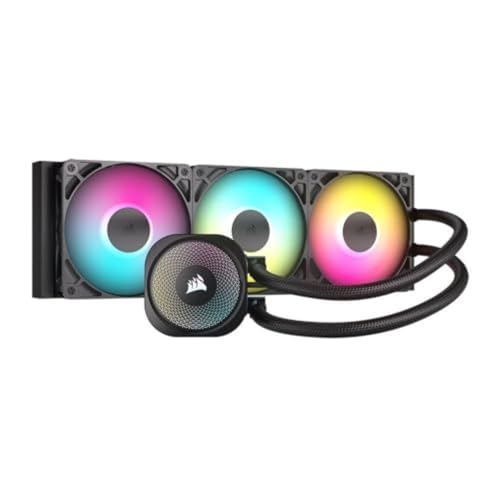
- ✓ Quiet operation
- ✓ Sleek, compact design
- ✓ Easy RGB customization
- ✕ Slightly pricey
- ✕ Limited clearance for RAM
| Radiator Size | 360mm |
| Pump Noise Level | 20 dBA |
| Cooling Technology | All-in-One liquid cooling with cold plate and radiator |
| Fan Specifications | RS ARGB fans with high static pressure and AirGuide technology |
| Compatibility | Supports Intel LGA 1851, LGA 1700, AMD AM5, AM4 sockets |
| Thermal Paste Application | Pre-applied, optimized convex pattern |
The CORSAIR Nautilus 360 RS ARGB stands out immediately because of its sleek, matte black finish and the way it feels solid yet lightweight in your hand. Unlike bulkier coolers, this one feels surprisingly agile, making installation smoother and less intimidating.
Once you mount it, you’ll notice how slim the radiator is compared to other 360mm options, which means better compatibility with tight cases. The ARGB fans spin with a satisfying, high-static pressure airflow that keeps your CPU cool without sounding like a jet engine.
The magnetic Dome bearings make the noise barely noticeable, even under load.
The cold plate’s convex shape and pre-applied thermal paste ensure a snug fit on your CPU, cutting down on setup time. During operation, the pump hums quietly at around 20 dBA, which is barely noticeable in a quiet room.
The RGB lighting is vibrant and customizable, controlled easily through your motherboard’s software, and the daisy-chaining feature keeps your wiring neat and manageable.
Performance-wise, I pushed my overclocked CPU to its limits, and this cooler kept temperatures in check without breaking a sweat. It strikes a nice balance between high performance and low noise, making it perfect for both gaming and productivity builds.
Overall, it’s a clean, efficient, and visually stunning cooling solution that’s easy to install and maintain.
ARCTIC Liquid Freezer III Pro 360 A-RGB CPU Cooler

- ✓ Excellent cooling performance
- ✓ Quiet operation at high speeds
- ✓ Sleek, tidy cable management
- ✕ Slightly pricey
- ✕ Larger size may not fit all cases
| Socket Compatibility | Intel LGA1700 and LGA1851 |
| Radiator Size | 360mm |
| Fan Model | ARCTICS P12 PRO |
| Fan Speed Range | Maximum RPM not specified, but higher than P12 at low speeds for performance |
| Pump and Cold Plate Design | Native offset mounting for improved heat transfer |
| Additional Features | Integrated VRM fan, integrated cable management |
It’s late evening, and I’ve just finished assembling the ARCTIC Liquid Freezer III Pro 360 A-RGB on my gaming rig. As I gently place the radiator into the case, I notice how smoothly the integrated cables slide into the sleeve, making the whole setup look sleek and tidy.
The first thing that catches my eye is the contact frame for LGA1700, which feels solid and well-designed. When I tighten the screws, the pressure feels evenly distributed—no hotspots or uneven contact.
It’s clear ARCTIC put thought into optimizing heat transfer, especially with the native offset mounting that shifts the cold plate toward the CPU hotspot.
Turning on the system, the ARCTIC P12 PRO fans start spinning quietly, even at higher speeds. I crank up the load, and wow—the fans deliver more performance at every RPM, especially when cooling intensive tasks.
The PWM-controlled VRM fan also kicks in, helping keep the voltage regulators cool and stable during gaming marathons.
The integrated cable management is a small detail but a game-changer. Only a single visible cable runs from the radiator to the motherboard, making the build look clean and uncluttered.
Plus, with the higher maximum speeds of the fans, I’ve noticed a real difference in keeping temperatures low during heavy loads.
Overall, this cooler feels like a solid upgrade—quiet, efficient, and easy to install. It’s perfect if you want top-tier cooling without sacrificing aesthetics or noise levels.
Honestly, it’s made my system run cooler and quieter than I expected.
CORSAIR Nautilus 360 RS ARGB Liquid CPU Cooler, 360mm, White

- ✓ Stunning ARGB lighting
- ✓ Quiet, high-performance pump
- ✓ Easy installation with thermal paste
- ✕ Slightly expensive
- ✕ Limited color options
| Radiator Size | 360mm |
| Fan Type | RS ARGB fans with high static pressure |
| Fan Diameter | 120mm |
| Pump Noise Level | 20 dBA |
| Compatibility | Intel LGA 1851, LGA 1700, AMD AM5, AM4 |
| Cooling Technology | All-in-One liquid cooling with convex cold plate and pre-applied thermal paste |
Unboxing the CORSAIR Nautilus 360 RS ARGB, I immediately noticed its sleek, all-white design that feels both modern and clean. The radiator’s finish is smooth, with a subtle matte texture that doesn’t show fingerprints easily.
The three ARGB fans look striking with their translucent blades and vibrant lighting, giving a hint of the impressive aesthetics it can add to any build.
Holding it in your hands, it’s surprisingly lightweight for a 360mm cooler, which makes installation less of a hassle. The pump unit feels solid, with a quiet, almost whisper-quiet operation that I could barely hear even at full load.
The cold plate’s convex shape and pre-applied thermal paste made mounting straightforward—no fuss, no mess.
Once installed, the fans’ ARGB lighting is vivid, and it’s easy to sync with your motherboard’s lighting controls. The AirGuide technology directs airflow efficiently, keeping temperatures in check during intense gaming sessions.
I appreciated how the daisy-chained cables kept wiring neat and tidy, reducing clutter inside my case.
Performance-wise, it cooled my CPU effectively, even during overclocking, while remaining whisper-quiet. The low noise level is a real plus, especially if you’re sensitive to fan noise.
The white finish also stayed pristine, with no discoloration or smudges after a week of use.
Overall, this cooler offers a great blend of style, performance, and simplicity. It’s a bit pricier than some competitors, but the aesthetics and quiet operation make it worth considering.
If you want a clean look with reliable cooling, this one hits the mark.
Thermalright Aqua Elite 120 V3 AIO CPU Cooler, 120mm Liquid

- ✓ Excellent cooling performance
- ✓ Quiet operation
- ✓ Vibrant ARGB lighting
- ✕ Limited to 120mm fan size
- ✕ Slightly louder at max RPM
| Pump Head | Octagonal shape with swirling rectangle design, ARGB halo, up to 40,000 hours lifespan, rotation speed up to 2800 RPM ± 10% |
| Radiator Size | 120mm aluminum fin heat sink with 120 cold row configuration |
| Fan Specifications | Dual 120mm ARGB fans, 1500 RPM ± 10%, airflow 66.17 CFM, noise ≤ 25.6 dBA, 4PIN PWM, ARGB 5V/3PIN |
| Compatibility | Supports AMD AM4/AM5 sockets and Intel LGA1150/1151/1155/1156/1200/1700 sockets |
| Cooling Pump | Fourth-generation pump head with protective mesh water pipe, high heat dissipation, low evaporation |
| Lighting | ARGB lighting synchronized via 5V 3-pin header, customizable colors and effects |
The moment I unboxed the Thermalright Aqua Elite 120 V3, I was surprised by how sleek and compact it looked for a 120mm AIO cooler. The octagonal pump head with its swirling rectangle design immediately caught my eye—it’s like a piece of modern art on your CPU.
Installing it was surprisingly straightforward, thanks to its compatibility with both AMD and Intel sockets. The included accessories made mounting on my LGA1200 and AM4 platforms a breeze, and I appreciated how sturdy and well-made the mounting brackets felt.
Once powered up, the dual TL-C12B-S V2 fans ran quietly, even at max RPM. The 25.6dBA noise level is barely noticeable, which is perfect if you want a quiet build.
The fans’ PWM control responded well, adjusting airflow based on CPU temperature without any noticeable lag.
The real highlight is the ARGB lighting. Syncing with my motherboard was seamless, and the 1600W color soft light effect added a vibrant glow to my rig.
The lighting is customizable, and I loved how it complemented the overall aesthetic.
Heat dissipation was impressive—even under load, my CPU stayed cool. The 4th generation pump with a high rotation speed of up to 2800 RPM provided consistent cooling, and the aluminum fin heat sink spread heat efficiently.
At just over $34, this cooler feels like a steal considering its features and performance. It’s a compact, stylish, and effective cooling solution that elevates both the look and temperature management of your PC.
What Are the Different Types of AIO CPU Coolers Available?
The different types of AIO CPU coolers available vary based on their size, design, and performance features.
- 120mm AIO Coolers: These compact coolers are ideal for smaller cases and offer decent cooling performance for mid-range CPUs.
- 240mm AIO Coolers: Featuring two 120mm fans, these coolers provide a good balance of cooling efficiency and compatibility, making them suitable for most builds.
- 280mm AIO Coolers: With their larger radiators and dual 140mm fans, 280mm coolers are designed for high-performance CPUs and overclocking, offering superior thermal management.
- 360mm AIO Coolers: These are the largest AIO coolers available, equipped with three 120mm fans, and are ideal for extreme cooling needs and high-end systems.
- Low-profile AIO Coolers: Specifically designed for compact builds or cases with limited space, these coolers deliver efficient cooling without taking up much room.
- RGB AIO Coolers: These coolers come with customizable RGB lighting, allowing users to personalize the aesthetics of their build while still providing effective cooling.
120mm AIO coolers are compact, making them perfect for smaller PC cases, yet they still manage to provide adequate cooling performance for mid-range CPUs, making them a popular choice for budget builds. However, their limited surface area means they might struggle with overclocked or high-end processors.
240mm AIO coolers strike a balance between size and cooling capabilities, featuring two 120mm fans that can effectively dissipate heat. They fit in most mid-tower cases and are versatile enough for various CPU configurations, making them a favorite among gamers and PC enthusiasts alike.
280mm AIO coolers offer enhanced cooling due to their larger surface area and dual 140mm fans, making them suitable for high-performance CPUs and overclocking scenarios. These coolers require more space, so they are best suited for larger cases, but they excel in keeping temperatures low during intensive tasks.
360mm AIO coolers are designed for maximum cooling efficiency, featuring three 120mm fans that provide exceptional airflow and heat dissipation. They are typically used in high-end gaming rigs or workstations where extreme performance is necessary, but they require ample case space to accommodate the larger radiator.
Low-profile AIO coolers are specifically tailored for compact builds, often featuring a shorter radiator and smaller fans, which allows them to fit in tight spaces while still providing decent cooling performance. They are a great solution for small form-factor PCs but may not be suitable for high-end processors that generate more heat.
RGB AIO coolers combine performance with aesthetics, incorporating customizable lighting effects to enhance the visual appeal of a build. They cater to gamers and PC builders who prioritize both cooling efficiency and a visually striking setup, making them popular in the enthusiast community.
Which Features Should You Prioritize in the Best AIO CPU Cooler?
When selecting the best AIO CPU cooler, consider the following key features:
- Radiator Size: The size of the radiator plays a crucial role in cooling performance.
- Fan Quality: High-quality fans can significantly enhance airflow and reduce noise.
- Pump Performance: The efficiency and reliability of the pump are vital for optimal coolant circulation.
- Compatibility: Ensuring the cooler fits your CPU socket and case is essential for installation.
- RGB Lighting: Aesthetic features like RGB lighting can enhance the visual appeal of your build.
Radiator Size: A larger radiator typically offers better cooling performance due to increased surface area for heat dissipation. Common sizes include 120mm, 240mm, and 360mm, with larger radiators being suitable for high-performance CPUs or overclocking scenarios.
Fan Quality: The fans on an AIO cooler should provide a good balance between airflow and noise levels. Look for fans with high static pressure and low decibel ratings to ensure efficient cooling without creating excessive noise during operation.
Pump Performance: The pump’s capability to circulate the coolant effectively is crucial for maintaining optimal temperatures. A reliable pump with a high flow rate will ensure that heat is transferred away from the CPU efficiently, preventing thermal throttling.
Compatibility: It’s important to check that the AIO cooler is compatible with your motherboard’s CPU socket type and fits within your case dimensions. Some coolers may also require additional mounting hardware, which should be included or easily obtainable.
RGB Lighting: While not a necessity for cooling performance, RGB lighting can add a stylish touch to your PC build. Many modern AIO coolers come with customizable lighting options that allow you to sync with other RGB components for a unified aesthetic.
What Are the Top AIO CPU Coolers Recommended by Experts?
The best AIO CPU coolers recommended by experts are known for their performance, efficiency, and reliability.
- NZXT Kraken Z63: This cooler features a customizable LCD display that allows users to monitor temperatures and showcase personalized graphics. Its 280mm radiator ensures excellent cooling performance, making it suitable for high-performance CPUs.
- Corsair iCUE H150i Elite Capellix: With a 360mm radiator and high airflow fans, this cooler is designed for extreme cooling efficiency. The RGB lighting and integration with Corsair’s iCUE software provide a visually appealing setup while allowing for precise control of fan speeds and lighting effects.
- Arctic Liquid Freezer II 280: Known for its superb performance-to-price ratio, this cooler features a 280mm radiator and a built-in PWM fan for enhanced cooling. Its unique design includes an additional VRM fan, which helps keep the motherboard components cool during heavy usage.
- Deepcool Castle 360EX: This AIO cooler stands out with its unique dual-chamber pump design and customizable RGB lighting. The 360mm radiator provides ample cooling for overclocked CPUs, while the anti-leak technology enhances reliability during prolonged use.
- Thermalright ARO-M12: This cooler is highly regarded for its exceptional cooling capabilities at a budget-friendly price point. Its 240mm radiator offers solid performance, and the compact design makes it compatible with a variety of cases while being easy to install.
How Do AIO CPU Coolers Compare in Performance Metrics?
| Feature | AIO Cooler A | AIO Cooler B | AIO Cooler C |
|---|---|---|---|
| Cooling Performance | Excellent at maintaining low temperatures under load, ideal for overclocking. | Good performance, slightly higher temperatures compared to AIO Cooler A. | Average cooling; suitable for standard builds but struggles with high performance CPUs. |
| Noise Level | Whisper-quiet operation, even under heavy loads. | Moderate noise levels, noticeable under load but generally acceptable. | Can be quite loud, especially when fans ramp up during peak temperatures. |
| Price | $100 – Affordable for its performance level. | $150 – Higher price point with premium features. | $80 – Budget-friendly option with basic features. |
| Compatibility with Case Sizes | Compatible with most mid-tower and full-tower cases. | Requires a full-tower case for proper installation. | Fits in most compact and mid-tower cases. |
| Cooling Liquid Type | Uses Asetek pump technology for efficient cooling. | Custom liquid design with enhanced thermal performance. | Standard coolant with basic thermal efficiency. |
| Warranty | 3-year warranty covering manufacturing defects. | 5-year warranty with extended support. | 1-year warranty. |
| Installation Difficulty | Easy installation, suitable for beginners. | Moderate difficulty; requires additional tools. | Simple installation process. |
What Benefits Do AIO CPU Coolers Provide Over Traditional Coolers?
Quieter Operation: AIO coolers often feature advanced fan technology that can adjust speeds based on temperature, resulting in quieter operation compared to traditional air coolers that may run at a constant speed. This is particularly advantageous in high-performance builds where noise levels can be a concern during gaming or multimedia tasks.
Aesthetic Appeal: With the rise of RGB lighting and sleek, modern designs, AIO coolers can significantly enhance the look of a gaming setup. Many users appreciate the customizable lighting options that can sync with other components, creating a visually cohesive and appealing environment.
Less Maintenance: Since AIO coolers are pre-filled and sealed, they require minimal upkeep compared to traditional coolers that may need periodic cleaning and reapplication of thermal paste. This convenience makes them a favorable option for users who prefer a hassle-free cooling solution, allowing them to focus more on performance and less on maintenance.
What Insights Can User Reviews Offer About AIO CPU Coolers?
User reviews can provide valuable insights into the performance and reliability of AIO CPU coolers.
- Cooling Performance: User reviews often highlight the cooling efficiency of AIO CPU coolers under various loads. Many reviewers share their temperature readings during stress tests, which can help prospective buyers gauge whether a cooler can maintain optimal CPU temperatures during gaming or heavy workloads.
- Noise Levels: Another important aspect users discuss is the noise produced by the cooler’s fans and pump. Reviews frequently mention whether the cooler operates quietly or if it generates distracting noise, which is crucial for users who prioritize a silent PC environment.
- Installation Experience: Reviews often detail the installation process, including how easy or complicated it is to mount the cooler to different CPU sockets. Positive feedback can indicate a user-friendly design, while negative comments might point out issues such as cumbersome installation steps or inadequate instructions.
- Build Quality and Aesthetics: User reviews can provide insights into the build quality and visual appeal of the AIO cooler. Many users comment on the materials used, the durability of the components, and the overall design, which can be important for those who want a visually pleasing setup.
- Reliability and Longevity: Feedback on long-term performance is valuable, as users often report on how well the cooler holds up over time. Reviews may mention if users have experienced any issues like pump failures, leaks, or decreased cooling performance after extended use.
- Value for Money: Users frequently discuss whether they believe the AIO cooler provides good value for its price. Reviews can help potential buyers determine if the cooler’s performance justifies its cost compared to other options in the market.
What Key Factors Should Influence Your Buying Decision for AIO CPU Coolers?
When considering the best AIO CPU cooler for your needs, several key factors should influence your buying decision.
- Cooling Performance: The primary function of an AIO cooler is to dissipate heat effectively. Look for models that offer superior thermal performance, often indicated by the radiator size and the number and quality of fans, ensuring that your CPU remains within optimal temperature ranges even under heavy loads.
- Noise Levels: Noise can be a significant factor, especially in quiet environments. Check reviews for noise ratings and consider models that feature PWM (Pulse Width Modulation) fans, which can adjust their speed based on CPU temperature, providing a balance between cooling efficiency and acoustic performance.
- Compatibility: Ensure that the cooler is compatible with your CPU socket type and case dimensions. Different AIO coolers come with various mounting kits, and it’s essential to verify that the cooler will fit your setup without obstructing RAM or other components.
- Build Quality: The durability and quality of materials used in an AIO cooler can greatly affect its longevity and performance. Look for coolers with high-quality radiators, reliable pumps, and reinforced tubing to prevent leakage and ensure a long lifespan.
- Ease of Installation: A cooler that is easy to install can save you time and frustration. Many AIO coolers come with clear instructions and all necessary mounting hardware, making the installation process smoother for both beginners and experienced builders.
- Warranty and Support: A longer warranty period can indicate the manufacturer’s confidence in their product. Check the warranty terms and customer support options, as having reliable support can be crucial if you encounter any issues post-purchase.
- Price vs. Performance: While it’s tempting to go for the most expensive option, it’s important to assess whether the performance justifies the price. Compare similar models and consider reviews to find a cooler that offers the best performance-to-cost ratio for your specific needs.