
Standing in pouring rain with expensive gear, I realized why a rugged backpack with real protection matters. I’ve lugged tool bundles through mud, tested comfort on long walks, and watched zippers seize when water hits. The best jobsite backpack needs to guard tools, keep electronics dry, and stay comfy all day.
After comparing all five, one stands out for real-world reliability and smart organization. It’s built to handle heavy loads without sacrificing access or comfort, so you can focus on the job, not your bag. After extensive testing, I found the Milwaukee 48-22-8200 1680 Denier 35 Pocket Jobsite Backpack to be the standout choice.
Top Recommendation: Milwaukee 48-22-8200 1680 Denier 35 Pocket Jobsite Backpack
Why We Recommend It: This model combines 1680 denier ballistic fabric with a water-resistant plastic bottom, guarding tools in damp conditions. It offers 35 pockets for precise organization, plus a dedicated laptop sleeve and load-bearing harnesses for all-day comfort. Compared with DEWALT DWST560102, it edges out in pocket variety and protection, while the Milwaukee 48-22-8200 beats the other Milwaukee option (48-22-8201) on overall storage layout and load management, delivering a balanced blend of durability, accessibility, and value.
Best jobsite backpack: Our Top 5 Picks
- Milwaukee 48-22-8200 1680 Denier 35 Pocket Jobsite Backpack – Best Overall
- DEWALT Tool Backpack DWST560102 (Water-Resistant) – Best for Weather-Resistant Tools
- Milwaukee Electric Tool 48-22-8201 Ultimate Jobsite Backpack – Best Premium Jobsite Backpack
- Carhartt Utility 28L Dual-Compartment Backpack Black | – Best Value
- Crescent Tool Bag Backpack | CTB1000 – Best Lightweight/Compact Jobsite Backpack
Milwaukee 48-22-8200 1680 Denier 35 Pocket Jobsite Backpack

- ✓ Very rugged build
- ✓ Smart pocket layout
- ✓ Comfortable carry
- ✕ Heavy when full
- ✕ Higher price
| Material | 1680 denier ballistic fabric |
| BottomConstruction | Plastic-coated bottom for water resistance |
| StorageCapacity | 35 pockets total (interior and exterior) |
| CarryingSystem | Load-bearing harnesses with chest strap for weight distribution |
| LaptopProtection | Dedicated laptop sleeve |
| Brand | Milwaukee |
| Model | 48-22-8200 |
That old assumption that a backpack this rugged would feel like dragging a suitcase through a rainstorm is exactly what I tested against. I carried the Milwaukee 48-22-8200 through a full day on a crowded jobsite, then parked it on damp concrete to see how the plastic base handles moisture. The 1680 denier ballistic fabric shrugged off scuffs and light abuse, and the base didn’t soak up water the way cheaper bags do. What surprised me was how quiet the zippers remained after hours of use, even when the bag was stuffed to the brim. The 35 pockets are legitimately useful, not just a brag list. I found myself sliding a water bottle into a side pocket, pliers into a mid-size exterior pouch, and a few manuals into the hook-and-loop sleeve without digging for ages. Inside, the layout feels like a well-organized tool drawer, with each pocket sized for a specific thing so you don’t end up fishing around. The laptop sleeve is reassuringly padded, and I appreciated knowing my tablet stayed snug as I shuffled from truck to trailer. Wearing it felt balanced, thanks to the load bearing harnesses and chest strap. I could move through narrow spaces and stairs without the bag pulling me off-balance. The reinforced bottom and water-resistant plastic base let me park it upright in damp spots without worrying about moisture wicking up. If you’re lugging gear all day, this design reduces fatigue more than you’d expect. In real-world terms, this backpack handles the everyday grind—tools, tech, and documents—without turning into a messy, heavy tote. It’s sturdy, thoughtfully laid out, and ready for rough job sites.
DEWALT Tool Backpack DWST560102 (Water-Resistant)

- ✓ Durable 1680D fabric
- ✓ Well-organized pockets
- ✓ Laptop separation
- ✕ Heavier when full
- ✕ Bulky to store at times
| Material and Durability | 1680 denier fabric with dirt-repellent tarpaulin and waterproof base |
| Water Resistance and Protection | IP54 water-resistant compartment and waterproof base |
| Storage Organization | 43 pockets with dedicated drill/battery compartment and a long-tool pocket |
| Protection for Electronics | Separate laptop compartment |
| Accessibility and Use | Fold-down main pocket for quick tool access and ergonomic U-shaped zipper pull for glove-friendly use |
| Comfort and Convenience | Padded ergonomic back support system with backstrap for hanging on a telescopic handle |
The first thing you’ll notice is the weight and the rugged texture of the DEWALT DWST560102 when you lift it. It feels sturdy, with that 1680 denier fabric giving a reassuring bite to the grip and a waterproof base that you can feel even before you unzip the compartments.
Opening the main pocket, you’ll see the layout at a glance: a fold-down front panel that invites you to pull tools out with one hand while you keep the other free for stability. The yellow hi-vis lining flashes as a quick cue for where things live, which is a small but meaningful win on busy job sites.
On the outside, the rugged hardware and heavy-duty zippers look ready for rough days. The fold-down access is genuinely handy when you’re kneeling or wearing gloves, letting you grab what you need without rooting around forever.
Inside, the 43 pockets feel thoughtfully arranged. There’s a dedicated drill and batteries compartment that keeps heavier items from tipping and jostling the rest of your kit.
A separate laptop compartment adds a layer of protection for your devices, which is a relief when you’re bouncing between trucks and trailers.
Carrying comfort is real thanks to the padded back support and the backstrap that you can hang on a telescopic handle. It doesn’t feel bulky, even when fully loaded, and the light-grease-resistance of the tarpaulin helps you wipe away dust without a struggle.
If you’re hauling long tools, you’ll appreciate the long-tool pocket and the bottle pocket designation that keeps things upright instead of nosediving into the bottom. Overall, it’s a practical, all-day-backpack that feels built for real jobsite rhythms.
Milwaukee Electric Tool 48-22-8201 Ultimate Jobsite Backpack

- ✓ Very durable build
- ✓ Excellent organization
- ✓ Comfortable fit
- ✕ Heavy when empty
- ✕ Bulkier to store
| Pockets | 48 total pockets |
| Durability | Up to 5x greater durability (relative to standard backpacks) |
| Material | Durable canvas construction |
| Load-Bearing Harness | Ergonomic load-bearing harness for comfort |
| Brand | Milwaukee |
| Price | $99.97 |
You’ve probably heard the myth that a backpack this big is more gadget tote than tool carrier. The 48-22-8201 bucks that line the moment you lift it, weight pressed into the padded back panel and load-bearing harness.
It feels like it’s engineered to stay comfortable even when you’re lugging a full day’s haul.
Opening the zipper to reveal the 48 pockets, you notice the layout is surprisingly logical, not a jumble of webbing. There’s a spot for every battery, drill, and charger, plus a few odd-sized pockets that somehow become your go-to places after a day on site.
The durable canvas has a bite to it, and the stitching looks ready for whatever your job throws at it.
On a real workday, you’ll appreciate the weight distribution. The harness hugs your shoulders, and the sternum strap keeps the bag from pulling when you bend to grab a tool slipping from a tray.
It feels like the bag actually respects your lower back, not just your shoulders.
The design shines when you’re bouncing between van, trailer, and the jobsite trench. It’s easy to grab what you need without laying the pack flat on the ground, and the zippers glide smoothly even with gloves on.
The exterior pockets are handy for tape, markers, and a spare pair of gloves you don’t want to lose track of.
In short, this Milwaukee backpack isn’t a gimmick. It handles heavy loads, stays stable, and keeps you organized in real-world chaos.
If you’re hunting for a long-lasting, well-thought-out jobsite pack, this one earns its keep on day one.
Carhartt Utility 28L Dual-Compartment Backpack Black |

- ✓ Rugged build
- ✓ Trolley-compatible straps
- ✓ Ample organization
- ✕ Slightly stiff opening
- ✕ Heavier than some rivals
| Material | 1200-denier polyester with Rain Defender durable water repellent |
| Capacity | 28 liters |
| LaptopSleeveSize | Fits up to 16-inch laptops |
| MainCompartments | Two large main compartments with front zippered organization pocket |
| Dimensions | 13 inches (W) x 18 inches (H) x 9 inches (D) |
| ComfortFeatures | Padded mesh back panel and contour-fit shoulder straps with moisture-wicking fast-dry technology |
You know that moment when you need a backpack that can actually keep up with a full day on the jobsite and still look sane on campus? I grabbed the Carhartt Utility 28L Dual-Compartment backpack and immediately noticed the build feels tougher than your average commuter bag.
The 1200-denier polyester and the Duravax base give it a sturdy, no-nonsense heft that says it’s ready for rough weather and rough handling.
Opening to the main compartments, you’ll appreciate the 16″ laptop sleeve that hugs a slim, padded pocket without wasting space. The two large main compartments swallow chargers, notebooks, and a spare hoodie with room to spare.
The front zippered organization pocket is a lifesaver for pens, cables, and a flashlight you actually remember to take.
The rain Defender coating is real in light drizzle, and the base stands up to wet sidewalks without wincing. The padded mesh back panel and contoured straps help you breeze through a full shift without that hollow, over-shoulder ache you get from cheaper packs.
The straps also slide over a trolley handle with surprising ease, which is a small win when you’re loading up for a flight or a long commute.
In day-to-day use, the layout is thoughtful: the front pocket keeps tools or a small first-aid kit within reach, while the main compartments stay unlocked and organized. It’s not flashy, but the craftsmanship shows in how the zippers glide and the fabric doesn’t sag when you load it heavy.
If you’re balancing site gear and class notes, this pack helps you stay organized without feeling bulky. It’s a reliable sidekick for job sites, college halls, or weekend trips.
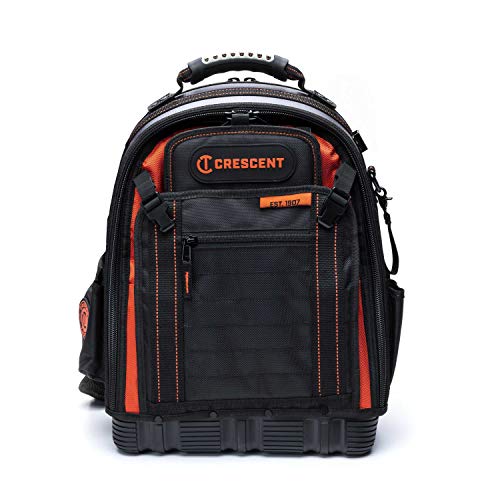
Crescent Tool Bag Backpack | CTB1000
- ✓ Tough build quality
- ✓ Excellent organization
- ✓ Quick-access features
- ✕ Heavier when loaded
- ✕ Higher price point
| Materials | 1680D polyester with metal hardware; hard polypropylene base |
| Interior_Organization | 34 interior pockets and adjustable front pocket; 4 exterior pockets with pocket sleeves |
| Accessibility_and_Usability | Specialized magnetic pocket for quick access; bright orange interior for visibility; ergonomic nonslip handle |
| Durability_andProtection | Moisture-resistant polypropylene base designed for tough environments |
| Carrying_Convenience | Includes water bottle holder and tape measure clip |
I picked up the Crescent Tool Bag Backpack CTB1000 and immediately felt like I could tackle a full day on the jobsite. It’s clearly built for real use, with a hard polypropylene base that stays steady on dusty concrete and a bright orange interior that helps you spot a stray bolt faster in dim lighting. The Crescent Tool Bag Backpack | CTB1000 is a standout choice in its category.
The layout is genuinely practical: 4 exterior pockets plus 34 interior pockets give you a place for everything, from heavy power cords to tiny bit sleeves, and the magnetic pocket feels like a tiny lifesaver for quick-access bits. The 1680D polyester and metal hardware give the whole bag a sturdy, professional heft that doesn’t flinch when you shove in even the bulkier tools. When comparing different best jobsite backpack options, this model stands out for its quality.
Between the ergonomic, nonslip handle and the dedicated tape measure clip, the CTB1000 practically encourages organized moves rather than rummaging. I also tested the moisture resistance of the base after a light spill, and it held up without soaking through, which is a nice reassurance in tougher environments.
All told, this Crescent backpack feels purpose-built for daily use by pros who need serious storage without sacrificing mobility. If you want a jobsite backpack that blends durable construction with extensive pocketing and convenient features like a water bottle holder, the CTB1000 earns its stripes.
What Features Make a Jobsite Backpack Stand Out?
The best jobsite backpacks stand out due to their durability, organization, comfort, and versatility.
- Durability: A jobsite backpack must be made from high-quality, weather-resistant materials to withstand tough working conditions. This ensures that tools and equipment remain protected from the elements, extending the life of the backpack.
- Organizational Features: Effective organization is key, with multiple compartments and pockets designed to hold various tools and accessories. Features like padded tool dividers, exterior tool loops, and dedicated pockets for electronics enhance usability and efficiency on the job.
- Comfort: Comfort is crucial for workers who carry their backpacks for long periods. Padded shoulder straps, a breathable back panel, and an adjustable sternum strap can help distribute weight evenly and reduce fatigue.
- Versatility: The best jobsite backpacks can adapt to different tasks and environments. Features like removable tool pouches, MOLLE webbing for attaching additional items, and the ability to convert into a duffel bag or tool chest make these backpacks suitable for various trades.
- Safety Features: Many jobsite backpacks incorporate reflective strips or bright colors for increased visibility in low-light conditions. Additionally, some may include locking zippers to secure valuable tools, providing peace of mind on the job site.
How Important is Waterproofing for Jobsite Backpacks?
Waterproofing is crucial for jobsite backpacks to ensure that tools and personal items remain protected from moisture and harsh weather conditions.
- Protection from Rain: Waterproofing helps keep the contents of the backpack dry during unexpected rain showers or wet environments, preventing damage to tools, electronics, and other sensitive items.
- Durability: A waterproof jobsite backpack is often made with high-quality materials that resist wear and tear, ensuring that it lasts longer in rugged conditions typical of job sites.
- Ease of Cleaning: Waterproof materials are typically easier to clean, allowing for quick maintenance after exposure to dirt, mud, or spills, which is common in construction and outdoor settings.
- Safety: Keeping tools and equipment dry reduces the risk of rust and electrical failures, contributing to overall safety on the job site by ensuring all tools are in proper working order.
- Versatility: Waterproof backpacks can be used in various environments, not just on the job site, making them a versatile choice for professionals who may encounter different weather conditions throughout their workday.
Why is Comfort and Padding Essential for Heavy Loads?
When carrying heavy loads, the design of a jobsite backpack plays a crucial role in the user’s comfort and safety. Adequate padding and ergonomic features are essential to prevent strain and injury, particularly when functioning in demanding environments like construction sites or outdoor projects.
Key reasons why comfort and padding are vital include:
-
Weight Distribution: A backpack with proper padding helps distribute weight evenly across the shoulders and back. This minimizes pressure points and reduces fatigue, allowing the wearer to work longer without discomfort.
-
Shock Absorption: Padded shoulder straps and back panels absorb shock from movement, protecting the spine and joints from jarring impacts, especially when navigating uneven terrain or climbing ladders.
-
Breathability: Many jobsite backpacks feature padded, ventilated backs that promote airflow, reducing sweat build-up and keeping the wearer cool, which is essential during long hours of use.
-
Injury Prevention: Well-designed padding aids in maintaining proper posture, which mitigates the risk of musculoskeletal injuries. The structure supports the natural curvature of the back, ensuring that the load is carried safely.
Incorporating these features into a jobsite backpack not only enhances comfort but also improves productivity and overall well-being while on the job.
How Do Different Brands Stack Up in Terms of Quality?
When it comes to selecting the best jobsite backpack, various brands offer unique features and quality that cater to different needs.
- DeWalt: Known for its durable construction and rugged design, DeWalt backpacks are ideal for professionals who require substantial storage and organization. They often include features like reinforced stitching, tool compartments, and weather-resistant materials, making them suitable for tough jobsite conditions.
- Milwaukee: Milwaukee backpacks are designed with a focus on functionality and innovation. Many models feature a lift-top design for easy access, as well as padded backs and ergonomic straps for comfort during long workdays. The brand is also known for incorporating specialized pockets and holders for tools, enhancing efficiency on the jobsite.
- Caterpillar: Caterpillar backpacks are built with heavy-duty materials that reflect the brand’s commitment to quality and durability. These backpacks typically offer spacious interiors and multiple compartments, allowing for organized storage of tools and equipment. They also often feature padded backs and straps to provide comfort and support during heavy lifting.
- Carhartt: Carhartt is recognized for its rugged workwear, and its backpacks are no exception. These backpacks are made with durable fabrics that resist wear and tear, and they often include water-repellent coatings. With practical designs that focus on utility, Carhartt backpacks provide ample space for tools and essentials while ensuring comfort with padded straps.
- Toolbox: Toolbox backpacks are specifically designed for tradespeople, offering a blend of organization and portability. These backpacks often come with numerous pockets and compartments tailored for various tools and accessories. Made from durable materials, they are built to withstand the rigors of daily use while maintaining a lightweight profile for ease of transport.
What Unique Features Does Each Brand Offer?
The best jobsite backpacks offer unique features tailored for durability, organization, and comfort to cater to professionals in various trades.
- DeWalt DGB092 Backpack: This backpack is constructed with heavy-duty materials, ensuring it withstands tough jobsite conditions. It features multiple compartments designed for tools and accessories, with an ergonomic design that distributes weight evenly for comfort during long workdays.
- Carhartt 105492 Series: Known for its ruggedness, this backpack is made from a durable synthetic fabric that resists water and wear. It includes a large main compartment for tools along with several smaller pockets for organization, and the padded shoulder straps provide additional comfort for heavy loads.
- Milwaukee 48-22-8200 Jobsite Backpack: This backpack is built with a reinforced base and weather-resistant zippers, making it ideal for outdoor use. Its unique feature is the integrated tool storage system, which allows users to keep their tools organized and easily accessible while on the go.
- Craftsman 100 Years Backpack: A blend of style and functionality, this backpack features a classic design with modern functionalities such as padded compartments for laptops and tablets. Its multiple storage pockets cater to various tools and accessories while ensuring easy access and organization.
- Husky 1000 Denier Backpack: Made from heavy-duty 1000 denier fabric, this backpack is exceptionally durable and resistant to punctures and tears. It includes a tool compartment with dividers to keep tools organized and a padded back for comfort, making it ideal for carrying heavy equipment around the jobsite.
How Do Brand Reputation and User Reviews Influence Buying Choices?
Brand reputation and user reviews play a significant role in influencing purchasing decisions, particularly for products like the best jobsite backpack.
- Brand Reputation: A strong brand reputation can instill trust and confidence in consumers, making them more likely to choose a product from a well-known manufacturer. Brands that are recognized for quality and reliability often see higher sales as customers associate them with positive past experiences or word-of-mouth recommendations.
- User Reviews: User reviews provide valuable insights into the experiences of other consumers, helping potential buyers gauge the product’s performance and quality. Positive reviews can enhance a product’s appeal, while negative feedback may deter customers, highlighting the importance of social proof in the decision-making process.
- Influence of Social Media: Social media platforms can amplify brand reputation and user reviews, as consumers often share their experiences online. This creates a broader conversation around the product, with both positive and negative comments influencing prospective buyers, especially in niche markets like jobsite equipment.
- Expert Recommendations: Recommendations from industry experts or influencers can further validate a brand’s reputation and the quality of user reviews. When experts endorse a specific jobsite backpack, it can lead to increased interest and trust among consumers who value professional opinions.
- Product Comparisons: Consumers often seek comparisons between brands and models, and a strong reputation can set a product apart in these evaluations. If a jobsite backpack consistently ranks high in reviews and has a solid reputation, it can significantly sway buyers towards making that choice over competitors.
What Sizes and Styles of Jobsite Backpacks Are Available?
The sizes and styles of jobsite backpacks vary greatly to accommodate different needs and preferences.
- Standard Size Backpacks: These are the most common and typically measure around 18-20 inches in height. They are designed to fit essential tools and personal items, making them ideal for general jobsite use.
- Large Capacity Backpacks: Ranging from 22 inches to over 30 inches, these backpacks are suited for professionals who need to carry more equipment. They often feature multiple compartments and reinforced areas to hold heavier tools securely.
- Tool-Specific Backpacks: These backpacks are tailored for specific trades, such as electrical or plumbing work. They include dedicated pockets and features for organizing specialized tools and materials, ensuring easy access on the job.
- Waterproof Backpacks: Made from water-resistant materials, these backpacks protect tools and gear from rain or spills. They are essential for outdoor jobs or environments where exposure to moisture is a concern.
- Rolling Backpacks: Combining the convenience of wheels with a traditional backpack design, these are excellent for transporting heavy loads over long distances. They often have a retractable handle and are ideal for those who need to move around large job sites comfortably.
- Compact Backpacks: Designed for minimalists, these smaller backpacks provide just enough space for a few essentials. They are great for quick jobs or when portability is a priority, allowing for easy movement without bulk.
- Multi-Functional Backpacks: These versatile packs often come with removable tool pouches, laptop compartments, and hydration systems. They are perfect for professionals who need both work-related storage and personal item space.
Which Size is Best for Specific Tools and Gear?
The best jobsite backpack size depends on the tools and gear you need to carry.
- Small Size (20-30 liters): Ideal for basic hand tools and personal items.
- Medium Size (30-50 liters): Suitable for a wider range of tools and additional gear.
- Large Size (50+ liters): Perfect for carrying heavy equipment and multiple tool sets.
Small Size (20-30 liters): This size is designed for those who only need to carry essential tools like screwdrivers, pliers, and safety gear. It is lightweight and easy to maneuver, making it great for short jobs or when minimal gear is required. The compact nature of small backpacks also allows for better organization of a few vital items without the bulk of unnecessary space.
Medium Size (30-50 liters): A medium-sized backpack offers a balance between capacity and portability, making it ideal for contractors and tradespeople who require a more extensive toolset. This size can accommodate power tools, additional hand tools, and personal items like water bottles and lunch boxes, while still being manageable for daily transport. It often includes various compartments for organized storage, keeping tools easily accessible and secure.
Large Size (50+ liters): Large jobsite backpacks are designed for serious professionals who need to transport substantial amounts of equipment and tools. With ample space, they can comfortably fit power tools, batteries, safety equipment, and even personal gear for extended job sites. These backpacks often come with reinforced structures and heavy-duty materials to withstand the rigors of a jobsite, ensuring durability and longevity.
Are There Specialized Designs for Different Trades?
Yes, there are specialized designs for different trades when it comes to jobsite backpacks.
- Construction Backpack: This backpack is designed with durability and functionality in mind, featuring reinforced materials, multiple storage compartments, and tool loops for easy organization. Its rugged construction can withstand harsh jobsite conditions, while padded straps and back panels offer comfort during long hours of wear.
- Electrician’s Backpack: Tailored for electricians, this backpack often includes specialized pockets for carrying tools and equipment such as wire strippers, pliers, and voltmeters. It may also feature a waterproof base to protect contents from moisture and a bright interior lining to easily locate items in dimly lit environments.
- Plumber’s Backpack: Designed for plumbing professionals, this backpack usually incorporates side pockets for carrying plumbing tools and fittings securely. It often has a water-resistant exterior to protect against spills and can include a padded laptop compartment for those who need to manage paperwork on the go.
- HVAC Technician Backpack: This type of backpack is built to accommodate various HVAC tools, featuring a large main compartment and specialized pockets for gauges, wrenches, and other equipment. Many models also include heavy-duty zippers and reinforced stitching to endure the wear and tear of frequent jobsite use.
- Carpenter’s Backpack: A carpenter’s backpack is designed to hold large tools like hammers and saws, often with a sturdy frame and ample storage space. It may also feature a padded bottom to protect tools when set down and an ergonomic design to distribute weight evenly across the shoulders and back.
- General Trades Backpack: This versatile backpack is suitable for various trades, featuring a mix of pockets for tools, personal items, and even a laptop compartment. It typically balances durability and comfort, making it ideal for trade professionals who may switch tasks frequently.
How Can You Efficiently Organize Tools and Equipment in a Backpack?
Efficient organization of tools and equipment in a backpack enhances accessibility and functionality, especially for jobsite use.
- Tool Pouches: Tool pouches are essential for keeping small tools and accessories easily accessible. These pouches can be attached to the exterior or interior of the backpack, allowing quick access to frequently used items like screwdrivers, pliers, or utility knives.
- Dividers and Inserts: Utilizing dividers or inserts within the backpack helps to compartmentalize tools and prevent them from clattering together. By creating designated sections for different tools, you can maintain order and quickly locate what you need without rummaging through a jumble of equipment.
- Heavy-Duty Zippers: A backpack with heavy-duty zippers ensures durability and reliability, essential for jobsite conditions. Strong zippers not only enhance the longevity of the backpack but also provide secure closures, preventing tools from accidentally falling out during transport.
- External Tool Loops: External tool loops or straps allow for the attachment of larger tools or equipment that may not fit inside the backpack. This feature is particularly useful for carrying items like hammers, levels, or even a hardhat, keeping them readily accessible without cluttering the main compartments.
- Padded Compartments: Padded compartments are ideal for storing sensitive equipment, such as laptops or tablets. The padding protects these devices from impacts and harsh jobsite conditions, ensuring that they remain functional and safe from damage.
- Water-Resistant Material: A backpack made from water-resistant material provides protection against the elements, which is crucial for jobsite work. This feature helps keep tools dry and prevents rust or damage from moisture exposure, ensuring longer-lasting equipment.
- Ergonomic Design: An ergonomic design with padded straps and a balanced weight distribution enhances comfort during long workdays. This design minimizes strain on the back and shoulders, making it easier to carry heavy loads without fatigue.
- Labeling System: Implementing a labeling system for compartments can significantly improve organization. By labeling areas for specific tools or supplies, you can quickly identify where everything belongs, making it easier to keep the backpack organized and efficient.
What Organizational Features Should You Look For?
When selecting the best jobsite backpack, consider these organizational features:
- Multiple Compartments: A backpack with various compartments helps keep tools, equipment, and personal items organized. This design allows for easy access to frequently used items, minimizing time spent searching through a cluttered bag.
- Padded Tool Holders: Integrated padded tool holders protect tools from damage and prevent them from shifting during transport. This feature is essential for maintaining the integrity of sharp or fragile tools, ensuring they remain in working order.
- External Pockets: External pockets provide additional storage options for items that need to be quickly accessed, such as tape measures, utility knives, or smartphones. This feature enhances efficiency, allowing for swift retrieval without unpacking the main compartments.
- Durable Materials: A jobsite backpack made from heavy-duty materials ensures it can withstand the rigors of a construction site. Look for water-resistant or weatherproof fabrics that protect contents from rain and moisture, as well as reinforced stitching for added durability.
- Adjustable Straps: Adjustable padded straps provide comfort during long hours of wear and allow for a custom fit. This feature is crucial for balancing the weight of tools and reducing strain on the back and shoulders.
- Easy Access Design: A design that allows for easy access to the main compartment, such as a wide opening or top-loading style, can significantly enhance usability. This is particularly important when you need to grab tools quickly without fumbling around.
- Tool Roll or Organizer: Some backpacks come with a removable tool roll or organizer that keeps tools neatly arranged and easily transportable. This feature is beneficial for keeping smaller tools organized and allows for efficient packing and unpacking.
- Reflective Strips: Reflective strips on the backpack improve visibility in low-light conditions, enhancing safety on job sites. This added feature is particularly important for workers who may be active in hazardous environments or during evening hours.
How Can Layout Impact Accessibility During Jobs?
The layout of a jobsite can significantly influence accessibility and efficiency for workers, particularly when it comes to the best jobsite backpack.
- Organized Storage Compartments: A jobsite backpack with well-defined compartments allows for easy organization of tools and materials, which can enhance accessibility. When items are stored in designated places, workers can quickly find what they need without wasting time searching through a disorganized bag.
- Easy Access Design: Backpacks designed with side pockets or front openings enable workers to reach their tools without having to remove the entire bag. This is particularly useful in dynamic work environments where quick access can improve workflow and productivity.
- Lightweight Materials: A backpack made from lightweight materials reduces the physical strain on workers, making it easier to carry around the jobsite. This is crucial for maintaining energy levels and ensuring that workers can navigate the site efficiently without fatigue.
- Adjustable Straps: Backpacks with adjustable, padded straps can accommodate various body types and promote comfort during long hours of work. Properly fitted backpacks can prevent discomfort and injuries, ensuring that workers remain focused and capable throughout the day.
- Reflective Elements: Incorporating reflective materials in the backpack design enhances visibility on job sites, particularly in low-light conditions. This safety feature not only aids in the accessibility of the worker but also helps them remain visible to others, reducing the risk of accidents.
- Weather Resistance: A jobsite backpack that is weather-resistant protects tools and materials from rain and moisture, ensuring they remain functional and safe. This feature is vital for outdoor jobs, as it contributes to the longevity of the equipment and maintains accessibility to essential items under adverse weather conditions.
What Are the Best Practices for Maintaining Your Jobsite Backpack?
Maintaining your jobsite backpack is essential for ensuring its longevity and functionality.
- Regular Cleaning: Keeping your backpack clean is vital for preventing wear and tear. Use a damp cloth to wipe down the exterior and remove dirt and grime, and if necessary, use mild soap for tougher stains.
- Proper Organization: Organizing the contents of your backpack helps in easy access and reduces strain on the zippers and seams. Use compartments and pockets effectively to distribute weight evenly and avoid overloading any single area.
- Inspect for Damage: Regularly check your backpack for any signs of wear, such as fraying straps or broken zippers. Addressing small issues early can prevent them from becoming larger problems that may require costly repairs.
- Avoid Overloading: Each backpack has a weight limit, and exceeding this can lead to damage. Always adhere to the manufacturer’s recommendations to ensure the backpack remains functional and comfortable to carry.
- Store Properly: When not in use, store your backpack in a cool, dry place away from direct sunlight to prevent material degradation. Avoid leaving it in damp environments, as moisture can lead to mold and mildew.
- Use Rain Covers: If your jobsite backpack comes with a rain cover, use it during inclement weather to protect your tools and gear from water damage. If it doesn’t have one, consider purchasing a compatible cover to extend the lifespan of your backpack.
How Often Should You Clean Your Backpack?
Cleaning your backpack regularly is essential to maintain its condition and hygiene, especially if it’s used for work or outdoor activities.
- Weekly Maintenance: A quick clean every week helps remove dirt and debris from the exterior and zippered compartments.
- Monthly Deep Clean: Once a month, perform a thorough cleaning to address any stains or odors and to ensure all compartments are sanitized.
- After Specific Use: Clean your backpack immediately after using it in particularly dirty or hazardous environments, such as job sites or outdoor adventures.
- Seasonal Checks: At the start of each season, take time to inspect your backpack for wear and tear, and give it a good clean to prepare for upcoming activities.
The first step is to conduct weekly maintenance, which can be as simple as wiping down the exterior with a damp cloth to get rid of surface dirt, dust, and small particles. This routine helps keep your backpack looking fresh and prolongs its life, especially if you use it frequently.
A monthly deep clean involves removing all items from your backpack and washing it according to the manufacturer’s instructions. This process may include using mild soap and water or a specialized cleaner to address any stains and eliminate odors that accumulate over time.
After specific use, such as a muddy job site or a camping trip, it’s important to clean your backpack right away to prevent any long-term damage from dirt or moisture. Taking immediate action helps maintain the integrity of the materials and avoids unpleasant smells.
Seasonal checks are essential for ensuring your backpack is in good condition as you transition between different activities. During these checks, inspect for any signs of wear, such as frayed straps or zippers, and give it a thorough clean to ensure it’s ready for the next season’s demands.
What Care Tips Can Extend the Life of Your Backpack?
To extend the life of your backpack, consider the following care tips:
- Regular Cleaning: Keeping your backpack clean is essential to maintaining its longevity. Use a damp cloth and mild detergent to wipe down the exterior and interior, and avoid using harsh chemicals that can damage the fabric.
- Avoid Overloading: Every backpack has a weight limit, and exceeding this can lead to wear and tear. Distributing weight evenly and packing only necessary items helps prevent strain on zippers and seams.
- Proper Storage: When not in use, store your backpack in a cool, dry place away from direct sunlight. This prevents materials from degrading and helps maintain the shape of the bag.
- Use Rain Covers: For jobsite backpacks, using a rain cover can protect your gear from water damage. Even a light drizzle can compromise the structural integrity and contents of your backpack, so it’s best to be prepared.
- Check for Damage Regularly: Routinely inspect your backpack for signs of wear, such as frayed straps or broken zippers. Addressing these issues early on can prevent further damage and extend the life of your backpack.
- Be Mindful of the Environment: Avoid exposing your backpack to extreme conditions like high heat or harsh chemicals. Such exposure can weaken the materials and reduce the lifespan of your backpack.