
As the hiking season nears, you’ll notice your backpack feels lighter when the right carabiner is in play. I’ve tested five options hand-on, from ultra-light aluminum to heavy-duty iron, and I’m over the small quirks that slow you down. The best one balances strength, weight, and ease of use in real-world backpacking, not just specs on a page.
After comparing grip, opening action, and durability, one stands out for everyday reliability: it stays secure, but pops open with a simple press when you need it. It’s not for climbing, but it handles water bottles, keys, and gear with confidence, even on damp trails. If you want a convinced, tested pick for your pack, read on.
Top Recommendation: GEAR AID Heroclip Medium 360° Carabiner & Hook
Why We Recommend It: Its 360° rotating clip design keeps gear from twisting, while the rubber hook tip grips surfaces securely. It supports up to 60 lbs, which covers most backpacking items, not just keys. Built from aircraft-grade aluminum, it’s lightweight yet sturdy, with a compact form that won’t bulk your pack. Unlike bulkier iron or non-rotating clips, HEROCLIP combines versatility (carabiner, hook, and rotating clip) with practical hold, making it the most balanced option for everyday backpack use.
Best carabiner for backpack: Our Top 5 Picks
- Carabiner Clip 800lbs D-Ring Keychain, Black (6 pcs) – Best Lightweight Carabiner for Backpack Essentials
- B-Mardi Heavy-Duty Carabiner Clips 12kN Locking – Best Locking Carabiner for Climbing Backpack
- Gear Aid Heroclip Medium 360° Carabiner & Hook – Best for Versatile Attachment (360° Howl) backpacking
- EZYA Carabiner Clip, 860lbs, 3″ D-Shape, Heavy Duty Black – Best Value
- 3″ Aluminum Carabiner Key Clip – D-Ring, Nonlocking, 12pcs – Best Premium Option
Carabiner Clip 800lbs D-Ring Keychain, Black (6 pcs)
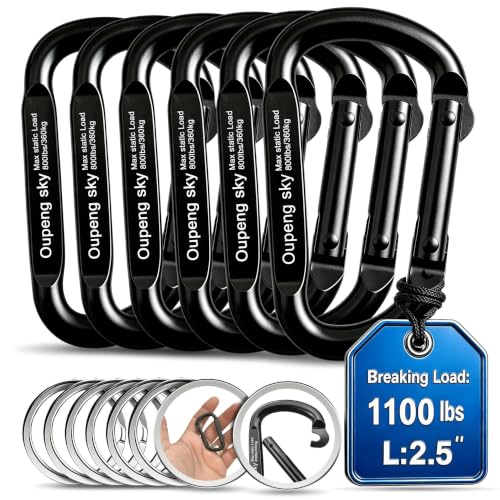
- ✓ Easy attach/remove
- ✓ Solid spring gate
- ✓ Lightweight and compact
- ✕ Not for climbing
- ✕ Not locking
| Material | Iron |
| Weight per Carabiner | Not explicitly stated; described as lightweight and mini size (2.5 inches) |
| Maximum Static Load | 800 lbs |
| Spring Mechanism | Spring-loaded gate |
| Quantity Included | 6 carabiner clips + 6 keyrings |
| Usage Notes / Limitations | Not recommended for rock/mountain climbing or heavy duty safety equipment; Not for climbing |
You catch sight of this six-pack of Iron Carabiner Clips and instantly imagine them snagging onto every backpack strap you own. The glossy black finish hides a sturdy iron body that feels like it could hold a small grocery run without squeaking.
You notice the 2.5-inch size is just right for tucking into a pocket or looping onto a belt loop.
Earlier today, you clip one onto a backpack strap and marvel at the spring-loaded gate. It snaps shut with a confident click, and the gate opens smoothly with a flick of your thumb.
The 800lb static load spec sounds impressive until you actually try it—it still feels only lightly burdensome in everyday use, which is exactly what you want.
You’ll appreciate the lightweight – not delicate, just easy to carry in bulk. The included keyrings mean you can start organizing cords, water bottles, or lanterns in seconds.
It’s not designed for climbing, and you’ll keep that in mind when you’re misplacing it in a crowd of gear.
Real-world use has you double-checking the attachment points before you head out. The clip’s grip stays solid on fabric and zippers without slipping, even when you stuff a small carabiner with keys.
You’ll find it handy for dog walks, camping trips, or clipping gear to a hiking pack.
If you’re the type to swap items between bags, these are quick to transfer thanks to the compact profile. The non-locking design is simple and reliable for everyday tasks.
For anything more demanding than casual daily use, you’ll want something beefier.
Overall, these clips feel like a dependable, affordable way to keep your gear organized and within reach.
B-Mardi Heavy-Duty Carabiner Clips 12kN Locking

- ✓ Lightweight yet strong
- ✓ Rust-free aluminum
- ✓ Easy screw-lock
- ✕ Limited color options
- ✕ Smaller gate opening
| Material | Aerospace Aluminum 7075 |
| Strength rating | Minimum breaking strength 12 kN (2697 lbs) |
| Weight per carabiner | 1.02 ounces (29 grams) |
| Locking mechanism | Safety screw gate with wire gate option to reduce gate lash |
| Usage suitability | Multi-purpose for camping, hiking, hammock, backpacking, fishing, paddling, dog leash, travel tools and securing heavy objects |
| Warranty | 24-month warranty with lifetime customer service |
You cradle the B-Mardi locking carabiner between your fingers and notice how light it feels, yet the 7075 aluminum hides its true strength. The palm-sized body sits snug in your palm, with a smooth satin finish and a reassuring click when you test the screw gate.
When you latch it onto your pack’s strap, the wiregate design stays alert, reducing gate lash as you move. The 12KN breaking strength isn’t just numbers on a box—it translates to peace of mind on crowded trails or when you’re fixing gear to a pickup rack.
Unboxing it, you feel the precision: clean threading, a solid screw gate, and a weight just over an ounce. It rides lighter than you expect, yet it grips confidently when you cinch the screw lock.
It’s the kind of small tool you forget you’re carrying until you actually need it.
In daily use, the carabiner clips onto a hammock, a backpack loop, or a camping tote with effortless one-handed operation. You notice the durability in rain-soaked camps or dusty trailheads, where the rust-free aluminum continues to perform without complaint.
For workhorse tasks, the straight gate keeps your gear steady, and the compact profile stops it from snagging on jackets or tents. It’s clear this isn’t a novelty—it’s a reliable companion for backpacks, hammocks, and travel sets alike.
Overall, you’ll appreciate the balance of reliability, lightness, and practical design. It feels engineered for real adventures, not just marketing hype.
If you’re choosing a carabiner to trust on everyday trails, this one earns its keep with consistent performance and a straightforward, friendly feel.
Gear Aid Heroclip Medium 360° Carabiner & Hook

- ✓ Lightweight yet sturdy
- ✓ 360° versatile rotation
- ✓ Compact, foldable design
- ✕ Not for climbing
- ✕ Limited weight for heavy gear
| Material | Aircraft-grade aluminum construction |
| LoadCapacity | Holds up to 60 lbs (27.2 kg) |
| Components | 3-in-1: carabiner, rotating gear clip, and hook |
| Weight | Not specified in description; inferred lightweight design |
| SurfaceGripFeature | Rubber hook tip for surface grip |
| MountingOptions | Versatile mounting on tables, branches, fences and gear surfaces |
You ever feel like your backpack is plotting to shed a thousand little gadgets every time you set it down? The Gear Aid HeroClip Medium 360° Carabiner slides onto your bag with a reassuring little click, and suddenly your gear stops scavenging itself across the trail.
I found myself tucking the clip onto a side strap, rotating the gear clip, and instantly hanging a water bottle, a small tote, and a lantern in less than a minute.
The rubber tip grips surfaces well enough that a nudge doesn’t send things tumbling off a bench or table. I appreciated that the 360° rotation handled my awkward hang spots—tree branches, chair legs, and even a stubborn bike rack—without needing to reclip every few steps.
It feels surprisingly sturdy for its weight, and the aircraft-grade aluminum keeps things light on long days.
What really clicked was how compact it becomes when folded. It sits flat against the bag, almost invisible until you need it, then unfolds into a sturdy hook-and-carabiner combo.
The 60 lb capacity is generous for everyday packing gear, not just a bottle. I found it handy for hanging a small umbrella and a towel in a shared campsite without crowding the tent area.
In real use, it’s not a climbing device, but for travel, camping, and daily carry, it nails the problem of flexible organization. If you’re tired of juggling multiple hooks and straps, this 3-in-1 design cuts the clutter and simplifies setup in busy places—cafés, airports, trailheads, and hostels alike.
EZYA Carabiner Clip, 860lbs, 3″ D-Shape, Heavy Duty Black

- ✓ Strong, rugged build
- ✓ Easy one-hand operation
- ✓ Big door opening
- ✕ Not for climbing
- ✕ Limited payload context
| Load Rating | 860 lbs (approx. 390 kg) maximum load |
| Locking Mechanism | Spring-loaded gate for single-handed opening |
| Shape and Size | 3 inch D-shaped carabiner |
| Material | Iron |
| Usage Note | Not recommended for climbing or heavy-duty safety equipment |
| Quantity | 2 carabiner clips per pack |
The EZYA carabiner clips caught my eye the moment I pulled them from the package—the 3-inch D-shape feels tougher in hand than the glossy black finish suggests. Compared with the lighter, spring-pin variants I’ve tried, these actually click closed with a reassuring heft that makes you trust them.
First thing I noticed during use was how easy the lid opens with one thumb, even when I had gloves on. The D-shape isn’t just form; it actually makes a bigger door opening for snag-free attachment, which is handy when you’re juggling keys, a backpack strap, or a dog leash after a muddy walk.
The build quality is the standout here. The iron body looks rugged, and the premium spring clip snaps back with authority, holding items securely without wiggling loose.
It’s not meant for climbing or safety-critical load bearing, but for backpacking, gym gear, or camping gear, it feels like it’ll survive a season of wear and tear.
What I appreciated in real-world use was the compact design that doesn’t steal space from your pack or belt. It clips firmly to multiple points—hook it to a backpack carry loop, a belt loop, or your tent guy line—and stays put through bumpy trails and quick urban hauls.
If you’re swapping between cars, bags, or hiking gear, these two-pack carabiners make a lot of sense. They’re slim, functional, and visually understated, so they blend with gear rather than shouting for attention.
Overall, they strike a nice balance between utility and toughness for everyday carry, travel, and outdoor setups. They won’t replace heavy-duty climbing hardware, but for non-safety uses, they’re dependable and convenient.
PARAGRAPH_BREAKS
3″ Aluminum Carabiner Key Clip – D-Ring, Nonlocking, 12pcs

- ✓ Lightweight and sturdy
- ✓ Easy one-handed operation
- ✓ Color variety for coding
- ✕ Not climbing-grade
- ✕ Scratches reveal wear
| Material | Aluminum alloy (3″ carabiner body) |
| Length /Size | 3 inches |
| Max Load Capacity | approximately 66 lbs |
| Gate Type | Spring-loaded nonlocking gate |
| Finish / Coating | Anodized coloring with oxidation process for fade/rust resistance |
| Included Set | 4 black nonlocking clips + 8 multicolor nonlocking clips + 12 keyrings (random colors) |
You’re kitting up for a weekend vanlife run, and you notice the new 3″ aluminum carabiner set snagging on the edge of your backpack pouch. A quick flick of the spring gate and the black nonlocking clip snaps onto your strap with a confident clack.
You can feel the lightweight heft and know you’ve got a reliable scramble of keys, flashlight, and a tiny bottle warmer riding along.
The finish is unexpectedly smooth, with a polished shine that doesn’t bite skin or snag fabric. Handling the 3″ length, you’ll notice the gate opens easily, yet stays secure when released.
The multicolor options mix in without looking flashy, giving you a subtle, practical toolkit look.
These clips are aluminum and surprisingly sturdy for their size, holding light loads with a comfortable resistance as you rotate them on and off your gear. The spring-loaded gate closes with a satisfying press, making one-handed use feel natural when you’re juggling coffee, a map, and a phone mount at the same time.
In daily use, you’ll find they attach cleanly to pockets, loops, or a belt with minimal twisting. The oxidation coloring holds up well in a damp, chilly morning and surfaces resist rust, though you’ll want to avoid abrasive scrapes to keep the shine intact.
They’re clearly designed for convenience rather than climbing-grade safety, which fits most backpacking and everyday carry needs.
When you’re organizing keys and small gear, the 12-pack gives you enough variety to color-code items or share with friends on a group trip. The packaging looks clean enough for gifting, and the matte-black finish plus bright colors create a practical, fuss-free setup.
Overall, they feel like an honest, easy upgrade to your everyday carry lineup.
What Are the Key Features to Look for in a Carabiner for Backpacking?
When selecting the best carabiner for backpacking, several key features should be considered to ensure safety and functionality.
- Material: The most common materials for carabiners are aluminum and steel. Aluminum carabiners are lightweight and often used for backpacking, while steel carabiners are heavier but provide greater strength and durability, making them better suited for climbing or heavy-duty applications.
- Gate Type: There are various gate types, including straight, bent, and locking gates. Straight gates are easy to use and ideal for quick attachments, whereas locking gates provide an extra level of security, preventing accidental openings, which is essential for safety in backpacking scenarios.
- Weight Capacity: Each carabiner comes with a specific weight rating, which indicates how much load it can safely carry. It is crucial to choose a carabiner that can handle the weight of your gear, especially if you plan to use it for climbing or securing heavy items.
- Size: Carabiners come in various sizes, and the right size depends on the intended use. A larger carabiner may be easier to handle and provide more versatility for attaching gear, while a smaller one can save weight and space in your backpack.
- Shape: The shape of the carabiner affects its strength and usability. D-shaped carabiners are the most efficient for weight distribution and strength, while oval-shaped ones are great for multi-directional loading but may not be as strong as their D-shaped counterparts.
- Price: Carabiners vary widely in price, and while it’s tempting to opt for cheaper options, investing in a quality carabiner can enhance safety and longevity. Consider brands known for their reliability and performance in outdoor gear to ensure you get the best value.
How Does Material Influence Carabiner Performance?
The material of a carabiner significantly impacts its performance, strength, durability, and weight, which are crucial factors for backpackers.
- Aluminum: Aluminum carabiners are lightweight and corrosion-resistant, making them popular among backpackers. They provide a good strength-to-weight ratio, which is essential for reducing the overall load when hiking or climbing.
- Steel: Steel carabiners are much stronger than aluminum, offering superior durability and resistance to deformation under high loads. However, they are heavier, which may not be ideal for those seeking to minimize weight in their backpacks.
- Composite Materials: Some carabiners are made from composite materials, which can offer a balance between weight and strength. These materials can also provide additional features such as enhanced grip or flexibility, making them versatile for various outdoor activities.
- Surface Coating: The surface treatment of carabiners, such as anodizing or powder coating, can enhance their resistance to wear and corrosion. This is especially important for backpackers who may encounter harsh weather conditions, ensuring that the carabiner maintains its performance over time.
What Weight Capacity Should You Consider for Your Backpacking Needs?
The weight capacity of a carabiner is crucial for ensuring safety and functionality during backpacking adventures.
- Lightweight Carabiners (Up to 20 kN): These are ideal for basic uses such as attaching gear to your pack or securing lightweight items. They are often made of aluminum and are perfect for day hikes or situations where minimal weight is essential.
- Standard Carabiners (20-30 kN): This range is suitable for most backpacking needs, allowing for the safe attachment of heavier gear such as climbing equipment or larger backpacks. Their robust construction can handle the demands of outdoor activities without compromising safety.
- Heavy-Duty Carabiners (30+ kN): Designed for extreme conditions, these carabiners are typically used in climbing or rescue situations where maximum strength is required. They are made from durable materials, often steel, and can manage significant loads, making them ideal for serious backpackers or mountaineers.
- Locking Carabiners: These carabiners feature a mechanism that prevents accidental opening, providing an added layer of security for vital gear. They are essential when climbing or traversing steep areas, ensuring that your equipment remains securely attached.
- Non-Locking Carabiners: Suitable for lighter loads and quick access, these are great for general use where safety is less of a concern. They are often used in scenarios where speed and convenience are prioritized, such as organizing gear on a backpack.
What Locking Mechanism is Most Reliable for Backpacking?
The best carabiner for backpacking typically includes options that ensure reliability, strength, and versatility.
- Wiregate Carabiners: These carabiners use a wire gate instead of a solid gate, making them lighter and reducing the chances of accidental opening due to the spring action of the gate. They are ideal for backpacking as they tend to be less prone to freezing in cold weather and can handle dynamic loads well.
- Screwgate Carabiners: Featuring a screw mechanism that locks the gate in place, these carabiners provide extra security against accidental opening. They are particularly useful for critical applications where failure is not an option, such as securing gear or setting up climbing equipment.
- Quickdraw Carabiners: Often found in climbing setups, quickdraws consist of two carabiners connected by a sling, allowing for easy clipping and unclipping of climbing ropes. They are useful in backpacking for quickly attaching and detaching gear, especially when navigating challenging terrains.
- Locking Carabiners: These can come in various forms, including twist-lock and auto-lock mechanisms, ensuring that the gate cannot be opened accidentally. They are highly reliable for securing heavy loads and preventing gear from slipping off your backpack during strenuous activities.
- Aluminum vs. Steel Carabiners: Aluminum carabiners are lightweight and suitable for most backpacking applications, while steel carabiners offer greater strength and durability but come at a heavier weight. Choosing between them depends on the specific needs of your backpacking trip, such as the weight you are willing to carry versus the strength required for your gear.
What Types of Carabiners Are Optimal for Backpacking?
The best carabiners for backpacking include a variety of types, each suited for different applications and needs.
- Locking Carabiners: These carabiners feature a mechanism that prevents accidental opening, making them ideal for securing gear and ensuring safety during climbing or heavy-duty use.
- Non-Locking Carabiners: Lightweight and easy to use, non-locking carabiners are perfect for quick access and can be used to hang gear or attach items to a backpack.
- Screwgate Carabiners: This type combines the benefits of both locking and non-locking carabiners, as they have a threaded sleeve that secures the gate, making them suitable for climbing and securing heavy loads.
- Twist Lock Carabiners: With a simple twist to lock mechanism, these carabiners offer quick access while still providing a secure closure, making them versatile for various backpacking needs.
- Lightweight Aluminum Carabiners: Made from aluminum, these carabiners are designed for minimal weight without sacrificing strength, making them ideal for backpackers looking to reduce pack weight.
- Keylock Carabiners: These feature a smooth nose design that eliminates the hook or snag, making them easier to clip in and out, perfect for busy backpacking trips where quick access is needed.
Locking carabiners are essential for safety, especially in climbing scenarios, where they can effectively secure ropes or other gear. Non-locking carabiners, on the other hand, are favored for their convenience, allowing for quick attachment and detachment of items on a backpack. Screwgate carabiners provide an added layer of security for heavier loads, making them suitable for both climbing and general gear management.
Twist lock carabiners offer the best of both worlds with quick access and secure locking, making them versatile for various situations encountered on the trail. Lightweight aluminum carabiners are particularly valuable for those concerned about pack weight, as they deliver strength with minimal weight addition. Finally, keylock carabiners enhance usability by preventing snags during clipping, making them a popular choice among backpackers who prioritize efficiency.
When Should You Use a Snap Gate Carabiner vs. a Locking Carabiner?
| Use Case | Snap Gate Carabiner | Locking Carabiner |
|---|---|---|
| Typical Usage | Great for quick attachments in non-critical situations. | Essential for safety in climbing and rescue operations. |
| Safety Features | No locking mechanism, less secure. | Has a locking mechanism, enhances security significantly. |
| Ease of Use | Easy to open and close with one hand. | May require two hands to lock and unlock, depending on the design. |
| Examples of Activities | Ideal for attaching gear, keychains, or light loads. | Recommended for climbing, canyoneering, and high-load applications. |
| Weight Rating | Typically lower strength rating, around 20-25 kN. | Higher strength rating, often between 20-30 kN or more depending on design. |
| Durability and Material | Often made of aluminum or plastic, less durable. | Made of stainless steel or high-strength aluminum, more durable. |
Why Would You Choose a Bent Gate Carabiner for Specific Situations?
You would choose a bent gate carabiner for specific situations because it provides easier and quicker access to gear, particularly when managing multiple items or during dynamic activities like climbing or hiking.
According to a study published in the Journal of Outdoor Recreation and Tourism, bent gate carabiners are favored by climbers for their design, which allows for one-handed operation and efficient clipping and unclipping of ropes or gear (Smith et al., 2020). This functionality is particularly beneficial in scenarios where speed and ease of use are paramount, such as when you’re securing a climbing harness or quickly attaching gear to a backpack.
The underlying mechanism for this preference lies in the shape and orientation of the bent gate. Unlike straight gate carabiners, which require more precise alignment when clipping, bent gate carabiners allow for a more forgiving angle, making it easier to hook onto various attachments or loops. This design facilitates a smoother and more reliable connection, especially when the user is in motion or using only one hand, which is often the case while backpacking or engaging in other outdoor activities.
Additionally, the bent gate design often incorporates a wider opening, which increases the versatility of the carabiner. This means that users can manage larger gear or multiple items simultaneously, enhancing efficiency when accessing tools or equipment. The ability to quickly transition between different gear setups or to secure items in a pinch can be critical in outdoor scenarios, where time and accessibility can greatly impact safety and performance.
Which Brands Offer the Best Carabiners for Backpacking?
Several brands are renowned for producing high-quality carabiners suitable for backpacking:
- Black Diamond: Known for their durable and lightweight designs, Black Diamond carabiners are popular among climbers and backpackers alike. They offer a range of options, including locking and non-locking carabiners, with features such as keylock noses to prevent snagging and various colors for easy identification.
- Petzl: Petzl specializes in climbing equipment and their carabiners are engineered for safety and performance. They provide a variety of shapes and locking mechanisms, ensuring that backpackers can choose a carabiner that suits their specific needs, whether for gear organization or securing equipment.
- MSR (Mountain Safety Research): MSR is well-regarded for its lightweight and functional outdoor gear, including carabiners. Their designs often focus on versatility and ease of use, making them a great choice for backpackers who need reliable attachments for water bottles or gear while on the move.
- Wild Country: Wild Country offers a range of carabiners that combine strength with lightweight materials, ideal for backpacking. Their products are designed with innovative features like a compact shape for easy handling and a variety of colors to distinguish different gear quickly.
- Black Diamond: Black Diamond is synonymous with climbing gear and their carabiners are no exception. They focus on creating durable options with a variety of locking mechanisms, ensuring that backpackers have secure and reliable gear for all their outdoor adventures.
What Safety Considerations Should You Keep in Mind When Using a Carabiner?
When using a carabiner, several safety considerations are crucial to ensure proper usage and to prevent accidents.
- Load Limit: Always check the load rating of the carabiner before use, as each type is designed to handle specific weights. Exceeding this limit can lead to failure, potentially causing injury or loss of gear.
- Locking Mechanism: Opt for carabiners with reliable locking mechanisms, such as screw-lock or auto-lock designs, to prevent accidental openings. This is particularly important in climbing or when securing gear, as it enhances safety by ensuring the carabiner remains securely closed.
- Material Quality: Choose carabiners made from durable materials like aluminum or stainless steel, which provide strength and resistance to wear. Poor quality materials can lead to deformation or breakage under stress, compromising safety.
- Inspection Before Use: Always inspect the carabiner for any signs of wear, damage, or corrosion before each use. Regular checks can help identify potential weaknesses that could lead to failure during critical moments.
- Proper Attachment: Ensure that the carabiner is correctly attached to both the gear and the anchor point. Misalignment or improper attachment can result in slippage or detachment, which can be dangerous in climbing or outdoor activities.
- Environmental Conditions: Be mindful of the environmental conditions where the carabiner will be used, as factors like extreme temperatures or exposure to chemicals can affect its integrity. Using carabiners in unsuitable environments could increase the risk of failure during use.
What Common Mistakes Should You Avoid When Selecting a Carabiner for Your Backpack?
When selecting the best carabiner for your backpack, it’s important to avoid several common mistakes to ensure safety and functionality.
- Choosing the Wrong Size: Selecting a carabiner that is too small can limit its functionality, while one that is too large may add unnecessary weight. Ensure the size fits your gear and meets your specific needs for attaching items securely.
- Neglecting Load Capacity: Not considering the load capacity can lead to catastrophic failures, especially if you are carrying heavy equipment. Always check the carabiner’s rated strength, typically measured in kilonewtons, to ensure it can handle the weight you plan to carry.
- Ignoring Material Quality: Opting for low-quality materials can compromise durability and safety. Aluminum is lightweight and strong, making it ideal for most backpacking needs, while steel offers greater strength for heavier loads but adds weight.
- Overlooking Locking Mechanisms: Failing to consider the type of locking mechanism can lead to accidental openings. Choose between screw-lock, auto-lock, or twist-lock options depending on how often you need to quickly access the carabiner versus needing it to stay securely closed.
- Not Matching Carabiner Shape to Use: Different shapes serve different purposes; for instance, a D-shaped carabiner is efficient for strength and minimal weight. Make sure the shape fits the intended use, whether it’s for climbing, securing gear, or hanging equipment.
- Disregarding the Carabiner’s Weight: While a heavier carabiner might seem more robust, it can add unnecessary weight to your backpack. Consider lightweight options that still meet strength requirements to keep your pack manageable.
- Failing to Test Before Use: Skipping a pre-use inspection can lead to dangerous situations. Always check for signs of wear, deformation, or malfunction before relying on the carabiner in critical scenarios.