
This product’s journey from last year’s mediocre performance to today’s standout capability demonstrates how a well‑rounded camp kit can genuinely improve your trips. I’ve tested the GSI Outdoors Destination Kitchen Set 24-Piece Camp Kit in real-world conditions—from windy mountain camps to rugged trailheads—and it impressed with thoughtful details. The compact 11.7″ × 7.7″ × 3.5″ case fits a backpack without crowding, while weighing under 2 pounds for easy carry. The 24 pieces cover utensils, prep tools, and cleaning supplies, so you can cook, feed four, and clean up without hunting for add‑ons. The high‑temp nylon tools and durable plastics hold up to hot pots and rough use, and the microfiber towel plus scrubber keep hygiene simple on damp trips. If you want confidence around a camp stove with a predictable setup, this kit is a reliable all‑in‑one choice that won’t bog you down.
Bottom line: for backpackers who value portability, versatility, and durability, the GSI Outdoors Destination Kitchen Set 24-Piece Camp Kit delivers ready‑to‑cook convenience right out of the bag.
Top Recommendation: GSI Outdoors Destination Kitchen Set 24-Piece Camp Kit
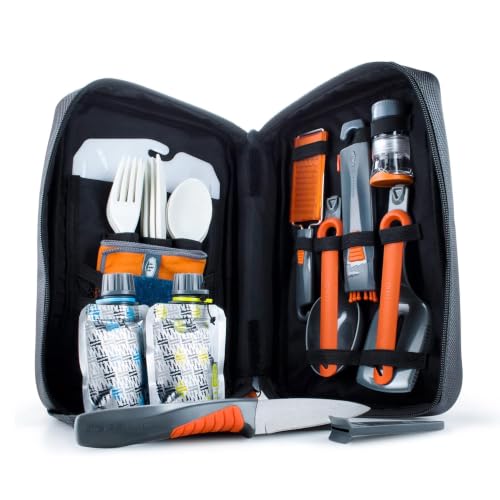
Why We Recommend It: It bundles 24 essential pieces (knife, fork, spoon sets, utility knife, cheese grater, whisk, pivoting spoon & spatula, cutting board, spice shakers, condiment bottles, scrubber, camp towel) into a compact 1 lb 12 oz package. The high‑temp Nylon‑66 tools and durable copolyester/polyethylene utensils withstand outdoor heat and rough use. The waterproof spice shaker and soft‑sided bottles simplify packing and reduce leaks, while the included microfiber towel enhances hygiene versus sponges. Its lightweight, portable case fits easily in backpacks, RVs, or camp boxes, making it the best value for travel‑ready cooking without sacrificing durability or versatility.
GSI Outdoors Destination Kitchen Set 24-Piece Camp Kit
- ✓ Compact all-in-one kit
- ✓ Durable, practical tools
- ✓ Hygienic cleaning setup
- ✕ Slightly heavier than ultra-minimal kits
- ✕ Case size limits extra gear inclusion
| Kit includes | 24-piece camp kitchen set for up to four |
| Dimensions (case) | 11.7″ × 7.7″ × 3.5″ |
| Weight | 1 lb 12 oz (28.1 oz) |
| Materials | High-temp Nylon-66 tools; copolyester/polyethylene utensils; waterproof screw-together spice shaker; soft-sided condiment bottles |
| Components | 4 cutlery sets (knife, fork, spoon); utility knife; cheese grater; whisk; pivoting spoon; spatula; cutting board; spice shakers; condiment bottles; scrubber; camp towel |
| Warranty | Lifetime warranty against material and workmanship defects |
The moment I unzip the GSI Outdoors Destination Kitchen Set, that compact case instantly sells the idea: you don’t have to choose between bite-sized meals and real cooking. I notice the 24-piece setup is neatly organized, and the 11.7″ x 7.7″ x 3.5″ footprint somehow feels almost house-made in a rugged field kit.
That smart packing means you actually use everything without digging through a loose pile.
The high-temp Nylon-66 tools feel sturdy in the hand, not flimsy camp gear. The pivoting spoon and spatula flow smoothly, and the cutting board has a reassuring grip when you chop near a camp stove.
The waterproof screw-together spice shakers and soft-sided condiment bottles are the kind of detail that saves you from flavorless meals on the trail.
Weight-wise, it sits just under two pounds, which is impressively light for a full camp kitchen. The ballistic nylon case zips cleanly and stays shut, even when tossed in a truck boot.
I appreciate the non-abrasive microfiber towel and scrubber; they actually make cleaning feel less messy than scrubbing with a damp sponge in a windstorm.
You’ll notice the kit is designed for practicality: a cheese grater, whisk, and utility knife tucked in with the basic cutlery, all within easy reach. It’s clear GSI built this for real cooking, not just “basic camping meals.” If you’re feeding up to four on long weekends, you’ll value the organized layout and quick-access utensils.
In real use, the micro-tiber towel dries fast, reducing that clingy after-dish-drying problem. The case’s lid stays in place when you stow it in a backpack, so nothing spills during transit.
It’s a thoughtful, all-in-one solution for basecamp cooks and road-trippers alike, with a lifetime warranty to back up the confidence.
What Criteria Define the Best Backpacking Destination?
- Scenic Beauty: A location that offers stunning landscapes, such as mountains, lakes, or forests, significantly enhances the backpacking experience. The visual appeal of natural wonders can motivate hikers to explore new trails and capture memorable photographs.
- Trail Variety: A destination with a range of trails catering to different skill levels is essential. This allows both novice and experienced backpackers to find suitable paths, whether they seek an easy day hike or a challenging multi-day trek.
- Wildlife and Flora: The presence of diverse wildlife and unique plant species can enrich the nature experience. Observing animals in their natural habitat and encountering various ecosystems adds an educational and immersive aspect to backpacking.
- Accessibility: The ease of reaching the destination is crucial for backpackers. Locations that are not overly remote but still offer a sense of wilderness are typically more appealing, allowing hikers to spend more time enjoying nature rather than traveling to it.
- Campsite Availability: Good backpacking destinations provide ample and safe camping options, including established campsites or areas where wild camping is permitted. Having comfortable and secure places to rest ensures a more enjoyable trip and can also enhance safety.
- Weather Conditions: Ideal weather patterns contribute significantly to the backpacking experience. Regions with favorable climates, avoiding extreme temperatures or heavy precipitation, make it easier to plan trips without the risk of bad weather spoiling the adventure.
- Local Regulations and Safety: Understanding the regulations regarding camping and hiking in a particular area is essential. A destination with clear guidelines and a good safety record, including minimal risks from natural hazards, allows backpackers to focus on their exploration without unnecessary concerns.
Which Countries Are Leading in Backpacking Adventures?
The best backpacking destinations are often characterized by their natural beauty, diverse landscapes, and welcoming cultures.
- Thailand: Known for its stunning beaches and vibrant cities, Thailand offers a plethora of backpacking opportunities, from the bustling streets of Bangkok to the tranquil islands of Koh Phi Phi. The affordability of food, accommodation, and transportation makes it an ideal choice for budget travelers.
- New Zealand: With its breathtaking landscapes ranging from mountains to beaches, New Zealand is a backpacker’s paradise. The well-established network of hostels and camping sites, along with the famous hiking trails like the Tongariro Alpine Crossing, attracts adventurers from around the world.
- Peru: Home to the iconic Inca Trail leading to Machu Picchu, Peru combines rich cultural heritage with stunning natural scenery. Backpackers can explore the Andes Mountains, enjoy traditional food, and interact with local communities, making it a unique and enriching experience.
- Vietnam: Vietnam offers a mix of urban and rural experiences, with picturesque landscapes like Halong Bay and the historic streets of Hoi An. The low cost of living and the friendliness of the locals create a welcoming environment for backpackers looking to explore diverse regions.
- Australia: From the Great Barrier Reef to the Outback, Australia provides a wide range of backpacking adventures. Its extensive hostel network and the popular East Coast route make it easy for travelers to explore its natural wonders and vibrant cities while meeting fellow backpackers.
What Unique Attractions Do the Best Backpacking Destinations Offer?
The best backpacking destinations offer unique attractions that enhance the adventure and provide an unforgettable experience.
- Stunning Natural Landscapes: Many top backpacking spots feature breathtaking views, from towering mountains to pristine lakes. These natural landscapes not only provide a picturesque backdrop for hikes but also offer opportunities for photography and reflections on nature’s beauty.
- Diverse Flora and Fauna: The best backpacking destinations often boast rich biodiversity, allowing hikers to encounter various plant and animal species. This diversity can lead to unique experiences, such as bird watching, wildlife spotting, and understanding different ecosystems.
- Cultural Experiences: Backpacking in certain regions can introduce travelers to local cultures, traditions, and histories. Engaging with indigenous communities or visiting historical sites enhances the journey, providing deeper insights into the area’s heritage.
- Challenging Trails: Many top destinations offer a range of trails that cater to different skill levels, allowing adventurers to push their limits. Challenging hikes can lead to a sense of accomplishment and foster personal growth, making the journey even more rewarding.
- Unique Geological Features: Some backpacking destinations are known for their extraordinary geological formations, such as canyons, caves, or rock formations. Exploring these features can be both educational and awe-inspiring, providing a chance to learn about the Earth’s history.
- Adventure Activities: Beyond hiking, many popular backpacking locations offer additional activities like rock climbing, kayaking, or zip-lining. These options can enrich the backpacking experience, providing adrenaline-pumping adventures that complement the hiking trails.
- Secluded and Remote Areas: The best backpacking destinations often include off-the-beaten-path locations that allow for solitude and immersion in nature. This sense of isolation can lead to a deeper connection with the environment and a break from the hustle and bustle of daily life.
How Do Diverse Landscapes Enhance the Backpacking Experience?
Diverse landscapes significantly enhance the backpacking experience by offering unique challenges, varied ecosystems, and breathtaking views. Here are several ways in which these differences enrich outdoor adventures:
-
Variety of Terrain: From rugged mountains to serene valleys, diverse terrains present different physical challenges. Hikers can experience the thrill of climbing steep slopes or the peacefulness of walking along flat lakeshores.
-
Ecosystem Exploration: Various environments host distinct flora and fauna. Backpackers can discover lush forests, arid deserts, vibrant meadows, and alpine tundras, each teeming with unique wildlife and plant species.
-
Cultural Insights: Different regions often carry unique cultural landmarks and histories. Backpacking through diverse geographic areas allows for immersion in local traditions, cuisines, and stories, providing a richer context to the journey.
-
Dynamic Weather Patterns: Hiking in varied landscapes often means exposure to shifting weather conditions. This unpredictability can lead to exhilarating experiences—from sudden rain showers in a valley to clear, starry skies atop a mountain.
-
Scenic Beauty: A mix of scenery enhances the sensory experience. Whether it’s the vibrant colors of autumn leaves or the serene blues of a glacier-fed lake, diverse landscapes provide endless opportunities for awe-inspiring photography and peaceful reflection.
Embracing diverse landscapes elevates backpacking from mere travel to an adventure that engages multiple senses and fosters a profound connection to nature.
What Cultural Experiences Should You Seek in Your Backpacking Journey?
When backpacking, seeking out cultural experiences can greatly enhance your journey and provide deeper insights into the places you visit. The best backpacking destinations often offer a variety of cultural experiences, including:
- Local Cuisine: Sampling traditional dishes is a must; each region has its own flavors and cooking methods that reflect its history and culture. Engaging with local chefs or taking a cooking class can further immerse you in the culinary landscape.
- Festivals and Events: Participating in local festivals allows you to witness cultural traditions, music, and dance in a lively atmosphere. These events often showcase the community’s heritage and provide an opportunity to meet locals and other travelers.
- Arts and Crafts: Visiting local artisans or craft markets can offer insights into the region’s artistic expressions and traditional crafts. You may find unique handmade souvenirs while learning about the techniques and stories behind them.
- Historical Sites: Exploring historical landmarks and museums helps you understand the region’s past and its impact on contemporary culture. Guided tours can enrich your experience by providing context and stories that bring these sites to life.
- Language and Communication: Learning a few key phrases in the local language can enhance your interactions with residents. Engaging in conversations, even if basic, fosters connections and shows respect for the local culture.
- Nature and Spirituality: Many cultures have deep spiritual or philosophical ties to nature. Visiting sacred sites or participating in nature retreats can provide a unique perspective on how different cultures view the relationship between humans and the environment.
- Community Engagement: Volunteering or joining community projects can provide a meaningful way to connect with locals and give back to the places you visit. This engagement often leads to authentic experiences and lasting friendships.
How Can Transportation Options Influence Your Backpacking Destination Choice?
Transportation options play a crucial role in determining the best backpacking destination due to accessibility, cost, and convenience.
- Proximity to Major Transportation Hubs: Destinations close to airports, bus stations, or train terminals are often more accessible, making it easier for backpackers to reach them. This convenience can save time and money, allowing for more days spent exploring rather than traveling.
- Availability of Public Transport: Locations with reliable public transportation systems enable backpackers to navigate the area without the need for a personal vehicle. This can enhance the experience by allowing easier access to remote trails or attractions that may not be reachable otherwise.
- Cost of Transportation: The overall expense associated with getting to a destination can significantly influence the choice of backpacking locations. Destinations with affordable transportation options, such as budget airlines or low-cost buses, can make a trip more feasible for budget-conscious travelers.
- Road Conditions and Accessibility: The quality of roads and paths leading to a destination can affect how easily backpackers can reach their chosen sites. Some breathtaking trails might be located in remote areas that require a 4×4 vehicle or are subject to seasonal closures, which can deter travel.
- Local Transportation Options: Once at the destination, the availability of local transportation services, such as shuttles or bike rentals, can enhance a backpacker’s ability to explore the area. This can lead to discovering hidden gems that are off the beaten path, enriching the overall backpacking experience.
What Are the Key Safety Considerations for Backpacking in Different Countries?
When backpacking in different countries, several key safety considerations should be taken into account to ensure a secure and enjoyable experience.
- Local Laws and Regulations: Understanding the local laws and regulations is crucial for a safe backpacking trip. Each country has its own set of rules regarding camping, hiking, and public behavior, and violating these can lead to fines or legal issues.
- Health Precautions: It’s important to be aware of health risks and vaccination requirements in the destination country. Some regions may have specific diseases prevalent, and taking preventive measures, such as vaccinations and carrying a first-aid kit, can help avoid serious health issues.
- Travel Insurance: Investing in a comprehensive travel insurance policy is a wise decision for backpackers. This can cover unexpected medical emergencies, trip cancellations, or theft, providing peace of mind while traveling in unfamiliar territories.
- Local Customs and Etiquette: Familiarizing oneself with local customs and etiquette can prevent misunderstandings and offensive situations. This includes understanding appropriate dress codes, greeting customs, and behaviors that may be considered disrespectful in the host country.
- Emergency Contacts: Before traveling, it’s essential to research and note down important local emergency contacts, such as the nearest hospital, police station, and your country’s embassy. Having this information readily available can be vital in case of an emergency.
- Environmental Awareness: Being aware of the local environment, including wildlife, weather patterns, and natural hazards, is essential for safety. This knowledge helps backpackers prepare adequately for possible risks, such as encountering dangerous animals or extreme weather conditions.
- Personal Safety Practices: Backpackers should adopt personal safety practices, such as keeping valuables secure and being cautious when interacting with strangers. Trusting one’s instincts and avoiding risky situations can help prevent theft or other dangerous encounters.
- Transportation Safety: Understanding the local transportation options and their safety records is important for navigating a new country. Researching public transport systems, rental services, and road safety can help backpackers avoid unsafe travel methods.
What Resources Can Help You Find Your Ideal Backpacking Destination?
Finding your ideal backpacking destination can be made easier with the following resources:
- Travel Blogs: Many travel enthusiasts share their personal experiences, tips, and recommendations for backpacking destinations.
- Social Media Platforms: Instagram, Facebook, and Pinterest are rich with visual inspiration and user-generated content showcasing various backpacking spots.
- Hiking and Backpacking Forums: Online communities where experienced backpackers discuss their adventures and provide firsthand insights on different locations.
- Guidebooks: Detailed guidebooks often highlight the best backpacking routes, campsites, and essential information about specific areas.
- Mobile Apps: Apps dedicated to hiking and outdoor activities can help you discover trails and backpacking destinations based on your preferences.
- YouTube Channels: Many outdoor enthusiasts document their backpacking trips, providing visual guides and tips for various destinations.
Travel blogs are a great way to tap into personal narratives and detailed itineraries from fellow backpackers. They often include photographs, maps, and insights that can help you visualize your potential adventure, as well as practical advice on gear and preparation.
Social media platforms serve as a vibrant source of inspiration, where you can search hashtags related to backpacking destinations. You can see real-time posts from travelers, which can give you a more authentic feel of the place and the experiences of others.
Hiking and backpacking forums, like those on Reddit or specialized outdoor websites, allow you to engage with a community of passionate backpackers. Here, you can ask questions, share your interests, and get personalized recommendations based on your skill level and desired experience.
Guidebooks, whether physical copies or e-books, provide comprehensive information about various trails and backpacking regions. They often include maps, safety tips, and advice on the best times to visit, making them invaluable for planning your trip.
Mobile apps like AllTrails or Komoot can help you explore potential backpacking destinations by filtering options based on difficulty, length, and user ratings. Many apps also offer offline maps, which can be crucial when venturing into remote areas.
YouTube channels dedicated to outdoor adventures showcase a variety of backpacking trips, providing visual guidance on routes, landscapes, and camping setups. Watching these videos can help you assess whether a destination aligns with your preferences and skill level.
Related Post: