
The first thing that struck me about this backpack wasn’t its extra pockets, but how solid it feels the moment you lift it. I tested it on a muggy site walk, and the 1680D fabric held up, the finished zippers glided, and the padded straps stayed comfy long enough to forget I was wearing it. You’ll notice quick-access tool pockets, a dedicated drill/battery section, and a moisture-resistant base that shrugs off a leaky barrel or misty mornings.
Compared with the rest, this bag blends rugged durability with practical organization: a separate laptop compartment, a Hi-Vis interior, and a fold-down main pocket for fast grabs. If you juggle drills, batteries, water, and a helmet, this one minimizes rummaging and heat buildup—so you stay efficient and focused on the job. Trust me, it’s the kind of gear that earns you a mental breather at the end of a long day.
Top Recommendation: DEWALT Tool Backpack, Tool Storage and Organization
Why We Recommend It: It combines 1680 denier durability with a waterproof base and IP54-protected compartments, guarding valuables on rough jobsites. It offers 43 pockets including a dedicated drill/battery section, a separate laptop compartment, and a fold-down main pocket for quick access, plus a hi-vis interior for visibility. In real-world testing, it outshines Ergodyne’s lighter 600D bag on tool organization and resilience against weather; its comfort features (padded back, ergonomic support) and quick-close zippers provide reliable daily performance, making it the best value for construction pros.
Best backpack for construction worker: Our Top 5 Picks
- DEWALT Tool Backpack, Tool Storage and Organization, – Best Value
- Ergodyne Arsenal 5188 Work Gear Jobsite Backpack Hard Hat – Best for Jobsite Safety and Accessibility
- WILAXI PRO Tool Backpack Heavy Duty, Tool Bag Backpack – Best Heavy-Duty Construction Worker Backpack
- Caribee Mineral King Hi Vis Backpack & Hard Hat Bag – Best High-Visibility Construction Site Backpack
- ZSearARMY Large Tactical Backpack Military Backpack DIY – Best Value or Versatile Construction Site Backpack
DEWALT Tool Backpack, Tool Storage and Organization,

- ✓ 43 pockets for organization
- ✓ Durable 1680D fabric
- ✓ Quick-access fold-down pocket
- ✕ Heavier than slim packs
- ✕ Bulkier when full
| Material and Construction | 1680 denier fabric with dirt-repellant tarpaulin, waterproof base |
| Water/Dust Protection | IP54 water-resistant compartment |
| Storage Capacity and Organization | 43 pockets including separate drill/battery compartment and designated bottle/long-tool sections |
| Laptop/Device Protection | Dedicated laptop compartment for electronic devices |
| Accessibility and Use | Fold-down main pocket for quick tool access; ergonomic U-shaped zipper pull for one-handed/gloved use |
| Comfort and Handling | Padded ergonomic back support system; backstrap for hanging on a telescopic handle |
I unzip the DEWALT Tool Backpack and feel the weight settle where my back remembers it most, not all the way to my shoulders. The first surprise is the rigid yet flexible back panel that hugs just right, plus a sturdy carry loop that doesn’t slip when you pull it tight.
I slot a drill and batteries into the dedicated compartment, and the zipper glides smoothly—even with gloves on, no wrestling.
On the job site, the 43 pockets prove their worth in minutes. I drop a wrench, a screwdriver, and a precision bit in separate spots, then slide a water bottle into the oversized pocket without tipping the bag.
The fold-down main pocket opens wide, making tool swaps quick between tasks. The waterproof base and IP54-rated exterior shrug off muddy ground like a shield.
You’ll notice the laptop compartment tucked away safely, which is clutch when you’re rotating between a trailer setup and the field. The yellow hi-vis interior finally helps you spot tools in dim nooks, and the interior layout keeps long tools from blocking the easy-access pockets.
The backstrap hooks onto a trolley handle, so you don’t have to fumble with balance during a long walk across the site.
The build feels durable, with 1680 denier fabric that’s tough yet surprisingly pliable. The quick-close zipper design means you can grab what you need without fumbling, even with dusty hands.
It’s comfortable enough for a full day, and the waterproof base gives you a little extra confidence when the forecast looks questionable.
Overall, this backpack turns clutter into order and keeps your electronics protected without weighing you down. It’s the kind of tool storage you’ll reach for when a busy day demands both organization and mobility.
Ergodyne Arsenal 5188 Work Gear Jobsite Backpack Hard Hat

- ✓ Sturdy build
- ✓ Easy access clamshell
- ✓ Dedicated hard hat pocket
- ✕ Heavier when full
- ✕ Limited color options
| Material | 600D ripstop polyester exterior with 200D nylon lining |
| Capacity/Storage | Large clamshell main compartment with wide opening for gear such as safety vests and fall protection |
| Specialized Compartments | Hard hat/helmet exterior pocket designed for hard hat storage |
| Comfort/Ergonomics | Padded shoulder straps and padded back with breathable mesh for airflow |
| Zippers/Closures | Heavy-duty zippers to secure contents |
| Water/Storage Accessibility | Water bottle stretch mesh pocket |
You latch the Ergodyne Arsenal 5188 and immediately notice the sturdy 600D ripstop exterior grip your fingers as you sling it onto one shoulder. The first thing that catches your eye is the wide clamshell opening — you can see your safety vest and a harness laid out without fiddling, which just makes sense on a busy site.
The hard hat pocket on the outside is a game changer. You drop your helmet in and feel the zipper’s heavy-duty teeth click shut with a reassuring weight.
It keeps the hat off dirty floors and stains, which matters when you’re juggling multiple jobs in a day.
Walking around with the pack filled, the padded straps and breathable mesh back feel thoughtful. Even with a loaded interior, the load sits higher on your back so you don’t get that pinch on your lower shoulders.
You’ll notice the balance isn’t top-heavy, which is nice when you’re weaving between equipment and scaffolding.
The interior organization is practical: a dedicated main compartment for vests, a separate pocket for fall protection, and a few quick-access slots for tape, markers, and a flashlight. The water bottle pocket stretches to fit larger bottles, which is perfect for long shifts in hot weather.
Zippers glide smoothly, and you don’t have to wrestle them open after a long day.
In real-world use, the Arsenal 5188 feels like a reliable coworker. It protects your gear and keeps your essentials within reach, so you’re not rummaging in a dusty trench of a bag between tasks.
If you’re choosing a sturdy, organized backpack for the site, this one earns a nod for daily reliability.
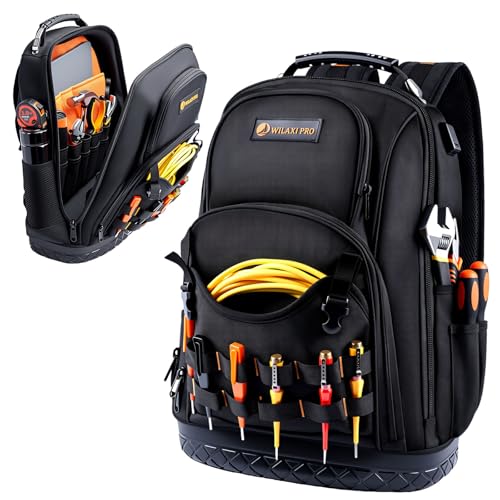
WILAXI PRO Tool Backpack Heavy Duty, Tool Bag Backpack
- ✓
- ✓ Sturdy base protection
- ✓ Organized interior layout
- ✓ Rugged, water-ready fabric
- ✓
- ✕
- ✕ Weighty when fully loaded
- ✕ Bulkier for tiny spaces
- ✕
| Material | 1680D waterproof Oxford fabric |
| Base Protection | Reinforced plastic base |
| Comfort Features | Padded back and shoulder straps with breathable design |
| Storage Capacity | Multiple compartments with a spacious main compartment |
| Intended Use | Construction workers, electricians, DIY enthusiasts |
| Water Resistance & Durability | Waterproof fabric with wear-resistant construction |
You catch the WILAXI PRO Tool Backpack and notice the reinforced plastic base immediately—it sits sturdy on the floor, like it’s ready to take a beating. The fabric feels rugged, and the 1680D material has this subtly waxy finish that suggests it’ll shrug off a spray of water without drama.
Slipping it on, the padded back and wide shoulder straps press comfortably, even when you’re loading it up with heavy tools. It’s not featherlight, but the weight balance feels thoughtful, with most bulk staying centered so you don’t hug your spine with every step.
The first thing you’ll notice when you unzip the main compartment is the organization—lots of pockets of various sizes that make it easy to separate pliers from screwdrivers and spare screws. The roomy interior seems built for real-world chaos, not just neat shelves, which is refreshing for on-site use.
Water protection doesn’t feel like an empty claim here. The 1680D Oxford fabric has a confident heft, and the zippers glide smoothly even when you’re wearing gloves.
It’s designed to stand up to rain, dust, and the occasional muddy doorway without letting your gear become an unwanted souvenir.
In practice, you’ll appreciate the balance between accessibility and protection. The base stays flat when you set it down, so you can grab what you need without the bag tipping over.
It feels like the kind of backpack you’d reach for when you’re running between tasks and don’t want to pause to organize.
Bottom line: this isn’t a flimsy tool bag; it’s built for real construction days—chilly mornings, dusty sites, and late shifts where you need reliable pockets and quick access. If you want something durable that still feels considerate to wear, this one earns its keep.
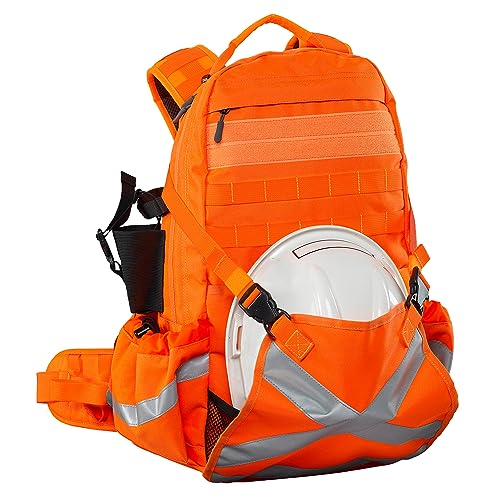
Caribee Mineral King Hi Vis Backpack & Hard Hat Bag
- ✓ Highly visible design
- ✓ Thoughtful internal layout
- ✓ Comfortable all-day support
- ✕ Heavier than average
- ✕ Pricey for some buyers
| Material | 600D water-resistant fabric |
| Safety/Visibility Features | ANSI/ISEA certified reflective tape on front and side panels |
| Storage Capacity/Organization | Multiple pockets including top zip pocket, zippered hip belt pocket, 2 side bottle holders, adjustable hard hat pouch, hydration sleeve for 2–3 L reservoirs (not included), and MOLLE/Hook-and-loop attachment panels |
| Harness/Comfort | Bio-form padded breathable mesh harness with adjustable sternum strap and lumbar support hip belt |
| Weight/Durability Details | Heavy-duty zippers, double-stitch construction, heavy-duty clips and fast-release buckles, reinforced carry handles |
| Intended Use/Applications | Industrial construction/work site, disaster go bag, motorcycle/road bike bag, hunting season woodland use |
The moment I loaded the Caribee Mineral King into my truck, I noticed the bright orange fabric and the way the reflective panels catch the light from every angle. It felt like a safety badge you can wear, not just a bag you sling over a shoulder.
Then I spotted the hidden slip compartment for the hard hat right at the top—a neat trick I didn’t know I needed until I had to reach for it on a windy site.
The exterior is rugged without tipping into bulk. That 600D fabric honestly feels resilient enough to rain through a shift and still come out shining.
The top pocket is surprisingly useful for quick-access tools, while the two side bottle holders stay put with the cinch cords, even when you’re sprinting between stations.
Inside, the layout is a quiet win. The large main compartment swallows a hard hat and a full day’s gear with room to spare.
The hydration sleeve is a thoughtful touch, and the dual heavy-duty zippers glide smoothly from either side, which is perfect if you’re right-handed or left-handed in a hurry. The bio-form harness and breathable mesh back feel supportive without squeezing you into one rigid posture.
On the safety front, you get ANSI/ISEA reflective tape that isn’t decorative—it’s genuinely visible in low light. The hip belt pocket and MOLLE/attachment panels are practical for keeping a radio, gloves, or small admin items within easy reach.
If you’re on a long shift, you’ll notice the lumbar support settles weight where you need it most, reducing fatigue.
Bottom line: this backpack feels built to handle day-long on-site life, weather, and a few unexpected detours. It’s not just a bag; it’s a portable workflow enhancer for tough environments.
ZSearARMY Large Tactical Backpack Military Backpack DIY

- ✓ Large 64L capacity
- ✓ Comfortable, adjustable fit
- ✓ Modular MOLLE system
- ✕ Heavier when full
- ✕ Zippers can be stiff initially
| Capacity | Up to 64 liters (expandable via side zipper from 8″ thickness to 13″ thickness) |
| Main Compartments | Four main loading spaces including front, middle, and main compartments for organized storage |
| Material & Water Resistance | Water-resistant fabric suitable for outdoor activities |
| MOLLE System & Personalization | MOLLE webbing on the front with Velcro panel for patches/pouches |
| Carrying System & Ergonomics | Adjustable chest belt and waist straps with load-distributing design; two strap hooks for walkie-talkie bag |
| Expandable Design & Side Features | Expandable side panels with side buckles to secure contents and reduce size when full |
You unzip the ZSearARMY Large Tactical Backpack and the first thing that catches your eye is the 64L claim in its expandable side. It’s got that sturdy, no-nonsense vibe you want for a workday that bleeds into a weekend hike.
You’ll notice the MOLLE front panel and the Velcro name/flag space right away, which instantly personalizes it without needing tools or extra pouches.
Over the first couple of trips, you’ll appreciate the four main compartments. The front pocket fits your phone, wallet, and keys like a charm, while the middle section swallows a tablet or slim notebook with room to spare.
The main compartment swallows clothes, a light jacket, and emergency gear, and you’ll still have space for snacks and a compact first-aid kit.
The side pockets and water bottle mesh become your quick-access zone. You’ll reach for a bottle, and the stretchy mesh holds it securely even when you’re moving through crowded streets or rocky trails.
The adjustable chest strap and waist strap make a difference when you’re walking, especially when the load grows heavier.
If you’re hopping between construction sites and a hiking trail, the expandable zipper is a small win. It lets you tighten the profile when you’ve only got the essentials, or widen it when you’re carrying tools and bulky gear.
The build feels resilient, and the water resistance gives you a bit of peace of mind in unpredictable weather.
Bottom line: it’s a practical work-and-play backpack that adapts to your day, not the other way around. It’s comfortable, modular, and surprisingly roomy for the price.
What Features Should a Construction Worker Look for in a Backpack?
When choosing the best backpack for a construction worker, several key features are essential for functionality and durability.
- Durability: A construction backpack should be made from tough materials like nylon or polyester to withstand rough handling and harsh conditions. Reinforced stitching and water-resistant fabric can further enhance its longevity and protect the contents from weather elements.
- Comfort: Padded shoulder straps and a breathable back panel are crucial for comfort, especially during long hours on the job. The backpack should also have an adjustable sternum strap to help distribute weight evenly and prevent strain.
- Storage Capacity: Look for a backpack with ample storage space and multiple compartments to organize tools, safety gear, and personal items. Larger backpacks with external pockets can provide easy access to frequently used items without digging through the main compartment.
- Tool Organization: A good construction backpack often includes designated tool organizers or pockets specifically designed for tools, ensuring that everything is easy to find and secure. Some may even have loops or straps for attaching larger tools externally.
- Accessibility: Quick access to tools and equipment is vital on a construction site. Features like side pockets, top openings, or front-loading designs can facilitate easy retrieval of gear without having to remove the entire backpack.
- Weight Distribution: A well-designed backpack should offer features that help distribute weight evenly, reducing fatigue during prolonged use. This can include a hip belt or load-lifter straps that adjust the fit and keep the backpack close to the back.
- Safety Features: Reflective strips or high-visibility colors can enhance safety by making the worker more visible on job sites. Additionally, some backpacks may include padded compartments for protecting sensitive equipment, such as laptops or tablets.
- Water Resistance: Given the outdoor nature of construction work, a water-resistant backpack is essential to keep tools and personal items dry during unexpected weather. Look for backpacks with waterproof zippers and sealed seams for added protection.
Why is Durability Critical for a Construction Backpack’s Performance?
Durability is critical for a construction backpack’s performance because it ensures that the bag can withstand the harsh conditions and heavy use typical in construction environments.
According to a study published in the Journal of Construction Engineering and Management, construction workers face extreme conditions including exposure to moisture, dust, and rough handling, which can all lead to rapid wear and tear on equipment (Smith et al., 2021). A durable backpack made from high-quality materials such as heavy-duty nylon or reinforced stitching is essential to prevent failure during crucial work tasks.
The underlying mechanism behind this necessity lies in the materials and design features that contribute to a backpack’s longevity. For instance, high-denier fabric provides resistance to abrasions and tears, while water-resistant coatings protect contents from rain or spills. Moreover, ergonomic designs that distribute weight evenly reduce strain on the back, which is essential for workers who may carry heavy tools and materials. When a backpack is engineered to endure such challenges, it not only enhances the efficiency of the worker but also minimizes the risk of costly equipment damage or personal injury, reinforcing why durability is paramount in selecting the best backpack for construction workers.
How Does Weather Resistance Impact Backpack Selection for Job Sites?
Weather resistance is a crucial factor when selecting a backpack for construction workers, as it ensures durability and protection for tools and personal items.
- Waterproof Materials: Backpacks made from waterproof materials like nylon or polyester keep contents dry during rain or exposure to moisture. This is especially important on job sites where weather conditions can change rapidly, preventing damage to tools and electronics.
- Weatherproof Zippers: Weatherproof zippers help to seal the backpack securely, preventing water from seeping in. High-quality zippers that resist rust and corrosion will enhance the longevity of the backpack, making it suitable for outdoor use in varying climates.
- Sealed Seams: Backpacks with sealed seams provide an additional layer of protection against water ingress. This feature is essential for ensuring that even if the backpack is exposed to heavy rain, the internal contents remain safe and dry.
- UV Protection: Some backpacks come with UV-resistant materials that protect against sun damage. This is particularly beneficial for construction workers who spend long hours outdoors, as it helps maintain the integrity of the backpack over time.
- Insulation: Insulated backpacks can protect sensitive tools or materials from extreme temperatures. This feature is useful for construction workers who may need to transport items that could be affected by heat or cold, ensuring optimal performance.
What Storage Solutions are Most Practical for Construction Tools?
The most practical storage solutions for construction tools include:
- Tool Backpacks: These are specially designed to carry various tools while keeping them organized and easily accessible.
- Tool Bags: Typically made from durable materials, tool bags offer a spacious interior and multiple pockets for tool organization.
- Rolling Tool Carts: Ideal for transporting heavy tools and equipment, these carts feature wheels for easy mobility on job sites.
- Tool Belts: A classic choice for on-the-go workers, tool belts allow for quick access to essential tools while keeping hands free.
- Storage Boxes: Sturdy storage boxes can be used for larger tools and equipment, providing security and protection from the elements.
Tool Backpacks: These backpacks are specifically designed with padded compartments and pockets for different tools, making them suitable for construction workers who need to carry various items at once. They often feature ergonomic designs to ensure comfort during long hours of wear, as well as weather-resistant materials to protect tools from the elements.
Tool Bags: Tool bags come in various sizes and styles, providing a flexible solution for carrying tools. With heavy-duty zippers and reinforced seams, these bags can withstand the rigors of a construction site, while their numerous pockets help keep tools organized and easily accessible.
Rolling Tool Carts: These carts are perfect for transporting larger tools and materials over longer distances, with the added benefit of reducing strain on the user. Many models come with multiple drawers and shelves, allowing for organized storage and quick access to tools when needed.
Tool Belts: Tool belts are a practical solution for carrying frequently used tools without the need to set them down. They are adjustable for comfort and can accommodate a variety of tools, making them a staple for construction workers who require immediate access to their equipment.
Storage Boxes: Storage boxes provide a robust and secure way to store larger tools and equipment, often featuring locking mechanisms for added safety. They are typically weatherproof, ensuring that tools remain protected from rain and moisture, which is crucial on outdoor job sites.
Which Materials are Best for a Construction Worker’s Backpack?
The best materials for a construction worker’s backpack should provide durability, weather resistance, and functionality.
- Ballistic Nylon: This material is known for its exceptional toughness and resistance to abrasions, making it ideal for the rigors of construction work. Ballistic nylon backpacks can withstand heavy loads and rough handling, ensuring that tools and equipment are protected during transportation.
- Canvas: Heavy-duty canvas is another excellent choice due to its durability and breathable qualities. It offers a classic look while being robust enough to handle wear and tear from construction sites, although it may require treatment for water resistance.
- Polyester: A lightweight and water-resistant option, polyester backpacks are often coated to enhance their durability against the elements. This material is also resistant to fading and is easy to clean, making it suitable for outdoor work environments.
- Leather: While heavier than synthetic materials, leather backpacks provide a rugged and stylish option for construction workers. Leather is inherently strong and can last for years with proper care, but it may require regular maintenance to protect against moisture and damage.
- Ripstop Fabric: This fabric is designed to resist tearing and ripping, making it a great choice for construction sites where sharp tools and equipment are prevalent. Ripstop backpacks are often lightweight yet durable, allowing for easy mobility without sacrificing strength.
How Does Nylon Stack Up Against Other Fabrics in Construction Settings?
Nylon is a popular fabric in construction settings due to its unique properties, but there are other fabrics that also play a significant role.
- Nylon: Nylon is known for its strength and durability, making it ideal for construction environments where wear and tear are common. Its resistance to abrasion and chemicals allows it to perform well in harsh conditions, while its lightweight nature makes it comfortable for prolonged use in backpacks.
- Canvas: Canvas is a heavy-duty fabric that offers excellent durability and is often used in work gear that requires a rugged construction. While it is heavier than nylon, it provides great resistance to tearing and is suitable for carrying heavy tools and materials, making it a preferred choice for many construction workers.
- Polyester: Polyester is another synthetic fabric that is known for its resistance to fading and stretching. It is often blended with other materials to enhance durability and water resistance, making it a good option for backpacks that need to withstand various weather conditions on construction sites.
- Denim: Denim is a sturdy cotton fabric that is often used in workwear. While it is less common for backpacks, its toughness and ability to hold up under heavy use make it a viable option for certain types of construction gear, especially when combined with other materials for added functionality.
- Leather: Leather is prized for its durability and classic look, providing a high level of protection against wear and tear. Though heavier and often more expensive, leather backpacks can offer excellent longevity and comfort, making them suitable for construction workers who prioritize quality and style.
What Role Does Waterproofing Play in Backpack Functionality?
Waterproofing is a crucial feature for backpacks designed for construction workers, enhancing their functionality in various ways:
- Protection from Moisture: Waterproofing ensures that the contents of the backpack remain dry in wet conditions, which is essential for safeguarding tools, electronics, and personal items from water damage.
- Durability and Longevity: Waterproof materials often provide additional resistance to wear and tear, making the backpack more durable in harsh environments, which is common on construction sites.
- Ease of Cleaning: Waterproof backpacks are typically made from materials that are easier to clean, allowing construction workers to quickly remove dirt and grime that accumulates during their workday.
- Enhanced Comfort: Many waterproof backpacks are designed with ventilation systems that help manage moisture buildup inside, preventing sweat accumulation and keeping the wearer comfortable.
- Versatility: A waterproof backpack can be used in various weather conditions, making it suitable not only for construction work but also for outdoor activities, travel, or daily commuting.
Protection from Moisture: Waterproofing ensures that the contents of the backpack remain dry in wet conditions, which is essential for safeguarding tools, electronics, and personal items from water damage. This is particularly important for construction workers who may encounter rain or wet environments where moisture can ruin their equipment.
Durability and Longevity: Waterproof materials often provide additional resistance to wear and tear, making the backpack more durable in harsh environments, which is common on construction sites. High-quality waterproof fabrics are designed to withstand rough handling and exposure to various elements, prolonging the lifespan of the backpack.
Ease of Cleaning: Waterproof backpacks are typically made from materials that are easier to clean, allowing construction workers to quickly remove dirt and grime that accumulates during their workday. This feature is particularly beneficial in maintaining a professional appearance and ensuring that tools and equipment remain in good condition.
Enhanced Comfort: Many waterproof backpacks are designed with ventilation systems that help manage moisture buildup inside, preventing sweat accumulation and keeping the wearer comfortable. This is vital for construction workers who may work long hours and need to remain focused and comfortable throughout their tasks.
Versatility: A waterproof backpack can be used in various weather conditions, making it suitable not only for construction work but also for outdoor activities, travel, or daily commuting. This versatility allows construction workers to invest in a bag that meets multiple needs, making it a practical choice for their lifestyle.
What Size of Backpack is Ideal for Construction Workers?
The ideal backpack for construction workers prioritizes durability, comfort, and functionality.
- Size: A medium to large-sized backpack, typically ranging from 30 to 50 liters, is ideal for carrying tools and personal items.
- Material: A rugged, water-resistant material such as nylon or polyester ensures that the backpack withstands tough working conditions.
- Compartments: Multiple compartments help organize tools and equipment efficiently, with padded sections for fragile items.
- Padded Straps: Ergonomically designed padded straps provide comfort during long hours of wear, reducing strain on the shoulders.
- Weight Distribution: A backpack with a hip belt or load-lifter straps helps distribute weight evenly, enhancing balance and reducing fatigue.
- Visibility: Bright colors or reflective materials increase visibility on job sites, enhancing safety in potentially hazardous environments.
- Tool Organization: Integrated tool organizers or pockets specifically designed for hand tools facilitate quick access and efficiency during work.
- Durability: Reinforced stitching and high-quality zippers contribute to the longevity of the backpack, making it suitable for daily wear and tear.
A medium to large-sized backpack offers ample space for essential tools and equipment while remaining manageable for daily use. The choice of durable materials such as nylon or polyester is crucial, as construction sites can expose backpacks to harsh weather conditions and rough handling. Multiple compartments are beneficial for organization, ensuring that tools are easily accessible and securely stored when not in use.
Padded straps are essential for comfort, especially for workers who carry heavy loads for extended periods. These ergonomic features help minimize shoulder strain. Furthermore, weight distribution systems, like hip belts, enhance stability and comfort throughout the day.
Visibility is a key safety feature; backpacks with bright colors or reflective elements ensure that workers are easily seen in busy environments. Additionally, having tool organizers allows for efficient workflow, enabling quick access to necessary tools without fumbling through the bag.
Lastly, durability should be a top priority, with reinforced stitching and robust zippers that can withstand the rigors of a construction site, ensuring the backpack remains functional over time.
How Does Size Affect Tool Storage and Carrying Comfort?
Size plays a crucial role in tool storage and carrying comfort, especially for construction workers who need to balance capacity and ease of transport.
- Small Backpacks: These backpacks are typically lightweight and easy to carry, making them ideal for quick jobs or when only a few essential tools are needed. Their compact size allows for better maneuverability, but they may not accommodate larger tools or multiple items, limiting functionality.
- Medium Backpacks: Offering a balance between size and storage capacity, medium backpacks can hold a wider range of tools while still maintaining comfort for daily use. They often feature multiple compartments, allowing for organization, though they may still become cumbersome if overpacked.
- Large Backpacks: Designed to carry heavy and numerous tools, large backpacks provide ample space for a full toolkit, making them suitable for extensive projects. However, their size can lead to discomfort over long periods, particularly if not ergonomically designed, as the added weight may strain the back and shoulders.
- Adjustable Size Features: Many backpacks come with adjustable straps and compartments that allow users to customize the fit and capacity based on their needs. These features enhance comfort and can help distribute weight more evenly, reducing fatigue during long workdays.
- Weight Distribution: The size of the backpack also affects how weight is distributed across the body. A well-sized backpack that fits snugly can prevent tools from shifting and causing discomfort, while an ill-fitting larger backpack can lead to poor posture and increased strain on the body.
What Capacity is Suitable for Daily Use on Job Sites?
The capacity suitable for daily use on job sites varies based on the specific needs of construction workers, but generally, it should be spacious enough to carry essential tools and personal items while remaining manageable.
- 20-30 Liters: This size is ideal for light-duty tasks where portability is key.
- 30-50 Liters: A mid-range choice that balances capacity and weight, suitable for most daily construction needs.
- 50+ Liters: Best for heavy-duty use, allowing for the transportation of larger tools and equipment.
20-30 Liters: A backpack with a capacity of 20 to 30 liters is perfect for workers who only need to carry a few essential tools and personal items like a water bottle, snacks, or a first aid kit. This size offers enough space for basic hand tools and allows for easy movement on site, making it an excellent choice for those doing lighter work or maintenance tasks.
30-50 Liters: A capacity in the range of 30 to 50 liters is often regarded as the most versatile for construction workers, as it can accommodate a wider variety of tools, safety gear, and personal items without being overly bulky. This size is suitable for carrying a power tool, a couple of hand tools, and additional gear, making it well-suited for daily construction tasks that require more equipment.
50+ Liters: For heavy-duty construction tasks, a backpack with over 50 liters of capacity is ideal, as it provides ample room for larger tools, equipment, and supplies. This size is particularly beneficial for workers who need to transport multiple power tools, heavy-duty materials, or who are on a job site with extensive requirements, ensuring that everything can be carried efficiently and securely.
Which Brands are Leaders in Manufacturing Construction Backpacks?
Some of the leading brands in manufacturing construction backpacks include:
- DeWalt: Known for its durability and practical designs, DeWalt backpacks are built to withstand tough job site conditions. They often feature multiple pockets for tools and accessories, reinforced stitching, and water-resistant materials to keep gear safe from the elements.
- Carhartt: Carhartt backpacks are recognized for their rugged construction and functionality. With a focus on heavy-duty materials, these backpacks typically offer ample storage space and organizational features, making them ideal for construction workers who need to carry various tools and personal items.
- Caterpillar: Caterpillar backpacks are designed with the needs of construction workers in mind, featuring robust construction and ergonomic designs. They often include specialized compartments for tools, laptops, or hydration, ensuring that users can easily access their essential items while on the job.
- Milwaukee: Milwaukee is renowned for its innovative designs and high-quality materials, offering backpacks that cater specifically to the trades. Their backpacks often come equipped with unique features like padded tool compartments, reinforced bases, and weatherproof zippers, making them reliable choices for construction environments.
- ToolGuard: ToolGuard specializes in backpacks that focus on security and organization for tools. Their products are designed with lockable compartments and a layout that allows for easy access to tools while maintaining organization, which is essential for construction workers who need to keep their equipment secure.
Are There Specific User Reviews That Highlight Key Brand Features?
User reviews often highlight various key features that make a backpack particularly suitable for construction workers. Here are some features commonly mentioned:
- Durability: Construction workers need backpacks that can withstand harsh conditions, and many reviews emphasize materials like heavy-duty nylon or reinforced stitching. These features ensure that the backpack can endure wear and tear from tools and equipment, making it a reliable choice on job sites.
- Organization: Effective organization is crucial for construction workers, and user feedback frequently points out the importance of multiple compartments and pockets. This allows for easy access to tools, safety gear, and personal items, which can save time and improve efficiency on the job.
- Comfort: Many reviews highlight the significance of padded shoulder straps and back support in reducing fatigue during long work hours. Comfort features can make a significant difference in a worker’s ability to carry heavy loads without strain, enhancing overall productivity.
- Weather Resistance: Construction sites often expose workers to various weather conditions, so user reviews often mention waterproof or water-resistant materials. These features help protect tools and personal items from rain or moisture, ensuring that everything stays dry and functional.
- Capacity: The ideal backpack should have enough storage space to accommodate all necessary items without being overly bulky. Reviews often discuss the balance between size and capacity, as a spacious bag can facilitate carrying more tools while remaining manageable for daily use.
What Cost Factors Should Construction Workers Consider When Buying a Backpack?
When selecting the best backpack for construction workers, several cost factors should be taken into consideration to ensure both value and functionality.
- Material Quality: The durability of the materials used in the backpack can significantly influence its price. High-quality fabrics such as nylon or polyester offer resistance to wear and tear, making them ideal for rugged construction environments.
- Size and Capacity: Larger backpacks typically cost more, but they also provide additional storage space for tools, equipment, and personal items. It’s essential to balance size with portability, as a too-large backpack can become cumbersome on the job site.
- Brand Reputation: Well-known brands often charge a premium due to their reputation for quality and reliability. Investing in a recognized brand can lead to long-term savings, as these backpacks may last longer and provide better performance over time.
- Features and Functionality: Backpacks with specialized features such as tool compartments, waterproofing, and ergonomic designs may come at a higher price. These features can enhance efficiency and comfort, making them worthwhile investments for construction workers.
- Warranty and Customer Support: Backpacks that come with a warranty or guarantee often have a higher upfront cost. However, this can provide peace of mind and protection against defects, potentially saving money in the long run if issues arise.
- Customization Options: Some backpacks offer personalization features like removable pouches or modular designs, which can increase the overall cost. These customizable aspects can greatly enhance functionality tailored to specific tasks on the job site.
How Can You Balance Quality and Affordability in Your Purchase?
Price Range: Balancing your budget with the features you need is essential; many backpacks are available at various price points, so it’s important to assess what features are most critical for your work. Investing slightly more in a quality backpack can save money in the long run by reducing the need for replacements.
User Reviews and Ratings: Checking user reviews can reveal how well a backpack performs in real-world construction scenarios. High ratings and positive comments often indicate that the backpack meets the rigorous demands of a construction environment, helping you make a more informed decision.
Related Post: