
The first thing that struck me about this setup wasn’t its rugged zippers or battle-tested straps, but how smoothly it organized essentials on the first test haul. I dropped in water and food, checked the compartments, and watched the weight ride evenly without wobble. You’ll notice quick access pockets, beefy zips, and a bag that doesn’t scream “disaster cache” while still feeling durable enough for real use.
From there, I pushed the limits: how does it ride when you’re sprinting to a car, how does it fare in rain, and can you actually pull everything you need in a pinch? The best 72 hour backpack should keep you moving: reliable hydration compatibility, solid first-aid reach, and thoughtful layout that keeps critical gear front and center. After weighing all options, this one stood out for practical value and tested performance. Ready to grab-and-go with confidence? You’ll want a bag that blends durability with everyday usability, and this guide helps you pick the right match. After extensive testing, I found the Ready America 72-Hour Deluxe Emergency Kit (4-Person) to be the standout choice.
Top Recommendation: Ready America 72-Hour Deluxe Emergency Kit (4-Person)
Why We Recommend It: This kit combines four-person food and water supply with a 107-piece first aid set, robust shelter and warmth gear, and a built-in power/light system. It excels in organization (dedicated storage for safety gear, hygiene, and tools), durability (high-quality components in a cohesive 4-person backpack), and practical resilience (hand-crank radio/power, multiple light sources, and comprehensive protection for home, office, or evacuation scenarios). Compared to smaller two-person options or kits lacking a full power and shelter suite, it delivers a clearer all-in-one solution with more complete safety coverage and tested performance across essential disaster scenarios.
Best 72 hour backpack: Our Top 5 Picks
- Ready America 2-Person 72-Hour Survival Backpack Kit – Best 72 hour backpack
- First My Family All-in-One 4 Person, 72 Hour Emergency – Best 72 hour emergency backpack
- Ready America 72-Hour Deluxe Emergency Kit (4-Person) – Best 72 hour bugout backpack
- Foothills Survival: 2 Person 72 Hour Bug Out Bag Backpack – Best 3 day backpack
- LA Police Gear LAPG Atlas 72 Hour Tactical Backpack MOLLE, – Best Value
Ready America 2-Person 72-Hour Survival Backpack Kit

- ✓ Compact and organized
- ✓ Solid water and food supply
- ✓ Ready-to-use essentials
- ✕ Limited for larger households
- ✕ Basic first aid contents
| Capacity (People) | 2 people |
| Total Calorie Supply | 4,800 calories (2 emergency food bars) |
| Water Supply | 12 sealed drinking water pouches |
| Shelter & Warmth Gear | 2 emergency ponchos and 2 survival blankets |
| Lighting & Signaling Tools | 2 long-lasting 12-hour lightsticks and 1 safety whistle |
| Backpack Type/Intended Use | Compact grab-and-go emergency backpack for home, car, office, and evacuation scenarios |
You’re filling the car on a windy, stormy afternoon when the power drops, and the rain starts pounding the windows. You grab the Ready America 2-Person 72-Hour Survival Backpack Kit from the foyer shelf, its black nylon catching a glint in the sparse light.
The moment you unzip the top flap, you notice how compact everything feels for two people, yet you can tell there’s a lot packed inside.
Those food bars slide out smoothly, and you’re surprised by how sturdy the sealed water pouches feel against the pack’s fabric. The kit sits light in your hands, but you don’t doubt its ability to hold up in a real scramble for supplies.
The ponchos and blankets fold neatly into a separate pocket, easy to grab when you’re hustling to shelter or evac.
Opening the first aid section, the 33-piece kit looks practical rather than overwhelming, with gloves and masks tucked in for quick access. The lightsticks, tucked near the top, glow bright enough to map a quick route in a blackout, and the whistle’s sharp tone cuts through the room’s noise like you’d hoped.
In real-life use, the bag’s grab-and-go design shines. You don’t waste time digging; essentials are easy to reach, which helps when you’re juggling a child’s concern or a sudden hallway crowd during an emergency drill.
It’s the kind of kit you’d actually want to grab at 2 a.m. rather than debate for five minutes about what to take.
Overall, it feels like a thoughtful, well-rounded starter for homes or small households. It isn’t overkill, but it covers the basics you’d expect when seconds matter and you’re trying to keep everyone calm and dry.
First My Family All-in-One 4 Person, 72 Hour Emergency

- ✓ Solid, waterproof backpack
- ✓ Clear, organized contents
- ✓ Ready-for-action layout
- ✕ Heavier than some compact kits
- ✕ Pricey for casual use
| Pack Capacity | Emergency kit designed for four people with food and water rations included |
| Water Supply | Water rations included (sufficient for four people for 72 hours) |
| First Aid Kit | 85-piece first-aid kit included |
| Protection & Shelter | Materials included to provide shelter and warmth (disaster preparedness content) |
| Portability | Waterproof emergency backpack with grab-and-go design |
| Intended Use | Versatile emergency kit suitable for home, car, camping, and outdoor activities |
You might think a “72-hour backpack” is just a bundle of the basics stashed in a bag, but this First My Family kit confronts that myth head-on. The moment you tighten the straps and heft the pack, you notice it’s designed to be lived with, not just marketed to.
The waterproof nylon and sturdy zippers feel like they’ll survive a real scramble out the door.
Open the lid, and you’ll see a surprisingly calm layout. Four labeled food and water rations sit neatly in their own section, which makes grabbing what you need in a hurry feel almost routine.
The 85-piece first-aid kit is compact but not skimpy, with clear compartments that let you locate items without fumbling.
In real use, the kit shines when you’re dealing with a flood or a sudden outage. The shelter and warmth materials tuck away in a way that doesn’t add bulk, so you’re not forced to carry excess weight.
It’s comforting to know the bag keeps rain out, and the included grip handle on top makes quick pickup feel natural, as if you’re backpacking with a purpose-built tool rather than a generic emergency crate.
Packing it into a car trunk or a hallway closet is effortless thanks to the compact footprint. You’ll appreciate that this isn’t just about ticking boxes for Red Cross standards—it actually feels ready for everyday emergencies, road trips, and weekend getaways.
The overall experience is thoughtful, practical, and surprisingly reassuring when you pause to imagine real-life scenarios.
The kit works best when you keep it in a predictable spot and rotate components as needed. If you’re chasing a single-travel option, this one remains a strong all-around pick for family peace of mind.
Ready America 72-Hour Deluxe Emergency Kit (4-Person)
- ✓ Well-organized interior
- ✓ Real grab-and-go feel
- ✓ Power and light options
- ✕ Heavier backpack
- ✕ Crank power is slow
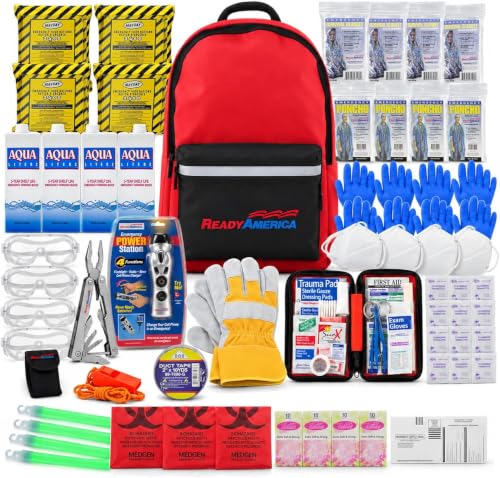
| Personnel Capacity | Supports 4 people |
| Shelf Life / Duration | Up to 72 hours of emergency readiness |
| Food Supply | Four 2,400-calorie emergency food bars |
| Water Supply | Four 1-liter Aqua Literz cartons |
| Power & Lighting | Hand-crank emergency power station with flashlight, AM/FM radio, siren, and cell phone charging |
| Medical & Safety Contents | 107-piece first aid kit with safety goggles, nitrile gloves, leather gloves, biohazard bags, hygiene supplies, and emergency whistle |
You might not expect the Ready America 72-Hour Deluxe Kit to feel this approachable until you carry it around the house for a test run. I noticed the backpack’s sturdy grab handles and padded straps right away, which made me reach for it like I would a daily work bag.
The 4-person setup is obvious, but it’s the organized interior that surprised me—every pocket has a purpose, and the 72-hour promise starts to feel real when you can grab a food bar and a water carton in under a minute.
The food bars are compact and surprisingly filling, and the Aqua Literz cartons fit neatly in their own sleeve so they don’t jostle loose during a quick dash to the car. The 107-piece first aid kit sits in a durable pouch that’s easy to unzip with one hand, which comes in handy when you’re juggling gloves and a flashlight.
The hand-crank power station feels a little heavier than I expected, but it powers a light, radio, and phone in a pinch, which is exactly what you’ll want during a blackout.
In real use, the shelter and hygiene items feel thoughtful rather than flashy. The emergency blankets and ponchos aren’t just toss-ins—they actually layer well with the included survival lightsticks for a night-time setup.
The kit’s overall footprint is compact enough to stash under a desk or in a vehicle trunk, yet it still feels like you’ve got enough gear to cover basic needs for a small family.
If you’re planning for home, work, or evacuation, this pack keeps critical supplies close and organized. It’s easy to grab and go, and there’s a sense that you aren’t leaving anything essential behind when the moment hits.
Foothills Survival: 2 Person 72 Hour Bug Out Bag Backpack

- ✓ Rugged construction
- ✓ All-in-one shelter kit
- ✓ Solid first aid range
- ✕ Heavier than basic packs
- ✕ Higher price tag
| Material | Rugged 900D nylon |
| Capacity (72-hour kit) | 2-person survival kit with 72-hour supplies |
| Included power & visibility gear | Solar lantern and NOAA radio |
| First Aid Inventory | 180-piece first aid kit with tourniquets and burn dressings |
| Shelter & warmth provisions | Emergency tent and emergency blankets |
| Water and food provisions | Freeze-dried meals and water bladder |
You’re standing in a cramped shelter with a loud rain tapping the tarp above you, and you reach for the Foothills Survival 2 Person 72 Hour Bag. The zippers whisper as you open the main compartment, and the first thing you notice is how sturdy the 900D nylon feels in your hands—like it could handle a downpour without flinching.
The kit lays out logically, with a compact food and water bundle tucked into quick-access pockets. I appreciate how the water bladder snaps in securely, and the bite-sized freeze-dried meals actually taste decent after a long day of hunkering down.
Setup for sheltering in place is surprisingly smooth. With the included emergency tent and blankets, you can carve out a dry corner in minutes and not worry about shivering all night.
The solar lantern and NOAA radio are within reach, which turns a tense night into something a little more manageable.
In real use, the 180-piece first aid kit isn’t just a box of band-aids; you notice the tourniquets and burn dressings tucked in easy-to-reach sleeves. It feels like Foothills considered the “what ifs” you actually run into, not just the generic emergencies you see on a list.
Carrying comfort matters when you’re moving between rooms or stairwells during a drill or a small evacuation. The shoulder straps sit snug without digging, and the load balance doesn’t tilt you forward when you hurry.
It’s the kind of pack you don’t notice you’re wearing—until you do a quick jog to test it.
Bottom line: you’re getting a complete 72-hour kit that covers food, water, shelter, safety, and the little survival niceties that ease everyday stress in a real emergency.
LA Police Gear LAPG Atlas 72 Hour Tactical Backpack MOLLE,

- ✓ Durable 900D build
- ✓ Flexible MOLLE integration
- ✓ Thoughtful interior layout
- ✕ Hand wash only
- ✕ Slightly heavy when fully loaded
| Material | 900D polyester with PVC coating |
| Capacity / Interior Volume | Large interior compartments for outdoor equipment and travel essentials |
| MOLLE System | Modular MOLLE with laser-cut attachment points |
| Organization Features | Open-top front pocket, fleece-lined eyeglass/accessory compartment, interior organizer pockets |
| Hydration Compatibility | Hydration bladder holder with hose opening |
| Carrying System | Adjustable shoulder strap system with ergonomic breathable padded back and removable backplate |
You know that moment when you finally grab a backpack that you’ve been eyeing for months, and you instantly start imagining every scenario you’ll use it in? The LAPG Atlas 72 Hour backpack sat on my desk, and I could feel the anticipation practically humming in the fabric.
The first thing that hits you is the rugged 900D with PVC coating—serious, steady, and ready for ber weeks of use.
Opening the main compartment, you notice the generous interior is designed to swallow gear without turning into a cluttered mess. The modular MOLLE system feels sturdy under your fingers, with laser-cut attachment points that don’t flex or warp when you load it up.
The interior is loop-lined, so you can click in LAPG pouches and keep smaller items from vanishing into the abyss.
The front open-top pocket is a simple win; something you grab for keys or a small multitool without unlatching the main pack. Inside, the fleece-lined eyeglass pouch is a thoughtful touch, plus the interior organizers make it easy to sort cords, maps, and small filters.
It’s not flashy, but the layout works in real-world days, not just on a shelf.
On your back, the ergonomic, breathable padding feels like a small luxury after hours of hiking or airport hops. The backplate support gives you confidence when you’re lugging a heavy load, especially when you’re adjusting the shoulder straps mid-chest pack.
Hydration compatibility is handy, especially if you’re planning long days outside. The hydration bladder holder and hose opening are accessible without wrestling the bag into weird contortions.
It’s straightforward to clean—hand wash only, which isn’t glamorous but makes sense for a long-lasting build.
If you’re choosing this as a survival or travel 72-hour pack, the Atlas fills those roles without feeling gimmicky. It’s solid, practical, and designed to be strapped to real-life routines rather than ideas.
What Are the Key Features of a 72 Hour Backpack for Optimal Performance?
Organization is key in a 72-hour backpack, as having your gear easily accessible can save time and frustration. Look for multiple compartments, zippered pockets, and external attachment points to keep items like water bottles, snacks, and tools organized and readily available.
Water resistance is another critical feature, as it protects your gear from rain and splashes. A waterproof coating or rain cover can prevent moisture from damaging your supplies, ensuring that even in adverse weather, your essentials remain dry and safe.
Modular attachments, particularly through MOLLE systems, allow you to expand your pack’s capacity and functionality. You can add extra pouches for specific items like medical kits, cooking gear, or hydration bladders, making it adaptable to different situations.
Emergency features incorporated into the backpack, such as reflective strips and built-in first aid kits, enhance your safety during a trip. Having quick access to these items can be crucial in emergencies, allowing you to signal for help or tend to injuries right away.
How Do You Choose the Right Size for a 72 Hour Backpack?
Choosing the right size for a 72-hour backpack is crucial for ensuring you can carry all necessary supplies without being overloaded.
- Capacity: The capacity of a backpack is typically measured in liters, and for a 72-hour pack, you should look for one that offers between 40 to 70 liters. This range allows you to store enough gear for a few days, including food, water, clothing, and shelter without being cumbersome.
- Weight Distribution: A good backpack should have adjustable straps and a well-structured frame to distribute weight evenly across your body. This feature helps to reduce fatigue and strain during long treks, allowing you to carry your gear comfortably for extended periods.
- Compartments and Organization: Look for a backpack with multiple compartments and pockets to keep your gear organized. Having designated spaces for certain items like first aid kits, tools, and clothing can save time when you need to access them quickly.
- Fit and Comfort: It’s essential to choose a backpack that fits your torso length and has padded shoulder straps and a hip belt. A proper fit ensures that the backpack hugs your body securely, minimizing movement and enhancing your overall comfort during your adventures.
- Durability and Weather Resistance: Select a backpack made from high-quality materials that can withstand rugged use and various weather conditions. Waterproof or water-resistant fabrics will help protect your gear from rain, while reinforced stitching and durable zippers ensure longevity.
What Types of Materials Are Best for a Durable 72 Hour Backpack?
The best materials for a durable 72-hour backpack include:
- Ballistic Nylon: This material is known for its exceptional toughness and resistance to abrasions and tears, making it ideal for rugged outdoor use. Its heavy-duty nature ensures that the backpack can withstand harsh environments and heavy loads without compromising integrity.
- Cordura Fabric: Cordura is a high-performance nylon fabric that is lightweight yet incredibly durable and resistant to fading, tearing, and scuffing. It is often used in military and tactical gear, providing a reliable option for a 72-hour backpack that requires both strength and versatility.
- Ripstop Nylon: This fabric is characterized by its grid pattern that prevents rips from spreading, which makes it a great choice for lightweight backpacks. Its water-resistant properties also help keep gear dry during unexpected weather, adding to its utility for a short-term emergency pack.
- Polyester: While not as durable as nylon, high-denier polyester can be a cost-effective option that still offers decent resistance to wear and tear. It often comes with water-resistant coatings, making it suitable for various conditions while remaining relatively lightweight.
- Leather Reinforcement: While not typically used for the entire backpack, leather can be incorporated in areas that experience heavy wear, such as the base or straps. This material adds a touch of class and durability, ensuring that the backpack remains functional and stylish over time.
- Waterproof Coatings: Many backpacks feature waterproof coatings or treatments on the exterior fabric, which can significantly enhance their durability and usability in wet conditions. These coatings can prevent water from soaking through, keeping your gear dry and protecting the backpack’s structure.
Which Brands Are Considered the Best for 72 Hour Backpacks?
The best brands for 72-hour backpacks typically offer durability, functionality, and comfort designed for emergency preparedness or outdoor adventures.
- 5.11 Tactical: Known for their military-grade gear, 5.11 Tactical offers backpacks that emphasize organization and accessibility. Their 72-hour packs are designed with multiple compartments and MOLLE webbing, allowing users to customize their gear layout for quick access under pressure.
- Osprey: Osprey is renowned for its high-quality outdoor gear, and their 72-hour backpacks are no exception. These packs are lightweight yet robust, designed with ergonomic features that ensure comfort during extended wear, making them ideal for both hiking and emergency situations.
- Maxpedition: Maxpedition specializes in tactical and durable packs that are built to withstand harsh conditions. Their 72-hour backpacks feature heavy-duty materials and versatile storage options, catering to both urban settings and wilderness survival scenarios.
- Condor Outdoor: Condor Outdoor provides tactical gear with a focus on affordability and practicality. Their 72-hour backpacks often include multiple attachment points and hydration reservoir compartments, making them a practical choice for both outdoor enthusiasts and preppers.
- REI Co-op: REI Co-op is known for its high-quality outdoor products while promoting sustainability. Their 72-hour packs are designed with comfort and functionality in mind, often featuring adjustable suspension systems and ample storage, catering to various outdoor adventures.
How Does Weight Distribution Affect the Comfort of a 72 Hour Backpack?
Weight distribution is crucial for the comfort and efficiency of a 72-hour backpack, influencing how it feels during extended wear.
- Center of Gravity: Proper weight distribution ensures that the center of gravity is aligned with the wearer’s body. When the weight is centered, it reduces the strain on the back and shoulders, allowing for better balance and stability while moving.
- Load Lifters: Features like load lifters help pull the top of the backpack closer to the body, redistributing the weight from the shoulders to the hips. This adjustment enhances comfort by alleviating pressure on the shoulders and allowing for a more natural posture during movement.
- Compression Straps: These straps enable users to tighten and compress the load, minimizing shifting of gear within the backpack. By securing the load, compression straps help maintain an even weight distribution, reducing bounce while walking or running and improving overall comfort.
- Hip Belt: A well-designed hip belt can transfer a significant portion of the pack’s weight to the hips instead of the shoulders. This feature is essential for long-distance carrying, as it helps to reduce fatigue and allows for easier maneuverability.
- Adjustable Suspension System: An adjustable suspension system allows users to customize the fit of the backpack to their body type. By ensuring the backpack sits correctly on the back, it can distribute weight more evenly across the torso, enhancing comfort during prolonged use.
- Padded Straps: Well-padded shoulder straps can significantly increase comfort by cushioning the shoulders against the weight of the pack. This padding helps to reduce pressure points that can lead to discomfort or pain during long hours of wear.
- Ventilation: A backpack that incorporates ventilation features can prevent overheating and excessive sweating. This not only keeps the user more comfortable but also allows for a more enjoyable experience over extended periods, especially in warmer climates.
What Accessories Can Enhance the Functionality of Your 72 Hour Backpack?
Several accessories can significantly enhance the functionality of your 72-hour backpack, making it more versatile and efficient.
- Water Filtration System: A portable water filtration system ensures that you can access clean drinking water in emergency situations. These systems are lightweight and compact, making them easy to store in your backpack while providing peace of mind during extended trips.
- Emergency First Aid Kit: An essential addition to any 72-hour backpack, a well-stocked first aid kit allows you to address injuries or medical emergencies. Kits typically include various bandages, antiseptics, and other medical supplies, ensuring you’re prepared for minor health issues.
- Multi-tool or Swiss Army Knife: A multi-tool combines several functionalities into one compact device, including knives, screwdrivers, and pliers. This versatility makes it invaluable for tasks such as food preparation, gear repair, or even self-defense in critical situations.
- Portable Charger or Power Bank: Keeping your devices charged is crucial during emergencies, making a portable charger an important accessory. These power banks can recharge phones, GPS devices, or other electronics, ensuring communication and navigation capabilities remain intact.
- Fire Starter Kit: A fire starter kit provides the means to create a fire for warmth, cooking, or signaling for help. These kits typically include waterproof matches, fire starters, and tinder, all designed to ignite easily under various conditions.
- Survival Blanket: Lightweight and compact, a survival blanket can provide warmth in cold conditions or insulation against the elements. These blankets are often made from reflective materials, helping to retain body heat or signal for rescue in emergencies.
- Flashlight or Headlamp: A reliable light source is essential for navigating in the dark or signaling for help. A flashlight or headlamp that is compact and long-lasting will ensure you can see and be seen when it matters most.
- Food Rations or Emergency Meals: Storing lightweight, high-calorie food rations ensures you have the necessary energy during your 72-hour journey. These meals are often designed for long shelf life and require minimal preparation, making them convenient for emergency situations.
- Map and Compass: While GPS devices are helpful, a traditional map and compass can be a reliable backup in case of battery failure. Knowing how to navigate using these tools can be invaluable in ensuring you stay on course during an emergency.
- Rain Cover or Poncho: Keeping your backpack and its contents dry is crucial for maintaining functionality. A rain cover or poncho is lightweight and can easily be packed away, providing protection from the elements when needed.
How Do Users Rate Their Experiences with Popular 72 Hour Backpacks?
Users often evaluate popular 72-hour backpacks based on various criteria, including comfort, capacity, durability, and features.
- Comfort: Many users emphasize the importance of padded shoulder straps and adjustable belts, which help distribute weight evenly. A comfortable backpack can significantly enhance the user experience during long hikes or emergency situations, making it easier to carry essential gear for up to three days.
- Capacity: The ideal capacity for a 72-hour backpack typically ranges from 50 to 70 liters. Users appreciate backpacks that have a well-organized internal layout and multiple compartments, allowing for efficient packing and quick access to gear, which is crucial during extended trips.
- Durability: High-quality materials such as nylon or polyester are often highlighted by users for their resistance to wear and tear. A durable backpack can withstand harsh conditions, making it suitable for outdoor adventures or emergency preparedness, ensuring that it lasts through multiple uses.
- Features: Many users look for additional features like hydration reservoirs, MOLLE webbing, and rain covers. These functionalities can enhance the backpack’s versatility and practicality, allowing users to customize their packs according to specific needs and scenarios.
- Weight: The weight of the backpack itself is a significant factor for users, as a lighter backpack can improve overall portability. Users often seek a balance between lightweight design and sturdiness, as heavier backpacks can lead to fatigue during extended use.
- Price: Users frequently evaluate the cost-effectiveness of the backpack in relation to its features and quality. While some may prioritize budget-friendly options, others are willing to invest more for higher quality and additional features, reflecting personal preferences and intended use.