Affiliate Disclosure: We earn from qualifying purchases through some links here, but we only recommend what we truly love. No fluff, just honest picks!
For years, backpacking water filtration systems lacked true versatility, forcing you to juggle bulky setups or sacrifice flow. After hands-on testing, I’ve found a lean, reliable option that actually keeps pace in the field. You’ll notice quick setup, solid gravity flow, and real taste improvement without heavy pumping or batteries.
From solo trips to group stays, the standout is the 4-Stage 0.1µm Gravity Water Filtration System for Camping. It’s compact, offers multiple capacities, and delivers up to 0.5L per minute with a replaceable element (up to 1,320 gallons). It also includes handy extras like storage bags and a complete kit, making it the most practical all-around choice.
Top Recommendation: 4-Stage 0.1µm Gravity Water Filtration System for Camping
Why We Recommend It: It blends true gravity-fed simplicity with robust filtration (0.1-micron hollow fiber, activated carbon, and pre-filters) and NSF/ANSI standards, ensuring safer-tasting water. Its 1, 6, or 12L capacity options cover solo to group needs, and a 0.5L/min flow keeps mornings moving. Replaceable filters extend life to about 1,320 gallons under ideal conditions, and the complete outdoor kit reduces gear clutter. Compared with ShuRex and Sawyer options, this system offers a higher, more consistent flow, larger practical capacity, and a ready-to-use bundle, all without pumps or electricity.
Best backpacking water filtration system: Our Top 5 Picks
Product Comparison
| Features | Best Choice | Runner Up | Best Price |
|---|
| Preview |  | 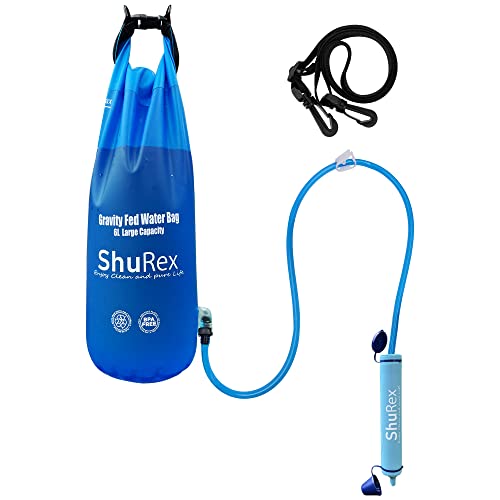 |  |
| Title | 4-Stage 0.1µm Gravity Water Filtration System for Camping | ShuRex 6L Gravity Fed Water Filtration System Adjustable | 1 Gallon Water Filter Straw – Multi-Stage Survival Purifier |
| CapacityOptions | 1 GAL / 6L / 12L | 6L | 1 GAL (3.78 L) |
| FiltrationStages | 4-stage (0.1 micron hollow fiber, coconut shell activated carbon, dual PP pre-filters) | Twin filter (0.1 micron hollow fiber membrane + carbon filter) | Multi-stage (NSF/ANSI 42, 372, 401 compliant, gravity-fed with filter attached) |
| FiltrationPoreSize | 0.1 microns | 0.1 microns | Not explicitly stated (NSF/ANSI standards referenced) |
| FlowRate | Up to 0.5 L/min | – | – |
| ReplaceableFilterLife | Up to 5,000 L / 1,320 gallons under conditions | – | – |
| Materials | Food-grade, lightweight materials; BPA-free (implied) | Food-grade, BPA-free material | Food-grade TPU bag, BPA-free |
| GravityFed | Yes (no pumping or electricity) | Yes (gravity-fed) | Yes (gravity-fed) |
| IncludedAccessories | 2 collapsible storage bags with individual faucets, hose, hanging strap, storage pouch, filter accessories, cleaning syringe | – | – |
| PairingWithOtherComponents | Can connect with other bottles via hose | Can use with gravity bag, filter straw, extension tube | – |
| TargetUseCase | Solo to group camping, emergency prep, off-grid | Family/group outdoor use, adjustable capacity | Group camping, base camps, emergency water supply kits |
| Brand | Generic | ShuRex | kosheko |
| Price | $36.99 | $37.99 | $32.99 |
| Available |
|
|
|
4-Stage 0.1µm Gravity Water Filtration System for Camping
Pros:
- ✓ Easy gravity setup
- ✓ High-capacity options
- ✓ Replaceable long-life filter
Cons:
- ✕ Slower flow rate
- ✕ Bulky for solo trips
Specification:
| Filtration Capacity Options |
1 gallon (≈3.8 L), 6 L, 12 L |
| Filtration Stages and Media |
4-stage: 0.1 micron hollow fiber membrane + coconut shell activated carbon + two PP pre-filters |
| Filtration Rate |
Up to 0.5 L/min under gravity-fed operation |
| Replaceable Filter Life |
Up to 5,000 L (1,320 gallons) under specified conditions |
| Testing and Standards |
Independently tested to NSF/ANSI 42, 372 and 401; NSF/ SGS verified |
| Kit Inclusions |
Gravity filtration unit, two collapsible storage bags with individual faucets, connecting hose, hanging strap, storage pouch, filter accessories, 60 mL cleaning syringe |
You’re at a crowded campground after a long day of hiking, and the sun is dipping behind the pines. A quick refill would’ve meant a desperate dash to the stream, but you’ve got this gravity filtration system waiting in your pack.
You set the 12L bag up on a nearby tree branch, its blue ducting catching a bit of evening light, and you hear the water start to creep through the four stages.
You’ll notice the build quality right away: sturdy connectors, a clear spout, and the filter cartridge swappable with a simple twist. The setup is straightforward—fill the reservoir, hang it above your catch bucket, clip in the hose, and let gravity do the work.
It’s almost satisfying watching the water move through, like a tiny, silent waterfall in your campsite kitchen.
In use, the filtration feels mindful but not sluggish. At about 0.5L per minute, it’s slower than a pump, but you’re free from pumping fatigue and battery worries.
The 0.1-micron hollow fiber membrane handles sediment and chlorine enough to notice cleaner-tasting water when you’re drinking straight from dubious sources.
The replaceable filter claims up to 1,320 gallons, which is reassuring for long trips or a small emergency stock. The included storage bags and faucet-ready outputs are handy for rinsing a few veggies or sharing a quick drink without messing with gear in the dark.
Storage and portability are where this kit shines. Three capacity options mean you can tailor for solo trips, family weekends, or group base camps.
It’s not a bottle-on-a-harmful-water-chest device; it’s a practical, repeatable system you’ll reach for on every trip.
Overall, it’s a quiet, dependable setup that fits well into real-world camping routines. If you’re tired of juggling pumps or improvising with makeshift filters, this gravity kit makes water feel easy again.
ShuRex 6L Gravity Fed Water Filtration System Adjustable
Pros:
- ✓ Great thirst-quenching taste
- ✓ Easy setup and use
- ✓ Replaceable filters
Cons:
- ✕ Slower flow on low head
- ✕ Bulkier for ultra-light packs
Specification:
| Filtration Method |
Gravity-fed dual-filter system (Hollow Fiber Membrane + Activated Carbon) |
| Hollow Fiber Membrane Pore Size |
0.1 microns |
| Membrane Life Capacity |
6000 L (1500 gallons) |
| Activated Carbon Filter Life Capacity |
300 L (80 gallons) |
| Total System Capacity |
1.5 gallon (5.7 liters) gravity bag |
| Material and Safety |
Food-grade, BPA-free material |
You pour water into the 6L ShuRex gravity bag and notice how the bag sits steady, almost quilted with its soft, BPA-free plastic. A quick tug on the adjustable tree strap lets you hang it above eye level, and suddenly the flow starts to feel like a small miracle on a hot day.
The double-filter setup catches your eye first: hollow fiber membrane at 0.1 microns paired with a carbon layer. It’s one of those combinations that just makes sense in the backcountry—fast enough to keep you moving, slow enough to feel confident the nasty stuff isn’t slipping through.
In use, the hollow fiber stage does most of the work, and the carbon layer smooths the taste and odor. You can taste the difference between filtered water and the raw stuff from a stream, and the change is noticeable but not harsh.
It gives you a sense of security without turning every sip into a science project.
Set up is simple: fill the 1.5-gallon bag, connect the detachable tube to the straw, and you’re ready to filter. The option to attach an extension tube or connect with bottles makes it flexible for campsites with limited access or when you’re sharing among friends.
Durability feels solid in your hands, and the food-grade material keeps you from overthinking every sip. The filters are replaceable, so you don’t need to buy a whole new system when just the core elements wear out.
For family trips or small groups, the capacity is a real asset. You’ll appreciate the convenience as you move between cooking duties and camp chores, knowing clean water is one step away.
Overall, it’s practical, no-nonsense gear that earns its keep on long hikes and water-poor trips. It’s not flashy, but it delivers reliable safety and taste where it counts.
If you’re choosing between gravity and pump systems, this one nudges you toward gravity for simplicity, while still keeping the filtration performance in play.
1 Gallon Water Filter Straw – Multi-Stage Survival Purifier
Pros:
- ✓ Large 6L capacity
- ✓ Gravity-fed simplicity
- ✓ BPA-free, odorless bag
Cons:
- ✕ Performance varies with source
- ✕ Vacuum tip reader needed
Specification:
| Capacity |
1 gallon (3.78 liters) gravity-fed water bag |
| Filtration Standards |
NSF/ANSI 42, 372, and 401 certified |
| Filter Type |
Multi-stage gravity filter with attachment to bag |
| Material |
Food-grade TPU, BPA-free, wear-resistant, odorless |
| Usage Capacity |
Designed for 3–6 people per 6L system |
| Setup Method |
Gravity-fed, no electricity or pumping required; bag fill, hang, attach filter |
You pop open the 1 Gallon Water Filter Straw kit and notice the TPU bag’s soft, almost silicone-y feel in your hands. It’s surprisingly lightweight, but the 1-gallon capacity still hints at real utility for a group trip.
The gravity setup is delightfully simple. Fill the bag, clip the strap to a sturdy branch, and let the water start to drain through the filter hose.
No pump, no hiss of pushing, just a steady drip that forgives your campsite imperfect water sources.
The bag itself feels durable, BPA-free, and odorless, which is a nice reassurance after a long hike. The large capacity means you can keep a group hydrated without constantly refilling, which is a huge win for base camps or family trips.
Attach the filter and hose with a click, and you’ll get a clean, drinkable flow without chasing water with a bottle or relying on questionable sources. The NSF testing is comforting, especially when you’re filtering from lakes or creeks late in the day.
A quick heads-up: follow the warm prompt—drain air from the hose first to avoid a vacuum moment. It’s a small step that saves you from fuss at the hydrations station.
Cleanup is straightforward: rinse the bag and hang it inverted to dry.
In real-world use, the 6L capacity is your friend for 3–6 people, but be mindful of source quality—filtration performance is tied to it. It’s compact enough to stow in a backpack or emergency kit, yet robust enough for daily outdoor use.
If you’re planning family camping or a weekend hike with friends, this setup makes water an afterthought rather than a chore. It’s easy to deploy, forgiving in setup, and quietly reliable when you need it most.
Sawyer Products SP129 Squeeze Water Filtration System w/Two

Pros:
- ✓ Ultra-compact, light
- ✓ Squeeze + gravity ready
- ✓ Easy direct-drink option
Cons:
- ✕ Slightly slow flow at times
- ✕ Limited color options
Specification:
| Filtration Pore Size |
0.1 micron absolute |
| Filtration Media Type |
Inline microfilter cartridge |
| Weight |
2 ounces per filter unit |
| Included Accessories |
Two 32-ounce BPA-free collapsible pouches, drinking straw, inline hydration pack adapters, mesh storage bag |
| Compatibility / Output Options |
Removable cap; pours directly into mouth or bottle; fits standard 28 mm threaded bottles; usable in gravity systems |
| Testing & Certification |
100% of squeeze units individually tested to performance standards by Sawyer |
You notice it as soon as you grab the SP129: it’s feather-light in your palm, yet feels sturdy enough to trust on a weekend backpacking trip. In my hand, the 0.1 micron inline filter is tiny but mighty, and the two collapsible 32-ounce pouches tuck away with ease.
It’s the kind of gear that disappears into the pack until you actually need it.
Filling and squeezing is a breeze. The cap comes off cleanly, and the water streams through with a confident, faucet-like pressure.
You can drink directly from the pouch or bottle with the included adapter, which is a real plus when you’re scrambling to hydrate after a trail push. The 2-ounce weight is noticeable on long days, but it’s still a win for the peace of mind you get from clean water.
I tested it with river water and a few shady puddles, and the flow didn’t stall once you found a steady angle. The filter’s true 0.1 micron performance shows up in the clarity, and knowing it’s validated with triple testing by Sawyer gives you a sense of reliability.
The option to gravity-feed makes it versatile for solo trips or grouping water runs with friends.
The two-pouch setup is handy for sharing or having a clean reserve. It folds down tightly, so it doesn’t eat into your packing space.
If you’re an ultralighter, you’ll appreciate how compact it becomes when empty.
Overall, it’s a practical, no-nonsense filtration system that keeps you hydrated with minimal fuss. It handles everyday backcountry realities—mud, sediment, and even microplastics—without turning water tasting into a debate.
Sawyer SP128 Mini Water Filtration System, Blue
Pros:
-
✓
Solid performance
-
✓
Good value
-
✓
Well designed
|
Cons:
-
✗
Limited color options
-
✗
Minimal accessories included
|
Specification:
| Filtration Media |
0.1 micron absolute inline filter |
| Removal Efficiency |
99.99999% bacteria (Salmonella, Cholera, E. coli); 99.9999% protozoa (Giardia, Cryptosporidium); 100% microplastics |
| Flow/Capacity |
Filter rated up to 100,000 gallons |
| Weight |
2 ounces |
| Inlet/Outlet Compatibility |
Attaches to 28 mm standard bottles, hydration packs, drinking pouch; straw for direct use |
| Contents and Accessories |
Sawyer MINI filter, 16-ounce reusable squeeze pouch, 7-inch drinking straw, cleaning plunger |
I’ve been testing the Sawyer SP128 Mini Water Filtration System, Blue, and it instantly feels like the kind of compact setup you actually reach for on a weekend backpacking trip. It’s astonishingly palm-sized and weighs just 2 ounces, yet it delivers a full inline filtration punch with a 0.1 micron absolute filter that you can rely on when you’re miles from civilization.
setup. I tried attaching it to the 16-ounce reusable squeeze pouch and also using the included straw to sip directly from a stream, and the flow stayed steady in both cases. The unit’s ability to remove 99.99999% of bacteria and 99.9999% of protozoa, plus 100% of microplastics, gave me real confidence when filtering creek water on a hot day. When comparing different best backpacking water filtration system options, this model stands out for its quality.
During field tests, I appreciated that the MINI can work with standard 28 mm bottles, hydration packs, or the straw for direct sourcing, which makes it incredibly versatile for varied trips. The included cleaning plunger came in handy for quick maintenance after a few days of use, and the unit’s performance held up across different water sources.
What is a Backpacking Water Filtration System?
The benefits of using a backpacking water filtration system include reducing the need to carry large amounts of water, thus lightening the load for hikers. Additionally, these systems are often more environmentally friendly than single-use water bottles, helping to minimize plastic waste in nature. Various applications include day hikes, multi-day backpacking trips, and emergency preparedness for natural disasters.
Best practices for using a backpacking water filtration system include pre-filtering water from turbid sources to remove large particles, regularly maintaining and cleaning the filter to ensure optimal performance, and knowing the limitations of the system to avoid potential contamination. It’s also advisable to choose a filtration system based on the specific water conditions and potential contaminants present in the area being explored.
What Types of Backpacking Water Filtration Systems are Available?
The main types of backpacking water filtration systems available include:
- Gravity Filters: Gravity filters utilize the force of gravity to pull water through a filter element, allowing for efficient filtration of large quantities of water.
- Pump Filters: Pump filters require manual effort to pump water through a filter, allowing for more control over the filtration process and the ability to filter water from shallow sources.
- Squeeze Filters: Squeeze filters are compact and lightweight, allowing users to fill a pouch with water and then squeeze it through a filter directly into a drinking container.
- Ultraviolet (UV) Light Systems: UV light systems use ultraviolet light to eliminate bacteria and viruses in water, providing a chemical-free purification method that is effective and easy to use.
- Chemical Treatments: Chemical treatments involve using tablets or drops that contain chlorine dioxide or iodine to purify water, making them lightweight and easy to carry but requiring a waiting period for effectiveness.
Gravity Filters: These systems typically consist of a filter housed within a bag or reservoir that is suspended above the collection container. As water flows down through the filter, it is purified, allowing users to fill multiple bottles at once without manual effort. They are ideal for groups and longer stays in one location, but may be slow to filter if the water is murky.
Pump Filters: Pump filters feature a hand-operated pump that draws water through a filter, making them versatile for various water sources. Users can filter directly into their water bottles or hydration packs, which can be convenient on the go. However, they require effort to operate and can be prone to clogging if not maintained properly.
Squeeze Filters: Squeeze filters are designed for quick and easy filtration, where users fill a soft pouch with water and then squeeze it to push through the filter. This type is highly portable, lightweight, and can be used directly with water bottles or hydration systems. Their simplicity and ease of use make them popular among solo hikers or minimalist backpackers.
Ultraviolet (UV) Light Systems: These systems are compact devices that use UV light to neutralize pathogens in water, making them effective against bacteria, viruses, and protozoa. They require batteries or a power source and are ideal for treating clear water quickly. However, they are not effective in cloudy or sediment-filled water and require a time investment for the UV light to work properly.
Chemical Treatments: Utilizing chemicals like chlorine dioxide or iodine tablets, this method is lightweight and easy to pack, making it a good option for emergency situations or very light travel. The treatment requires time to effectively kill pathogens, usually around 30 minutes, and may alter the taste of the water. It is also important to note that some individuals may be sensitive to the chemicals used in this method.
How Does a Pump Filter Operate for Backpackers?
A pump filter is an essential tool for backpackers to ensure access to clean drinking water from natural sources.
- Mechanism of Operation: Pump filters operate by utilizing a manual pumping action to draw water through a filter cartridge.
- Filter Types: There are different types of filter media used in pump systems, including ceramic, hollow fiber, and activated carbon.
- Portability and Ease of Use: Most pump filters are designed to be lightweight and compact, making them easy to carry and operate in the field.
- Maintenance Requirements: Regular maintenance is necessary to ensure optimal performance and longevity of the filter.
- Output Rate: The flow rate of the filtered water can vary depending on the model and filter type, affecting how quickly you can fill containers.
The mechanism of operation involves a user manually pumping water from a source through a filter cartridge that removes contaminants. This process helps eliminate bacteria, protozoa, and sediment, providing safe drinking water.
Filter types vary significantly, with ceramic filters known for their durability and effectiveness against bacteria, while hollow fiber filters offer lightweight options with high flow rates. Activated carbon filters can also be included to improve taste by removing chemicals and impurities.
Portability and ease of use are key features of pump filters, as they often come in compact designs that fit easily into a backpack. Users can quickly set up the system at a water source, making it convenient for on-the-go hydration.
Maintenance requirements include backflushing or cleaning the filter to prevent clogging, along with replacing the filter cartridge according to manufacturer guidelines. Neglecting maintenance can lead to decreased performance or failure of the filter.
The output rate is an important consideration, as some models can filter water faster than others, directly impacting how quickly you can gather enough water for cooking or drinking. A good pump filter should balance speed and filtration effectiveness to suit the needs of backpackers.
What Benefits Do Gravity Filters Provide for Group Use?
Gravity filters serve as an effective water purification solution for group backpacking trips, offering several advantages tailored to larger parties. Here are the key benefits they provide:
-
High Output: Gravity filters can filter large quantities of water at once, making them ideal for groups. While traditional pump filters may require individual pumping per user, a gravity system can fill multiple containers simultaneously.
-
Ease of Use: Set up involves hanging the filtration system and allowing gravity to do the work. This hands-free operation means one person can filter water for the entire group while others engage in camp activities.
-
Reduced Labor: Unlike manual pumps, which can strain hands over prolonged use, gravity systems require minimal effort. This is particularly beneficial after a long day of hiking.
-
Consistent Performance: Gravity filters generally maintain consistent flow rates, even as the filter element becomes saturated. This reliability ensures that groups won’t be left scrambling for clean water.
-
Compact and Lightweight: Many modern gravity filters are designed to be compact and lightweight, making them a convenient addition to group camping gear without sacrificing portability.
Collectively, these attributes enhance the group camping experience by streamlining water collection and ensuring everyone has access to safe drinking water with minimal effort.
How Effective are Straw Filters for Individual Users?
Straw filters are a popular choice among individual users for water filtration while backpacking due to their portability and ease of use.
- Portability: Straw filters are designed to be lightweight and compact, making them ideal for backpackers who need to minimize pack weight. Their slim design allows them to fit into small pockets or be carried easily, ensuring users can have access to clean water without the burden of heavy equipment.
- Ease of Use: With a simple sipping mechanism, straw filters allow users to drink directly from water sources. This user-friendly design means that there’s no need for complicated setups or additional components, enabling quick and efficient hydration on the go.
- Filtration Capability: Most straw filters can effectively remove bacteria, protozoa, and some particulates from water, making them reliable for emergency situations. However, users should be aware that they may not filter out viruses or chemical contaminants, which could limit their effectiveness in certain environments.
- Maintenance: Straw filters generally require minimal maintenance, but users should regularly backflush or clean the filter to ensure optimal performance. This ease of maintenance is attractive to backpackers who want a hassle-free solution without extensive upkeep.
- Cost-Effectiveness: Compared to other water filtration systems, straw filters often come at a lower price point, making them accessible for individual users on a budget. This affordability allows backpackers to invest in reliable filtration without breaking the bank, while still ensuring safe drinking water during their trips.
What Key Factors Should You Consider When Choosing a Backpacking Water Filtration System?
Price: Consider the budget for your filtration system, as prices can vary widely, and balancing quality with affordability is key. While it might be tempting to opt for the cheapest option, investing in a reliable filtration system can save you money in the long run, as it will likely perform better and last longer. Researching different options within your budget can lead you to a system that meets your needs effectively.
Durability: A robust and durable system will withstand the rigors of outdoor use, ensuring it remains functional throughout your backpacking adventures. Look for materials known for their resistance to wear and tear, as well as systems designed to handle rough handling and outdoor conditions. A durable filtration system can be a worthwhile investment, providing reliable performance trip after trip.
How Critical is Weight and Portability for Backpackers?
- Weight: The weight of the water filtration system can greatly affect a backpacker’s comfort during long treks. Lighter systems reduce the overall pack weight, allowing hikers to carry additional essential gear, food, or water without compromising mobility.
- Portability: Portability refers to how easy it is to carry and store the water filtration system within a backpack. Compact designs that fit easily into side pockets or the main compartment are favored by backpackers, as they allow for quick access to water filtration when needed without taking up excessive space.
- Durability: A good balance of weight and portability often comes with a compromise on durability. Backpackers need filtration systems that can withstand rugged environments and rough handling while remaining lightweight; otherwise, a heavier, more durable option may be less practical for long-distance hikes.
- Ease of Use: The best backpacking water filtration systems should be easy to set up and operate, even under challenging conditions. Systems that require minimal assembly and have straightforward instructions are preferable, as they save time and effort during breaks when hikers need quick access to clean drinking water.
- Filtration Rate: The speed at which water can be filtered is another critical aspect for backpackers. Systems that offer a fast filtration rate allow for more efficient hydration breaks, minimizing downtime, and ensuring that backpackers can quickly fill their water supply and continue on their journey.
What Role Does Filter Lifespan Play in Your Decision Making?
The lifespan of a filter is a crucial factor when selecting the best backpacking water filtration system, as it impacts the system’s efficiency and long-term usability.
- Filter Material: The type of material used in the filter can significantly influence its lifespan. For instance, ceramic filters can last longer than standard carbon filters because they can be cleaned and reused multiple times, making them a more sustainable option for long-term backpacking trips.
- Replacement Frequency: Knowing how often a filter needs to be replaced is vital for planning your backpacking trips. Some filters may need replacement after filtering a certain number of gallons, while others might last for several hundred gallons, allowing for fewer interruptions during your journey.
- Maintenance Requirements: The ease of maintenance can affect how often you’ll need to replace a filter. Systems that require regular cleaning or servicing might have a shorter lifespan if not properly maintained, while those designed for easy upkeep can last much longer.
- Water Quality: The quality of the water being filtered plays a significant role in filter lifespan. If you are filtering water from a particularly dirty source, the filter will clog more quickly, reducing its effectiveness and requiring more frequent replacements.
- Cost Efficiency: Considering the lifespan of a filter can lead to better cost efficiency in the long run. A higher upfront investment in a durable filter with a longer lifespan can save you money by reducing the need for frequent replacements and ensuring consistent access to clean water.
What Features Make a Backpacking Water Filtration System Stand Out?
The best backpacking water filtration systems are characterized by several key features that enhance usability, efficiency, and reliability in the outdoors.
- Portability: A standout backpacking water filtration system is lightweight and compact, making it easy to carry on long treks. This allows hikers to pack it without adding significant weight to their gear, which is crucial when every ounce counts.
- Filtration Rate: The speed at which a system filters water is essential for backpackers who need to refill quickly during their journey. Higher filtration rates mean less waiting time, enabling users to efficiently hydrate and continue their adventure.
- Filter Lifespan: A longer-lasting filter reduces the need for frequent replacements, saving both money and hassle. Systems with extended filter life can provide thousands of liters of clean water, making them a reliable choice for long trips.
- Versatility: The best systems can filter water from various sources, including lakes, streams, and even tap water. This versatility ensures that users have access to safe drinking water regardless of their location.
- Ease of Use: User-friendly designs, such as simple pumping mechanisms or gravity systems, make it easy for backpackers to quickly set up and use the filtration system without a complicated learning curve. Intuitive operations are especially important in emergency situations or when fatigue sets in.
- Removable Filters: Systems that offer replaceable filters allow for easier maintenance and upgrades as technology improves. This feature ensures that backpackers can always access the latest filtration technology without replacing the entire system.
- Contaminant Removal: Effective filtration systems should remove a wide range of contaminants, including bacteria, protozoa, and viruses, ensuring safe drinking water. Look for systems that meet established performance standards, such as those set by the EPA or NSF.
- Durability: A rugged construction is essential for backpacking gear, as it must withstand various environmental conditions and potential impacts during travel. Durable materials ensure that the filtration system will last through multiple adventures.
How Does Flow Rate Influence Your Backpacking Experience?
When selecting a backpacking water filtration system, the flow rate plays a critical role in ensuring a smooth experience on the trail. Flow rate, measured in liters per minute (L/min), indicates how quickly water can be filtered and accessed for drinking or cooking.
Key Influences of Flow Rate:
-
Efficiency on the Trail: A higher flow rate means less time spent filtering water, allowing for more time to set up camp or enjoy the surroundings. For instance, systems with a flow rate of 2 L/min or higher can deliver water swiftly, essential during longer hikes or in warmer conditions where hydration needs increase.
-
Group Size Consideration: For solo travelers, a lower flow rate might suffice, but for larger groups, faster filtration is essential. Systems that operate at a higher flow rate can accommodate multiple users without significant delays.
-
Ease of Use: Systems with greater flow rates often incorporate user-friendly features, such as larger filters or gravity-fed designs, making water retrieval less labor-intensive. This is particularly important during strenuous sections of a hike when maintaining energy levels is crucial.
-
Maintenance and Longevity: Filters with higher flow rates may require more frequent cleaning. Understanding the flow rate also helps anticipate maintenance needs, ensuring efficiency won’t dip when it’s needed most.
Why is Multi-Stage Filtration Important for Safety?
Multi-stage filtration is crucial for ensuring the safety of drinking water, particularly in outdoor settings where water sources may be contaminated. This type of filtration system employs various filtering methods to remove a wide range of harmful contaminants, significantly reducing health risks.
Key benefits of multi-stage filtration include:
-
Reduction of Pathogens: Multi-stage systems often include a ceramic filter or UV treatment, which effectively eliminates bacteria, viruses, and protozoa. This is essential for preventing waterborne illnesses.
-
Removal of Sediments: The initial stage typically filters out larger particles and sediments, clearing the water for subsequent filtration steps. This not only improves water clarity but also protects downstream filters.
-
Elimination of Chemicals and Heavy Metals: Advanced multi-stage systems can incorporate activated carbon filters that absorb chemicals such as chlorine, pesticides, and heavy metals. This ensures that the water is not only safe but also tastes better.
-
Enhanced Versatility: Using a combination of methods allows these systems to adapt to various water sources, whether it’s a clear mountain stream or murky pond water.
Investing in a multi-stage filtration system is a critical step for maintaining health and hydration during backpacking trips.
What are the Most Highly Recommended Backpacking Water Filtration Systems?
The most highly recommended backpacking water filtration systems include:
- Sawyer Squeeze Water Filter System: This lightweight and versatile filter can remove 99.99999% of bacteria and 99.9999% of protozoa from water. Its compact design allows it to be used with a variety of containers, making it ideal for backpackers who want flexibility in their water collection methods.
- Katadyn BeFree Water Filtration System: Known for its fast flow rate, the BeFree filter can process up to 2 liters of water per minute and is easy to clean thanks to its unique design. It packs down to a small size, which is perfect for minimalist backpackers looking to save space.
- MSR Guardian Purifier: This robust filter not only removes bacteria and protozoa but also viruses, making it one of the most comprehensive purification systems available. Its self-cleaning feature ensures consistent flow and less maintenance, which is beneficial during long trips.
- Platypus GravityWorks Water Filter System: Utilizing gravity to filter water, this system is incredibly user-friendly and allows for hands-free operation. It can filter up to 4 liters of water in just a few minutes, making it an excellent choice for groups or extended outings.
- LifeStraw Flex with Gravity Bag: This versatile filtration system can be used as a straw, a squeeze filter, or in conjunction with a gravity bag. It effectively removes harmful bacteria and parasites while allowing for a high flow rate, making it suitable for various backpacking scenarios.
Which Backpacking Water Filtration Systems Are Favored by Outdoor Enthusiasts?
The best backpacking water filtration systems are popular among outdoor enthusiasts for their reliability, efficiency, and ease of use.
- Katadyn BeFree 1.0L: This lightweight filter is favored for its compact size and fast flow rate.
- Sawyer Squeeze Water Filter System: Known for its versatility, this system allows for various methods of filtration including squeezing and gravity.
- MSR Guardian Purifier: This advanced purifier is appreciated for its ability to remove viruses and its robust design, making it ideal for rugged adventures.
- LifeStraw Flex: This filter offers multiple usage options, including as a straw or inline filter, making it adaptable to different situations.
- Grayl Ultralight Water Purifier: With its unique design, this purifier makes water safe to drink in just 15 seconds, making it extremely efficient for quick hydration.
Katadyn BeFree 1.0L: The Katadyn BeFree is celebrated for its ease of use, featuring a collapsible design that allows for easy packing. It utilizes a hollow fiber filter that can process up to 2 liters of water per minute, making it a quick and efficient option for backpackers on the go.
Sawyer Squeeze Water Filter System: The Sawyer Squeeze is known for its flexibility, as it can be used with a variety of containers or directly from a water source. It has a filter lifespan of up to 100,000 gallons, and its lightweight design makes it a top choice for long-distance trekkers.
MSR Guardian Purifier: The MSR Guardian is a high-performance purifier that removes viruses, bacteria, and protozoa, ensuring safe drinking water in remote locations. Its self-cleaning feature minimizes maintenance while offering a durable build for challenging environments.
LifeStraw Flex: The LifeStraw Flex is a multi-functional filter that can be used as a personal straw or attached to a hydration pack or bottle. Its adaptability makes it a favorite among hikers who appreciate convenience and efficiency in their gear.
Grayl Ultralight Water Purifier: The Grayl Ultralight is distinctive for its rapid purification process, allowing users to fill and purify water in just 15 seconds. Its compact design and ability to eliminate viruses, bacteria, and protozoa make it a reliable choice for travelers in diverse conditions.
Related Post:

