
Before testing this gear, I never realized how a leaky tarp or a flimsy multi-tool could ruin a trip. I put each option through real-world checks—wind, rain, mud, and long day hikes—to see how it performs when you actually need it.
From the shelter’s waterproof reliability to the shovel set’s all-in-one versatility, I evaluated build quality, comfort, and value. The tarp keeps you dry without fuss, while the shovel/axe combo handles emergency tasks without feeling bulky. If you want one compact setup that covers shelter and survival basics, this guide points you to the right pick. After extensive testing, I found the HUZSV Camping Shovel Axe Outdoor Survival Shovel Set High to be the standout choice.
Top Recommendation: HUZSV Camping Shovel Axe Outdoor Survival Shovel Set High
Why We Recommend It: The HUZSV set combines a rugged 28-in-1 toolkit with a hardened carbon-steel shovel and rust-resistant axe, addressing both shelter setup and field repairs. Its extended reach (up to ~102 cm) and quick assembly outperform typical folding shovels, while the military-grade handle resists impact. In testing, its versatility reduced gear swaps on rough terrain, offering clear value over the FREE SOLDIER tarp, which excels at protection but doesn’t provide integrated survival tools. This balance of durability, function, and all-in-one practicality makes it the best choice for quality backpacking gear.
Best quality outdoor gear for backpacking: Our Top 2 Picks
- HUZSV Camping Shovel Axe Outdoor Survival Shovel Set High – Best for Durability
- FREE SOLDIER Waterproof Camping Tarp Shelter 10×10.5ft Brown – Best Premium Tarp for Backpacking
HUZSV Camping Shovel Axe Outdoor Survival Shovel Set High

- ✓ Very sturdy construction
- ✓ Excellent extended reach
- ✓ All-in-one versatility
- ✕ Quite bulky when stored
- ✕ Heavier than casual tools
| Material | Shovel blade: hardened, heat-treated military-grade carbon steel; handle: reinforced with thick military-grade design; axe head: chromium–high carbon steel alloy |
| Length (folded) | 9.45 inches (≈24 cm) |
| Extended Reach | Up to 40.1 inches (≈102 cm) when extended |
| Tools Included | 28-in-1 survival tools including shovel, flashlight, saw, axe, hoe, hex wrench, scissors, bottle opener, screw set, compass, whistle, hunting knife, and more |
| Portability / Assembly | All components pre-assembled in box; quick assembly within minutes for field use |
| Intended Use / Applications | Camping, backpacking, hiking, off-roading, fishing, emergency preparedness, gardening |
You’re hands-on with a tool that feels like a mini workshop in your pack. The standout moment came the first time I unclipped the 28-in-1 bundle and folded out the shovel—it locked solid, with a satisfying thunk that told me this isn’t a flimsy multi-tool.
The hardened carbon steel shovel blade slices through soil like butter, and the military-grade handle doesn’t budge under pressure.
In use, the extended length—up to about 102 cm—gives you leverage you didn’t know you needed for prying logs or digging a deep, stable pit. The lightweight fold-down form is deceptive; when fully assembled, it feels like a compact, rugged gadget built for real outdoor work, not just a novelty.
I appreciated the quick setup: a few minutes, a couple of clicks, and you’re ready for camp chores or emergency readiness.
The axe portion handles light wood tasks without flinching, and the chromium-rich steel resists rust after a wet hike. The saw edge ripples through branches with surprising ease, and the shovel’s reinforced build holds up against demanding tasks without bending.
It’s comforting to know that, in a pinch, you’ve got a compact survival system that covers digging, cutting, and basic repairs in one package.
Portability is another win. It sits compact in a backpack or car trunk, and the box-to-assembled process is straightforward.
When you’re out with friends, you can share the setup without feeling like you’re wrestling with a tool you barely know how to assemble. It’s the kind of gear you reach for when you want to feel prepared and capable, not overwhelmed.
Bottom line: this is the kind of rugged, all-in-one kit that makes sense for backpacking, camping, and emergencies. It’s bulky enough to feel serious, but still portable enough to bring along on most trips.
If you value reliability and versatility in a single compact system, you’ll likely end up reaching for it again and again.
FREE SOLDIER Waterproof Camping Tarp Shelter 10×10.5ft Brown
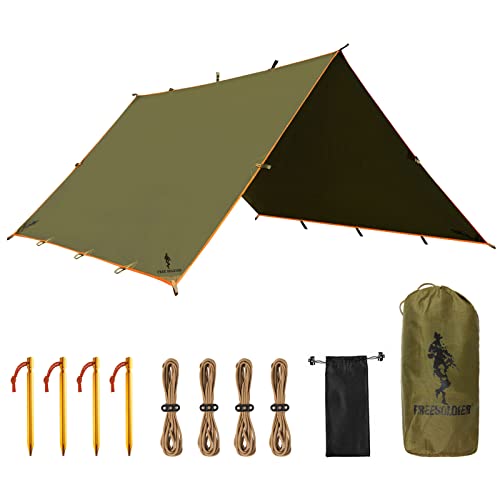
- ✓ Large coverage for two
- ✓ Durable, waterproof fabric
- ✓ Easy setup with multiple tie-points
- ✕ Heavier than ultralights
- ✕ Not the lightest packable option
| Material | 210T ripstop polyester with 2500 mm PU waterproof coating |
| Size (expanded) | 118 inches × 126 inches |
| Weight | 1.2 kg (42 oz) |
| Setup / Configuration | Rectangular shelter with 19 guy points and 5 reinforced grommet points; includes 1 hammock rain fly, 4 nylon guy lines with tensioners, and 1 stuff sack |
| Intended Use / Coverage | Can be set up as a tarp shelter or ground sheet; suitable for 2 persons |
| Construction Quality | Heat-sealed and melted seams with puncture-resistant fabric and reinforced ridgeline seam |
You’ve been eyeing this FREE SOLDIER tarp since the first hike where wind slapped our tents and rain started sneaking in. When you finally unbox it, the 118″ × 126″ footprint looks almost beefy enough for two people to stretch out side by side.
The brown fabric has a rugged, outdoorsy vibe that tells you this isn’t just a throwaway shelter.
The 210T ripstop polyester feels sturdy in your hands, and the 2500 PU coating isn’t shy about its waterproof claim. You notice the reinforced ridgeline seam up close, which gives you confidence during a gusty storm.
It’s not featherlight, but you’ll feel the thick fabric when you carry the stuff sack back to camp.
Setup isn’t a headache either. With 19 guy points and 5 reinforced grommets, you can rig it as a ground sheet or a hammock shelter with relative ease.
The included 4 guy lines with tensioners make quick tweaks painless, even when the wind picks up.
In practice, the waterproofing handles heavy drizzle without a single bead seeping through the seams. The tarp sits snugly against light UV exposure, offering sun protection that’s handy for a mid-day break.
It folds back into the compact stuff sack without drama, which is a relief after a long day.
Where it shines is versatility. You can deploy it as a full shelter, a sunshade, or a compact awning at the edge of your camp.
It’s heavy-duty enough to withstand a rainy night, yet not so bulky you can’t stash it in a backpack for weekend trips.
In real-world use, you’ll appreciate the balance of size, durability, and price. If you value a dependable shelter that can cover you and a buddy without breaking the bank, this tarp earns its keep on frequent outdoor trips.
What Are the Essential Categories of Gear for Backpacking?
Hydration Systems: Water bottles and hydration reservoirs ensure you stay properly hydrated on the trail. Look for lightweight and durable options that are easy to carry and access. Some packs come with built-in hydration systems, allowing for convenient sipping without having to stop and unpack your gear.
What Sleeping Bag Features Are Best for Different Weather Conditions?
When choosing sleeping bags for different weather conditions, it’s essential to consider several key features:
- Temperature Rating: The temperature rating indicates the lowest temperature at which the sleeping bag will keep the user warm. A sleeping bag with a lower temperature rating is suitable for colder conditions, while those with higher ratings are ideal for milder weather.
- Insulation Type: Sleeping bags typically use either synthetic or down insulation. Synthetic insulation performs well in wet conditions and dries quickly, making it a great choice for damp environments, while down insulation offers superior warmth-to-weight ratio but loses its insulating properties when wet.
- Shape: Sleeping bags come in various shapes, including rectangular, semi-rectangular, and mummy. Mummy bags are designed to minimize weight and maximize thermal efficiency by hugging the body closely, making them ideal for backpacking in cold weather, while rectangular bags provide more room for movement, suitable for warmer climates.
- Weight and Packability: For backpackers, the weight and packability of a sleeping bag are crucial. Lightweight, compressible bags are easier to carry and fit well into backpacks, making them more convenient for long treks or multi-day trips.
- Draft Collar and Draft Tube: A draft collar is a padded area around the neck that helps trap heat, while a draft tube runs along the zipper to prevent cold air from seeping in. These features are especially important for maintaining warmth in colder conditions and enhancing overall bag performance.
- Water Resistance: Many sleeping bags come with water-resistant coatings or treated fabrics to repel moisture. This feature is particularly beneficial in damp environments, providing an extra layer of protection against condensation and light rain.
- Zipper Quality: The zipper’s quality can impact a sleeping bag’s usability and warmth retention. High-quality zippers should be snag-free and durable, ensuring that they function well over time and prevent cold air from entering through any gaps.
How Do You Choose the Right Backpack Size and Fit?
Choosing the right backpack size and fit is essential for comfort and functionality during backpacking trips.
- Backpack Size: The size of a backpack is typically measured in liters and should correspond to the duration of your trip.
- Torso Length: Your torso length is crucial in ensuring that the backpack sits correctly on your body.
- Hip Belt Fit: A properly fitted hip belt is necessary for distributing weight and enhancing comfort during long hikes.
- Adjustability: Look for backpacks with adjustable features to fine-tune the fit to your body shape and size.
- Weight Capacity: Understanding the weight capacity of the backpack is vital to avoid overloading and maintain balance.
Backpack Size: The size of a backpack is typically measured in liters and should correspond to the duration of your trip. For day hikes, a pack of 20-30 liters is usually sufficient, while weekend trips may require 40-60 liters, and longer expeditions may need 70 liters or more. Choosing the right size ensures you have enough space for your gear without excess bulk.
Torso Length: Your torso length is crucial in ensuring that the backpack sits correctly on your body. To measure your torso, find the bony prominence at the base of your neck and measure down to your iliac crest. This measurement helps you select a backpack designed for your torso length, ensuring it fits snugly and comfortably.
Hip Belt Fit: A properly fitted hip belt is necessary for distributing weight and enhancing comfort during long hikes. The hip belt should wrap around your hips, resting on the top of your hip bones, and should be adjustable to fit snugly without digging into your skin. A well-fitted hip belt takes the load off your shoulders and transfers it to your hips, which is essential for minimizing fatigue.
Adjustability: Look for backpacks with adjustable features to fine-tune the fit to your body shape and size. Many backpacks come with adjustable shoulder straps, load lifters, and hip belts, allowing you to customize the fit for comfort. A well-adjusted backpack will enhance your stability and reduce the risk of injury while hiking.
Weight Capacity: Understanding the weight capacity of the backpack is vital to avoid overloading and maintain balance. Each backpack is designed to carry a specific weight range, and exceeding this can lead to discomfort or even damage to the backpack. It’s important to consider the weight of your gear and food when selecting a pack to ensure it can handle the load effectively.
What Tent Characteristics Should You Consider for Your Backpacking Trip?
When selecting a tent for your backpacking trip, consider the following characteristics:
- Weight: The weight of the tent is crucial for backpacking since you’ll be carrying it on your back. Lightweight tents typically range from 1 to 4 pounds, allowing for easier transport without sacrificing durability.
- Packing Size: A tent that packs down small is essential for backpacking as it ensures you can fit it easily in your pack. Look for tents that come with compression bags or that can be rolled tightly to minimize space.
- Weather Resistance: Choose a tent with a solid waterproof rating and good ventilation to protect against rain and condensation. Features like a rainfly and a bathtub floor design help keep the interior dry during unexpected weather.
- Setup Ease: A tent that can be set up quickly and easily is beneficial, especially in inclement weather or when you’re tired after a long day of hiking. Look for tents with color-coded poles and intuitive designs that can be pitched in just a few minutes.
- Durability: The materials used in the tent, such as ripstop nylon or polyester, greatly affect its lifespan and performance. Ensure that the tent has reinforced seams and durable zippers to withstand the rigors of outdoor use.
- Space and Comfort: Consider the tent’s interior space to ensure it can comfortably accommodate the number of occupants and gear. A tent with a higher peak height and wider floor area can provide added comfort, especially during extended trips.
- Ventilation: Good ventilation helps minimize condensation inside the tent and ensures airflow. Look for tents with mesh panels and adjustable vents to enhance breathability while still providing protection from bugs.
Which Brands Are Recognized for Producing Top-Quality Backpacking Gear?
Several brands are renowned for producing top-quality outdoor gear for backpacking:
- Osprey: Known for their comfortable and durable backpacks, Osprey offers a wide range of models tailored to various backpacking needs.
- REI Co-op: As a retailer with its own brand, REI Co-op combines affordability with quality, offering gear that is highly regarded by outdoor enthusiasts.
- MSR (Mountain Safety Research): MSR specializes in innovative cooking and water purification equipment, making them a go-to brand for essential backpacking gear.
- The North Face: This brand is famous for its high-performance tents and sleeping bags, ensuring that backpackers are well-equipped for various weather conditions.
- Sierra Designs: Sierra Designs is recognized for its lightweight tents and sleep systems, providing excellent options for ultralight backpackers.
Osprey has built a reputation for their ergonomic design and attention to detail, ensuring that their backpacks not only carry weight efficiently but also enhance user comfort over long distances. They feature a variety of sizes and styles, catering to both short weekend hikes and extended expeditions.
REI Co-op stands out for its commitment to sustainability and community involvement, offering a range of high-quality gear that is both accessible and reliable. Their products often receive positive reviews for performance and value, making them a trusted choice for backpackers of all levels.
MSR focuses on creating reliable cooking systems and innovative water treatment solutions that are essential for any backpacking trip. Their products are designed for efficiency and ease of use, ensuring that outdoor enthusiasts can prepare meals and stay hydrated in the backcountry with minimal hassle.
The North Face is renowned for its robust tents and sleeping bags that are engineered to withstand harsh weather while providing comfort and warmth. Their gear is often favored by serious adventurers who require reliable equipment for extreme conditions.
Sierra Designs has a strong emphasis on ultralight gear, making it an excellent choice for backpackers who prioritize weight savings without sacrificing functionality. Their tents and sleeping bags are designed for easy setup and portability, appealing to those who aim to travel light.
What Sleeping Bag Brands Are Trusted by Experienced Backpackers?
Experienced backpackers often rely on several trusted sleeping bag brands known for their quality and durability.
- REI Co-op: REI Co-op sleeping bags are popular for their balance of quality and affordability. They offer a range of options suitable for various temperatures and conditions, often featuring sustainable materials and designs that cater to the needs of outdoor enthusiasts.
- Sea to Summit: Sea to Summit is renowned for its innovative designs and high-performance sleeping bags. Their bags are lightweight and compressible, making them ideal for backpacking, and they often incorporate advanced insulation technologies to ensure warmth without bulk.
- Therm-a-Rest: Therm-a-Rest is well-known for its sleeping pads, but their sleeping bags are equally impressive. They focus on comfort and practicality, offering bags that are designed to be used in conjunction with their pads for the best sleeping experience in the wild.
- Big Agnes: Big Agnes sleeping bags are designed with the backpacker’s needs in mind, featuring unique designs that maximize room and comfort. Many of their bags also come with integrated sleeping pad sleeves, ensuring that you stay warm and secure throughout the night.
- Marmot: Marmot is a longstanding brand in the outdoor gear industry, recognized for its high-quality down sleeping bags. Their products are engineered for extreme conditions, providing excellent thermal efficiency and a lightweight feel for serious backpackers.
- North Face: The North Face is synonymous with high-performance outdoor gear, including sleeping bags that are durable and weather-resistant. Their bags are often packed with advanced insulation materials, ensuring warmth and comfort across a range of outdoor adventures.
Which Tent Manufacturers Are Renowned for Durability and Performance?
Several tent manufacturers are well-regarded for their durability and performance in the outdoor gear market, particularly for backpacking.
- Big Agnes: Known for their innovative designs and lightweight materials, Big Agnes tents often feature a robust construction that withstands harsh weather conditions. They focus on providing excellent ventilation and ease of setup, making them a favorite among backpackers who prioritize both weight and functionality.
- MSR (Mountain Safety Research): MSR is celebrated for its high-performance tents that are engineered to handle extreme environments. Their products often incorporate advanced materials and technologies, ensuring durability while maintaining a lightweight profile, which is crucial for backpacking trips.
- Nemo Equipment: Nemo is recognized for its creative designs and attention to detail, resulting in tents that offer both comfort and performance. Their unique features, such as innovative pole systems and gear storage solutions, enhance usability for backpackers who need reliable shelter in various conditions.
- REI Co-op: REI Co-op tents are known for their quality and affordability, making them a popular choice for outdoor enthusiasts. They strike a balance between durability and weight, ensuring that backpackers have a reliable option without breaking the bank, while still offering solid performance in varied weather conditions.
- Sea to Summit: This brand is famous for its ultralight designs that do not compromise on strength and stability. Sea to Summit tents are particularly aimed at serious backpackers who need gear that can withstand rigorous use while remaining easy to carry on long hikes.
What Backpack Brands Do Outdoor Enthusiasts Recommend?
Outdoor enthusiasts often recommend several backpack brands known for their quality and durability.
- Osprey: Osprey is renowned for its innovative designs and ergonomic fit, making it a favorite among backpackers. Their packs often feature adjustable harness systems, ample storage options, and are constructed with lightweight yet durable materials, ensuring comfort during long hikes.
- Deuter: Deuter backpacks are celebrated for their high-quality construction and excellent ventilation systems. They offer a wide range of sizes and styles, catering to different types of outdoor activities, and are designed to provide stability and comfort on various terrains.
- Gregory: Gregory backpacks are known for their user-friendly features and customizable fit, which enhances the overall carrying experience. With a focus on load distribution and comfort, these packs often come equipped with multiple compartments for organization and hydration reservoirs.
- The North Face: The North Face offers a variety of durable backpacks suitable for both casual hikers and serious trekkers. Their products are engineered to withstand harsh conditions, featuring weather-resistant materials and thoughtful designs that prioritize user comfort and accessibility.
- REI Co-op: REI Co-op backpacks provide excellent value for money, combining quality and functionality. With a reputation for sustainability and customer satisfaction, their packs often include adjustable fits and practical features for outdoor adventures.
- Arc’teryx: Arc’teryx is known for its premium quality and cutting-edge technology in backpack design. Their products are often favored by serious adventurers for their lightweight materials and advanced construction techniques that enhance performance in extreme environments.
- Hyperlite Mountain Gear: Hyperlite Mountain Gear specializes in ultralight backpacks that are perfect for minimalist backpackers. Their packs are made from Dyneema fabric, which is incredibly strong and waterproof, enabling users to carry less weight without sacrificing durability.
How Can You Ensure You’re Choosing the Best Gear for Your Backpacking Needs?
A high-quality sleeping bag and sleeping pad contribute to restful nights outdoors. Look for bags that are appropriate for the season and temperature ratings, while sleeping pads offer insulation and comfort from the ground. Together, they enhance your ability to recharge for the next day of hiking.
Lightweight and compact cooking equipment allows for convenient meal preparation on the go. Invest in a reliable stove, cookware, and utensils that are easy to pack and use. The ability to prepare warm meals can greatly improve your morale and energy levels during multi-day trips.
Breathable, moisture-wicking, and weather-resistant clothing keeps you comfortable in various conditions. Layering is key; start with a moisture-wicking base layer, add insulating middle layers, and finish with a waterproof outer shell. This approach helps regulate body temperature and protects you from wind and rain.
Proper hiking boots or shoes provide support and traction on diverse terrains. Select footwear that fits well, offers good ankle support, and has a sturdy sole for grip. Investing in quality footwear minimizes the risk of blisters and injuries on the trail.
A reliable method to purify water is vital for hydration and health. Consider portable water filters, purification tablets, or UV purifiers that are lightweight and easy to use. Access to clean water is critical for maintaining energy levels and avoiding dehydration during your backpacking journey.
GPS devices or maps help ensure you stay on track during your adventures. Familiarize yourself with navigation tools and techniques, as they can be lifesaving in unfamiliar areas. A good map, compass, or GPS unit can enhance your confidence and enjoyment of the journey.
A comprehensive first aid kit prepares you for minor injuries and emergencies. Include items like bandages, antiseptics, pain relievers, and any personal medications you may need. Regularly check and restock your first aid kit to ensure it’s ready for any situation that may arise.
What Cooking Gear Is Essential for Backpackers?
The essential cooking gear for backpackers includes items that are lightweight, portable, and multifunctional to enhance the outdoor cooking experience.
- Portable Stove: A reliable portable stove is crucial for cooking meals quickly and efficiently while on the trail. Options like canister stoves or multi-fuel stoves provide flexibility in fuel choice and are designed to be lightweight and compact for easy transport.
- Cookware Set: A good cookware set typically includes a pot, pan, and lid, often made from lightweight aluminum or titanium. These materials ensure even heat distribution and durability, while nesting designs help save space in your backpack.
- Utensils: Lightweight utensils such as spoons, spatulas, and tongs are necessary for meal preparation and serving. Opting for multi-functional tools, like a spork or a combination knife/fork, can reduce the number of items you carry.
- Biodegradable Soap and Sponge: Keeping your cooking gear clean is essential, and biodegradable soap is both environmentally friendly and effective. A lightweight sponge or cloth can help you wash your pots and pans without taking up too much space.
- Food Storage Containers: Airtight food storage containers or resealable bags are important for keeping food fresh and preventing pests. They also make meal prep easier by organizing ingredients and minimizing waste while you’re on the trail.
- Portable Coffee Maker: For coffee lovers, a portable coffee maker or French press adds a touch of comfort to mornings in the wilderness. These compact devices allow you to brew your favorite coffee easily, ensuring that you start your day with energy.
- Lightweight Grill or Griddle: A lightweight grill or griddle expands your cooking options, allowing you to prepare a variety of foods. Some models can be used directly over a campfire, making them versatile for different cooking methods.
- Firestarter: A reliable firestarter is essential for cooking with wood or charcoal. Whether you choose waterproof matches, a flint and steel, or a lighter, having a dependable way to start a fire is key to outdoor cooking.
How Should You Select Clothing to Optimize Comfort and Efficiency While Backpacking?
Selecting the right clothing for backpacking is crucial for ensuring comfort and efficiency on the trail.
- Moisture-Wicking Base Layers: These layers are designed to pull sweat away from your skin, keeping you dry and comfortable during physical activity. Look for materials like merino wool or synthetic fabrics that offer breathability and quick-drying properties, which help regulate your body temperature.
- Insulating Mid Layers: Insulating layers, such as fleece or down jackets, provide warmth without adding excessive weight. They trap heat close to your body while still allowing moisture to escape, making them ideal for varying temperatures encountered while backpacking.
- Weather-Resistant Outer Layers: A high-quality waterproof and windproof jacket is essential for protection against the elements. Look for breathable materials like Gore-Tex or similar technologies that keep you dry while allowing moisture from sweat to escape.
- Durable Hiking Pants: Choose pants made from lightweight, quick-drying, and abrasion-resistant materials to withstand the rigors of the trail. Features like zip-off legs for converting to shorts or reinforced knees add versatility and durability, enhancing comfort during long hikes.
- Comfortable Footwear: Investing in a good pair of hiking boots or shoes that provide proper support and fit is vital for preventing blisters and discomfort on the trail. Consider options with good traction and water resistance, depending on the terrain you expect to encounter.
- Layering Accessories: Accessories like hats, gloves, and neck gaiters can help regulate your temperature and protect you from sun or cold exposure. Lightweight and packable options are best, as they can be easily stored when not in use.
- Backpacking-Specific Socks: Quality socks made from merino wool or synthetic blends can help prevent blisters and keep your feet dry. Look for options with cushioning and arch support, specifically designed for long-distance hiking, to enhance comfort during prolonged wear.
What Are the Key Qualities of High-Performance Backpacking Gear?
The key qualities of high-performance backpacking gear include durability, weight, versatility, and weather resistance.
- Durability: High-performance backpacking gear must withstand the rigors of outdoor use, including rough terrains and unpredictable conditions. Materials like ripstop nylon or high-denier fabrics are often used to ensure that the gear can endure abrasions and impacts without easily tearing or degrading.
- Weight: Lightweight gear is essential for backpackers who need to maintain a manageable pack weight over long distances. Innovations in materials and design allow for high-quality items that minimize weight while maintaining strength, enabling backpackers to carry more without sacrificing comfort.
- Versatility: Gear that can serve multiple purposes is highly valued, as it reduces the need to carry excess items. For example, a tent that can also be configured as a tarp or a sleeping bag that can be unzipped to serve as a blanket can enhance the backpacking experience by offering flexibility in various conditions.
- Weather Resistance: Backpacking gear needs to protect against the elements, including rain, wind, and cold temperatures. Waterproof and breathable materials, such as Gore-Tex or similar technologies, ensure that gear keeps the user dry and comfortable while allowing moisture from sweat to escape.
- Packability: High-performance backpacking gear should be designed to compress and fit easily into a backpack without taking up excessive space. Items that can be rolled or packed tightly are essential for efficient organization and weight distribution during long hikes.
- Functionality: Each piece of gear should serve its intended purpose efficiently, with user-friendly features that enhance usability. For instance, backpacks with adjustable straps and multiple compartments make it easier to access gear and distribute weight evenly for a more comfortable experience.
How Does Material Affect the Quality and Durability of Backpacking Gear?
The material used in backpacking gear plays a crucial role in determining its quality and durability.
- Nylon: Nylon is a highly popular material in backpacking gear due to its high strength-to-weight ratio and resistance to abrasion. Its waterproof variants, such as ripstop nylon, are commonly used in backpacks and tents, providing an excellent balance between weight and durability in rugged outdoor conditions.
- Polyester: Polyester is often chosen for its resistance to UV degradation and its ability to retain color over time, making it suitable for outdoor gear exposed to sunlight. While generally heavier than nylon, polyester is still durable and can offer good water resistance, especially when treated with coatings.
- Gore-Tex: Gore-Tex is a specialized material known for its waterproof and breathable properties, making it ideal for jackets and footwear in wet conditions. The technology allows moisture to escape while preventing water from penetrating, ensuring comfort during prolonged backpacking trips.
- Cordura: Cordura is a brand of fabric known for its exceptional durability, often used in high-wear areas of backpacks and gear. It is resistant to tears, scuffs, and abrasions, making it a favorite choice for heavy-duty outdoor applications where gear is subjected to rough conditions.
- Canvas: Canvas is a traditional material that offers durability and water resistance but is heavier than synthetic alternatives. It’s often used in classic backpack designs and offers a rugged, timeless aesthetic while providing solid structural integrity for carrying heavy loads.
- Dyneema: Dyneema is an ultra-lightweight material that boasts an impressive strength-to-weight ratio, making it ideal for ultralight backpacking gear. Despite its lightweight nature, it is highly resistant to tearing and water, making it suitable for high-performance outdoor applications.
- Aluminum: Aluminum is often used in the frames of backpacks and trekking poles for its lightweight and strong characteristics. It provides essential structural support while minimizing weight, which is crucial for maintaining comfort during long hikes.
- Silnylon: Silnylon combines silicone and nylon to create a lightweight, waterproof fabric commonly used in ultralight tents and tarps. Its silicone coating makes it highly resistant to water and UV damage, although care must be taken to avoid punctures as it can be less durable against sharp objects.
What Is the Importance of Weight and Portability When Selecting Gear?
According to the American Hiking Society, the average weight of a backpacking pack can significantly affect a hiker’s endurance and performance on the trail. Reducing pack weight can lead to increased enjoyment and less strain on the body, which is particularly important during long-distance hikes or challenging terrains.
Key aspects of weight and portability include materials used in manufacturing gear, the design of the equipment, and the specific features that enhance packability. High-quality outdoor gear often utilizes lightweight materials such as titanium, carbon fiber, and advanced synthetic fabrics, which maintain durability while minimizing weight. Additionally, gear designed with collapsible or compressible features allows for easier storage and transport, making it more convenient for backpackers who need to maximize space.
This consideration of weight and portability can significantly impact the hiking experience. For instance, a lighter pack can lead to improved speed and stamina, allowing backpackers to tackle longer trails or more challenging climbs. According to a report by the Outdoor Industry Association, 48% of outdoor participants cite comfort as a key factor in their gear choices, emphasizing the importance of both weight and portability in enhancing user experience and satisfaction.
The benefits of selecting lightweight and portable gear extend beyond mere convenience; they also promote safety. Carrying a lighter load reduces the risk of injury, such as back pain or muscle strain, which can occur with heavier packs. Moreover, portable gear often features innovative designs that enhance functionality, such as multi-use tools or compact cooking systems, enabling backpackers to travel more efficiently.
To ensure optimal weight and portability, backpackers should consider best practices such as investing in high-quality, lightweight gear, carefully evaluating the necessity of each item, and utilizing gear-sharing or rental services for less frequently used equipment. Additionally, adopting minimalist packing strategies can further reduce pack weight while still ensuring that essential items are included for a safe and enjoyable trip.
What Are the Best Affordable Options for Quality Backpacking Gear?
The best affordable options for quality backpacking gear include a variety of essential items that provide durability and performance without breaking the bank.
- Backpack: A solid backpack is crucial for any backpacking trip, and options like the Osprey Exos or REI Co-op Flash provide lightweight yet spacious designs. These packs often feature adjustable harness systems and multiple compartments for easy organization, making them ideal for both short and long hikes.
- Tent: A reliable and budget-friendly tent such as the Big Agnes Copper Spur offers excellent weather resistance and a lightweight design. With easy setup features and ample interior space, these tents are perfect for backpackers looking to balance portability with comfort.
The REI Co-op Trailbreak sleeping bag is a great option that provides warmth and comfort at an affordable price point. With synthetic insulation, it performs well in various temperatures and packs down small for easy transport. - Sleeping Pad: The Therm-a-Rest Z Lite Sol sleeping pad combines durability and comfort, making it a popular choice among budget-conscious backpackers. Its closed-cell foam design offers insulation and cushioning while being lightweight and compact for backpacking trips.
- Cooking System: The MSR PocketRocket Deluxe stove offers a compact and efficient cooking solution for backpackers. It heats water quickly and pairs well with lightweight cookware, making it ideal for those who want to prepare meals on the go without carrying excessive weight.
- Water Filter: The Sawyer Squeeze Water Filter System provides an affordable and effective way to ensure safe drinking water while backpacking. Its lightweight design and easy-to-use features allow travelers to filter water from various sources quickly, ensuring hydration on the trail.
- Clothing Layers: Investing in quality clothing layers such as moisture-wicking base layers, insulating mid-layers, and waterproof outer layers is vital. Brands like Columbia and Patagonia offer affordable options that provide comfort and protection from the elements, making them ideal for diverse weather conditions.
- First Aid Kit: A compact first aid kit is essential for any backpacking trip, and options like the Adventure Medical Kits are both affordable and comprehensive. These kits include basic medical supplies to handle common injuries and ailments, ensuring safety on the trail.
What Budget-Savvy Sleeping Bags Offer Great Features?
When it comes to budget-savvy sleeping bags that offer great features, several options stand out for backpackers seeking quality outdoor gear.
- REI Co-op Trailbreak 30 Sleeping Bag: This sleeping bag is designed for three-season camping, with a synthetic insulation that retains warmth even in damp conditions. It features a roomy cut that allows for comfort while still being lightweight, making it easy to pack for backpacking trips.
- Marmot Trestles 30 Sleeping Bag: Known for its durability and comfort, the Marmot Trestles 30 utilizes SpiraFil high-loft insulation, providing excellent warmth-to-weight ratio. Additionally, it has a water-resistant exterior which helps keep moisture at bay, making it suitable for various weather conditions.
- Kelty Cosmic 40 Sleeping Bag: This sleeping bag is an excellent choice for those who prioritize weight savings and packability, as it weighs just under 2 pounds. With a synthetic fill that provides good insulation and a comfortable design, it’s perfect for summer backpacking adventures.
- Big Agnes Fish Hawk 30 Sleeping Bag: The Fish Hawk features a unique design that includes a built-in sleeping pad sleeve, ensuring that you stay on your pad throughout the night. It also offers a combination of synthetic insulation and a lightweight build, making it a versatile option for backpackers.
- Sea to Summit Ascent AcII Sleeping Bag: This sleeping bag is ideal for those who camp in varying temperatures, as it includes a versatile design that allows users to zip two bags together for extra warmth. With a focus on lightweight materials and compressibility, it is perfect for backpacking without sacrificing comfort.
Which Budget-Friendly Tents and Backpacks Provide Good Value?
Some of the best budget-friendly tents and backpacks that offer good value include:
- REI Co-op Flash Air 2 Tent: This lightweight tent is designed for backpackers looking for a balance between weight and durability.
- Big Agnes Copper Spur HV UL2 Tent: A popular choice, this tent is known for its spaciousness and ease of setup, making it great for both casual and serious backpackers.
- Osprey Exos 58 Backpack: This backpack is highly regarded for its comfort and functionality, ideal for long hikes without breaking the bank.
- Gregory Paragon 58 Backpack: This pack provides excellent support and organization, making it perfect for multi-day trips at a reasonable price.
- MSR Hubba NX 2 Tent: A well-rounded option, this tent offers solid weather resistance and ample space, making it a favorite among budget-conscious campers.
- Kelty Cosmic 20 Sleeping Bag: This sleeping bag combines warmth and affordability, making it a staple for many backpackers.
The REI Co-op Flash Air 2 Tent is known for its lightweight design, making it ideal for those who prioritize carrying less weight on long treks. It features a quick setup and durable materials, ensuring it can withstand various weather conditions while remaining budget-friendly.
The Big Agnes Copper Spur HV UL2 Tent is another favorite due to its spacious interior and easy assembly, offering a great balance of comfort and convenience for backpackers. Its high volume architecture provides ample headroom and livability without significantly increasing the weight.
The Osprey Exos 58 Backpack is praised for its lightweight design combined with a comfortable suspension system, allowing backpackers to carry heavier loads with ease. Its multiple pockets and compartments offer excellent organization for longer trips while keeping costs manageable.
The Gregory Paragon 58 Backpack provides robust support and a well-structured frame that is perfect for carrying camping gear and essentials on multi-day excursions. Its adjustable harness and hip belt ensure a custom fit for various body types, enhancing comfort on the trail.
The MSR Hubba NX 2 Tent is well-known for its strong construction and weatherproof capabilities, making it a reliable choice for unpredictable outdoor conditions. Its lightweight design does not compromise on durability or space, making it a solid investment for budget-minded campers.
The Kelty Cosmic 20 Sleeping Bag offers a great combination of warmth and value, featuring quality insulation that keeps you cozy without a hefty price tag. This sleeping bag is versatile enough for different seasons, making it a practical choice for any backpacking adventure.
What Mistakes Should You Avoid When Selecting Backpacking Gear?
When selecting backpacking gear, it’s crucial to avoid common mistakes that can impact your outdoor experience.
- Choosing Heavy Gear: Selecting heavy gear can significantly increase your backpack weight, leading to fatigue and discomfort on the trail. Lightweight options are available that do not compromise quality or durability, allowing for a more enjoyable hiking experience.
- Ignoring Weather Conditions: Failing to consider the weather can result in inadequate gear that doesn’t protect against rain, cold, or extreme sun. Always check the forecast and choose gear that matches the conditions you’ll face, such as waterproof tents or insulated sleeping bags.
- Overpacking: Bringing too much gear can lead to unnecessary weight and bulk, making it difficult to navigate trails. Focus on essential items and multi-functional gear to streamline your pack while ensuring you have everything you need for your trip.
- Neglecting Comfort: Prioritizing price over comfort can lead to issues like blisters or back pain. Investing in a well-fitted backpack, comfortable sleeping pad, and supportive footwear can enhance your overall experience, allowing for longer and more enjoyable hikes.
- Underestimating Quality: Opting for cheaper gear may save money initially but can lead to failures or the need for replacements. Investing in high-quality outdoor gear may have a higher upfront cost but pays off in durability, performance, and comfort over time.
- Not Testing Gear Beforehand: Assuming gear will work well without prior testing can lead to disappointment on the trail. Always test your gear, such as sleeping bags and tents, at home to ensure they meet your needs and function as expected.
- Failing to Research: Skipping research can result in choosing gear that doesn’t meet your specific needs or preferences. Take the time to read reviews, watch videos, and consult trusted sources to identify the best quality outdoor gear for backpacking that suits your style and requirements.
How Can You Ensure a Proper Fit for Your Backpack?
Ensuring a proper fit for your backpack is crucial for comfort and performance during backpacking trips. The following are key elements to consider:
- Backpack Size: Choose a backpack that corresponds to your torso length, which can be measured from the base of your neck to your hip bone.
- Adjustable Straps: Look for backpacks with adjustable shoulder, hip, and sternum straps to customize the fit for your body shape.
- Load Lifters: These are straps located above the shoulder straps that help pull the weight of the pack closer to your body, improving balance and comfort.
- Hip Belt Fit: The hip belt should sit comfortably on your hips, distributing weight efficiently; a well-fitted belt can significantly reduce strain on your shoulders.
- Test with Weight: Always try on the backpack with a load similar to what you plan to carry on your trips to assess how well the pack distributes weight and fits.
Choosing the correct size means finding a backpack that fits your specific torso length, which ensures that the pack won’t sit too high or low on your back, leading to discomfort.
Adjustable straps are essential as they allow you to modify the fit based on your clothing and body shape, ensuring that the backpack feels secure and does not shift while walking.
Load lifters help to keep the weight of the backpack in alignment with your center of gravity, which helps to prevent strain on your back and shoulders, making it easier to navigate different terrains.
A properly fitted hip belt is vital as it takes the majority of the pack’s weight off your shoulders and distributes it onto your hips, which are designed to bear weight more effectively.
Testing the backpack with weight is critical because it gives you a realistic sense of how it will perform during hikes, allowing you to assess factors like comfort and stability when loaded.
What Common Overpacking Pitfalls Should You Watch Out For?
When preparing for a backpacking trip, it’s crucial to avoid common overpacking pitfalls that can lead to unnecessary weight and discomfort.
- Packing Too Many Clothes: It’s easy to overestimate how many outfits you’ll need, but lightweight, quick-drying materials can help minimize the number of clothing items. A good rule of thumb is to bring a base layer, an insulating layer, and a waterproof shell, allowing for versatile combinations without excessive bulk.
- Bringing Redundant Gear: Many backpackers tend to pack duplicates of essential items, like multiple cooking tools or flashlights. Instead, consider multifunctional gear that can serve several purposes, such as a knife that includes a can opener or a headlamp that doubles as a lantern.
- Overpacking Food: While nutrition is vital, bringing too much food can add significant weight to your pack. Plan your meals carefully, opting for lightweight, high-calorie options and calculating portions based on your daily energy needs to avoid excess.
- Ignoring Pack Weight Limits: Some hikers underestimate the importance of keeping their pack weight within a manageable range, which can lead to fatigue and discomfort on the trail. Aim for a pack weight of 20-25% of your body weight, factoring in the essentials and the best quality outdoor gear for backpacking to ensure comfort and endurance.
- Neglecting Personal Items: Many travelers forget to consider personal items that can enhance comfort, like a lightweight pillow or a favorite book, leading to discomfort during rest periods. It’s worthwhile to prioritize a few small comforts that can significantly improve your overall experience without adding much weight.